METHOD AND APPARATUS TO APPRECIATE IROHA

Posted on Format Gallery

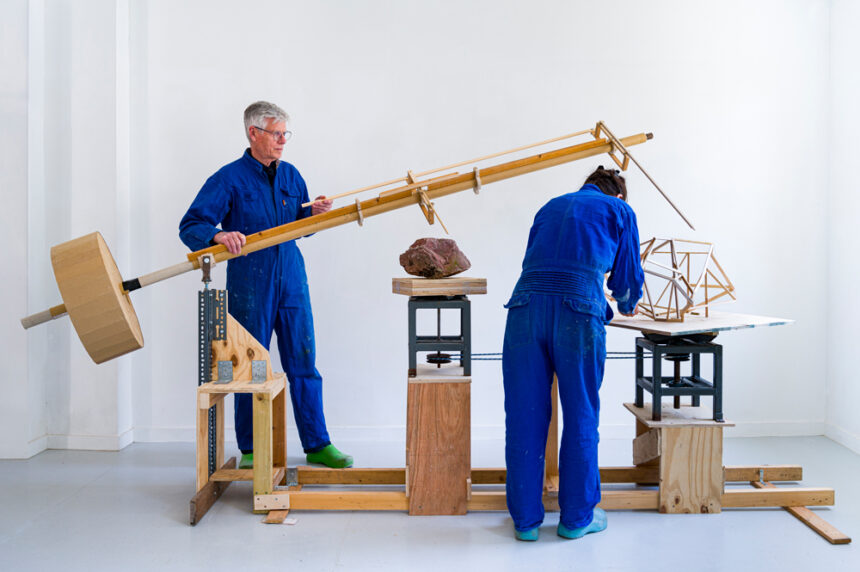
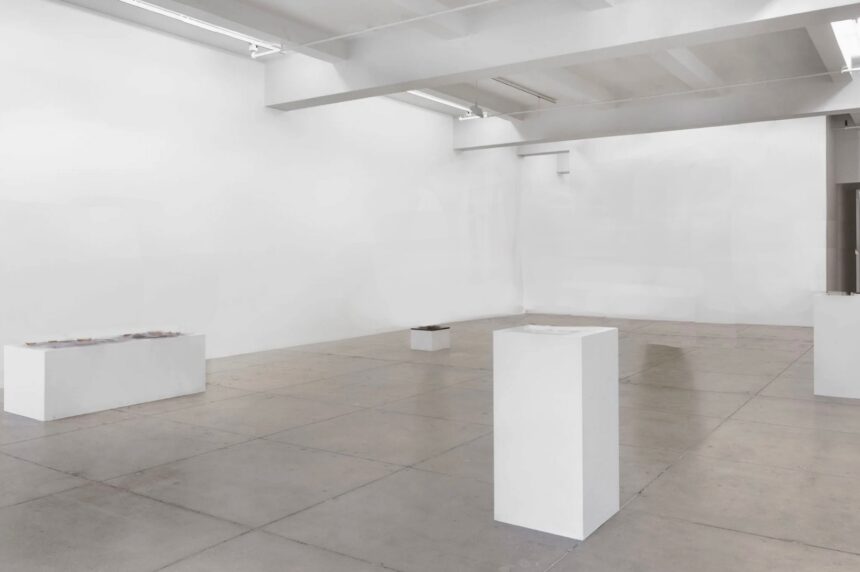
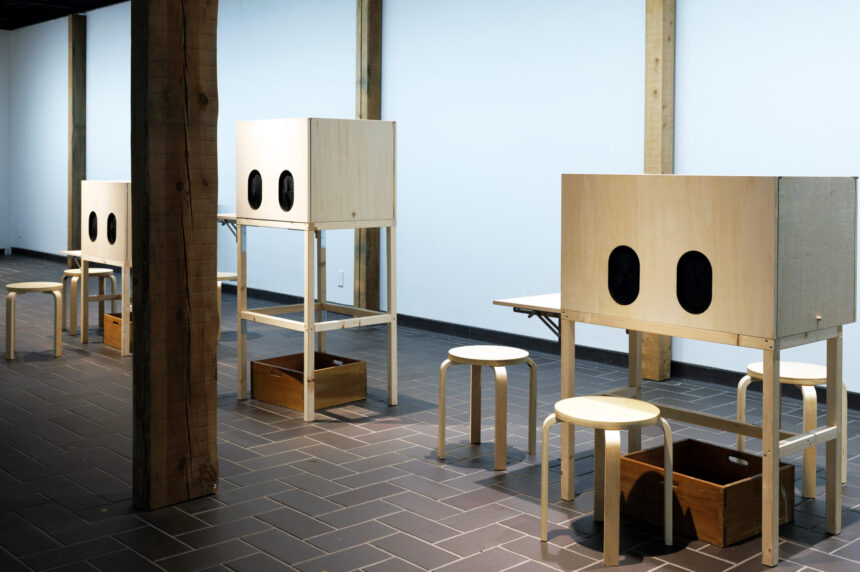
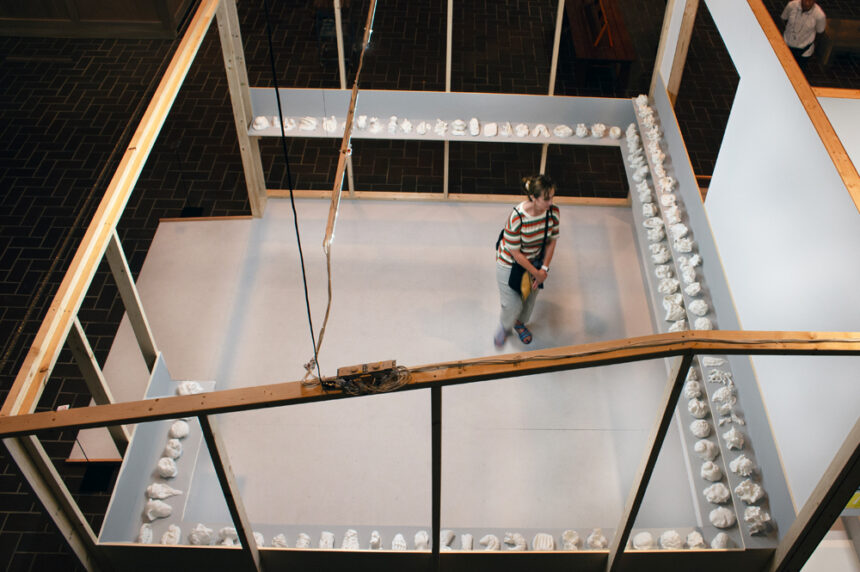
Method and Apparatus to Appreciate Iroha (MATA IROHA)* was an installation by Dunhill and O’Brien made for the exhibition Pleasure in Making at Tokyo Metropolitan Art Museum. The exhibition, curated by Hayato Fujioka, ran from July to October 2025, following residencies hosted by Kaetsu Ariake High School and HAKUTEN, Tokyo.
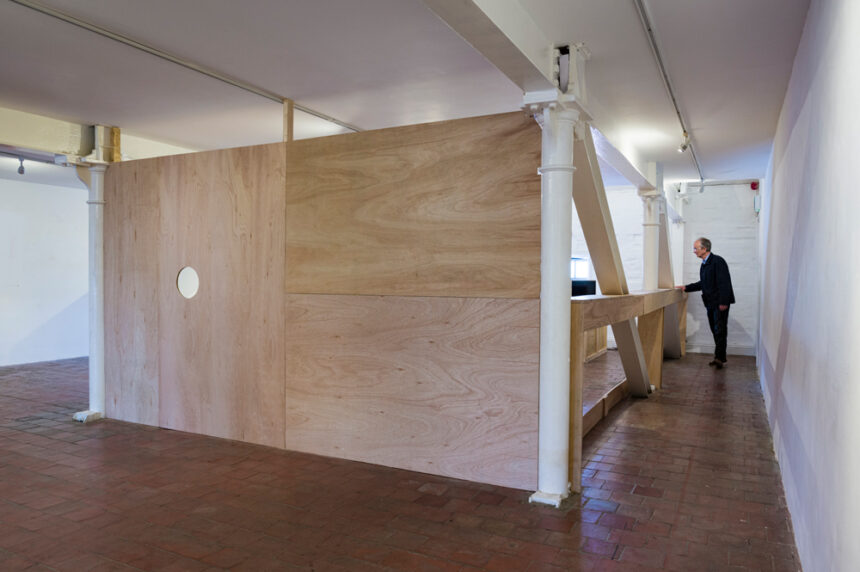
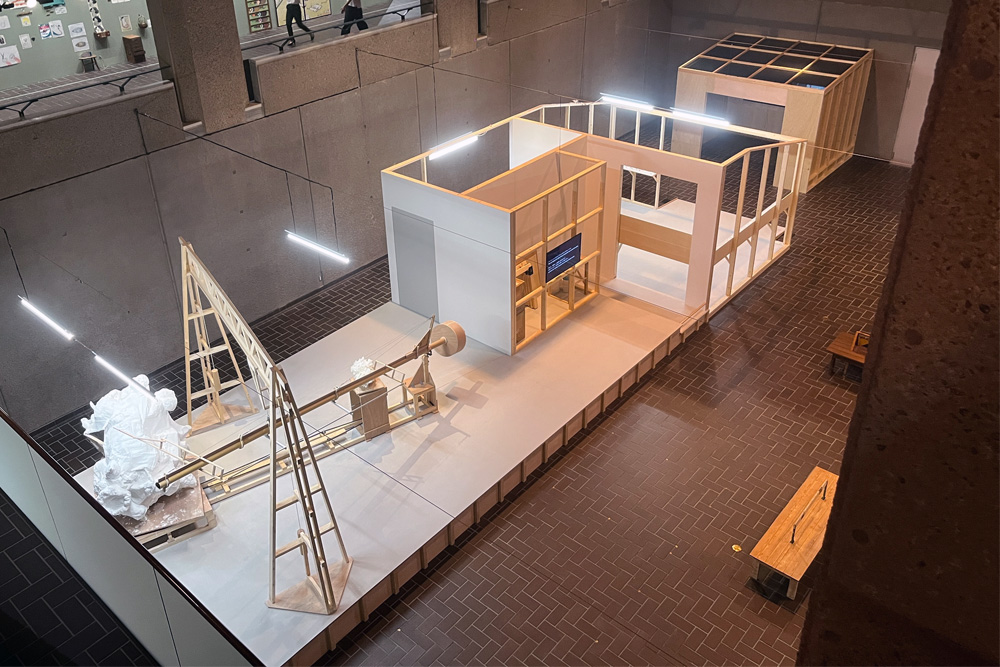
The installation was a large-scale multipart work with overall dimensions of 3.5 metres x 4.6 metres x 17 metres.
 
METHOD
The project began with their trip to the museum in Autumn 2024 to see the gallery space first hand and to visit a sculpture in the collection which they had spotted on the museum’s website.
 
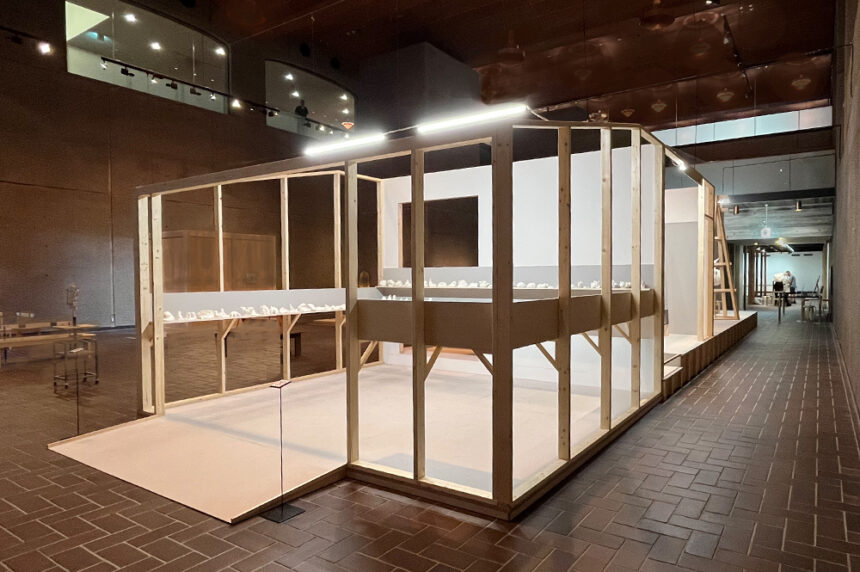
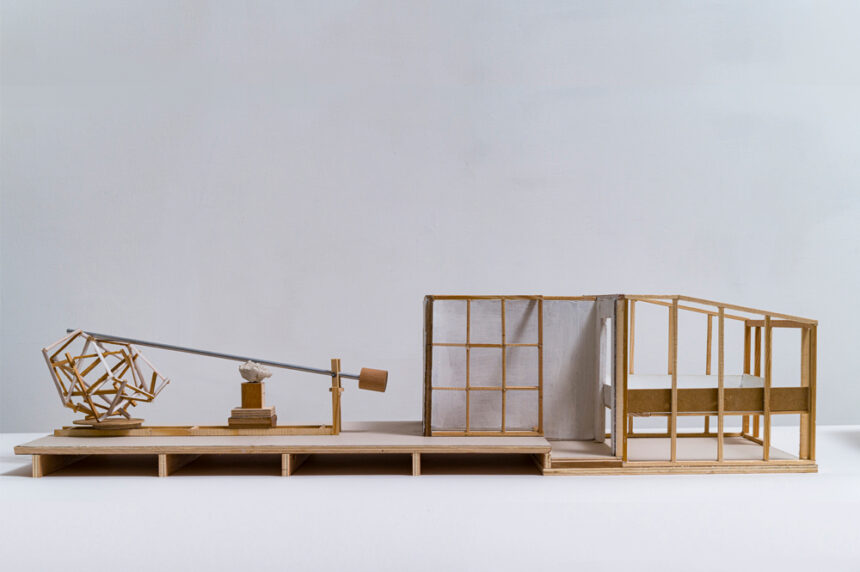
Designed by Mayekawa Kunio in 1975 the Museum’s sculpture gallery is a cavernous modernist space with distinctive hand hammered concrete walls. Noting that their ground floor sculpture studio and workshop in London would fit into this imposing and challenging gallery Dunhill and O’Brien decided to construct a life-size (1:1) platform and structure based on the dimensions of their studio for the exhibition. In this way they created their own making space independent of the gallery that could also act as a ‘raft’ and plinth.
 
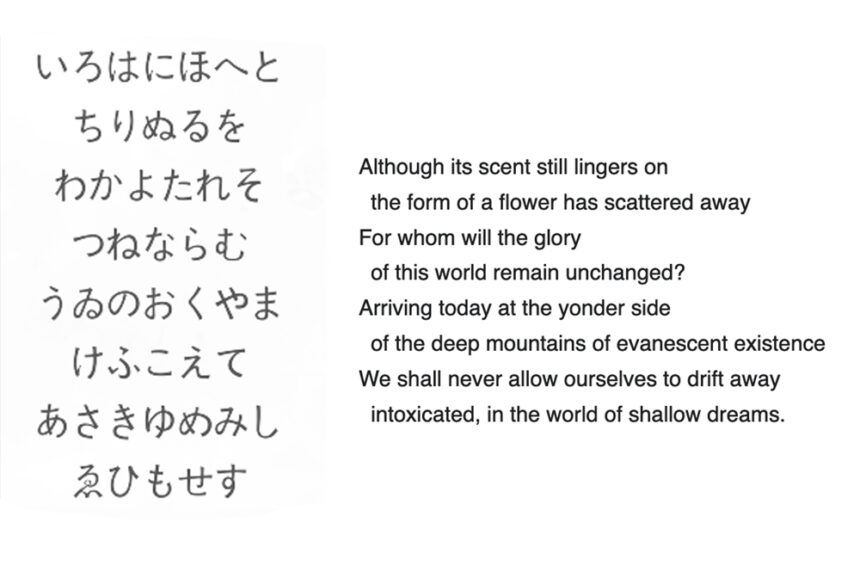
Meeting the basalt sculpture, they had first seen online, ‘IRL’ proved to be a powerful experience. I, RO, HA…N (1979) by Mogami Hisayuki, is a rock quite literally inscribed with meaning. Its title refers to an 11th Century poem, Iroha (いろは), sometimes ascribed to the Buddhist philosopher Kūkai (空海) (774–835). It is a perfect pangram containing each of the 47 kana syllables that make up the Japanese language. By carving these kana shapes into the raw basalt rock Mogami set out to translate the philosophical statement of the poem (which is a famous cultural artefact) into a tangible object.
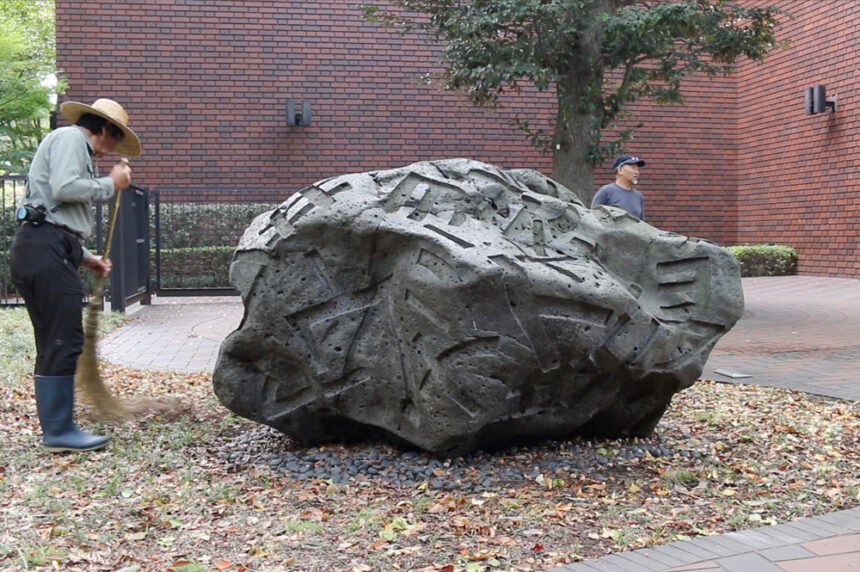
 

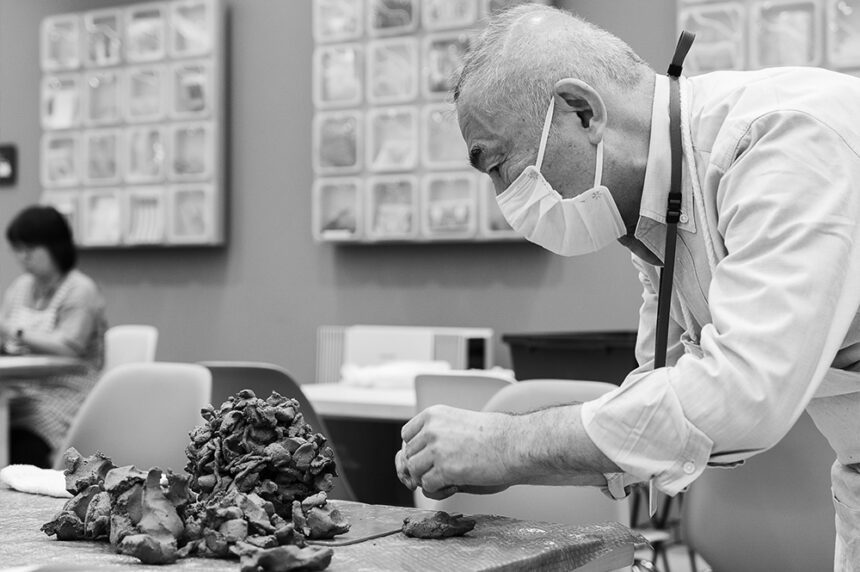
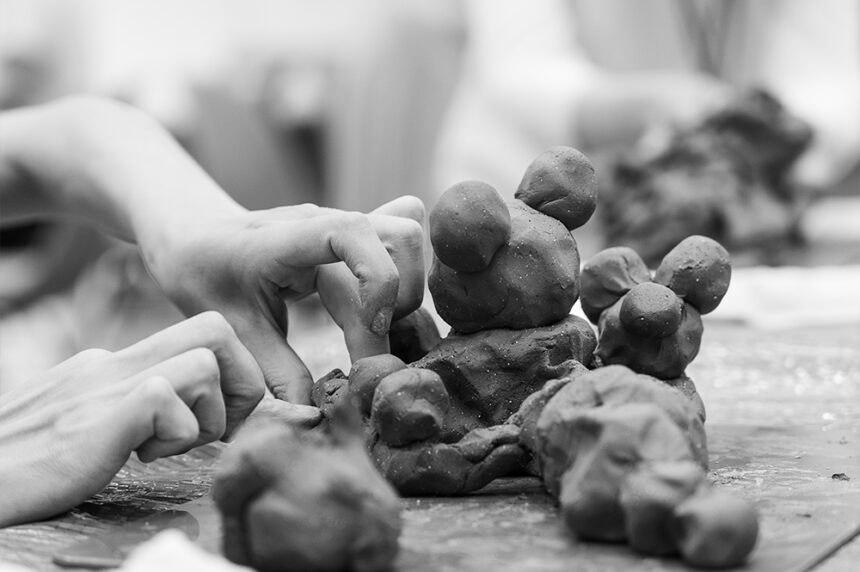
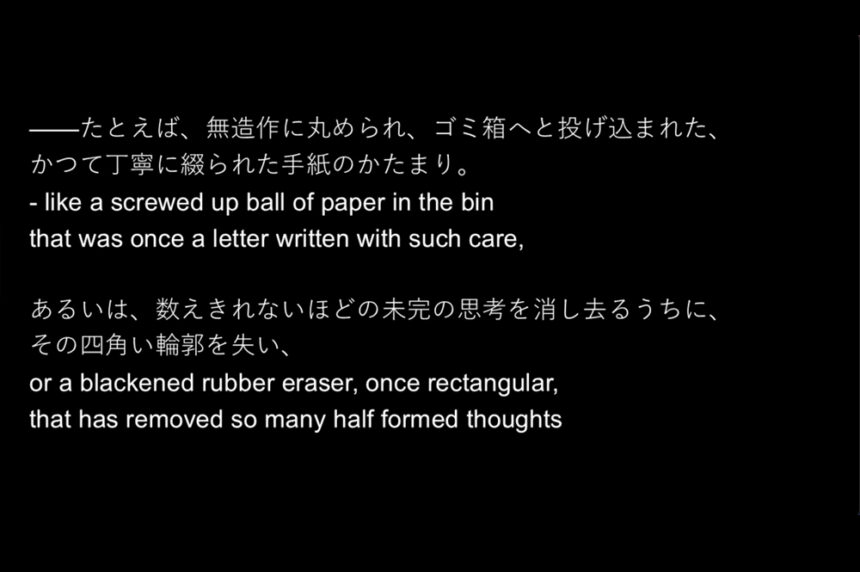
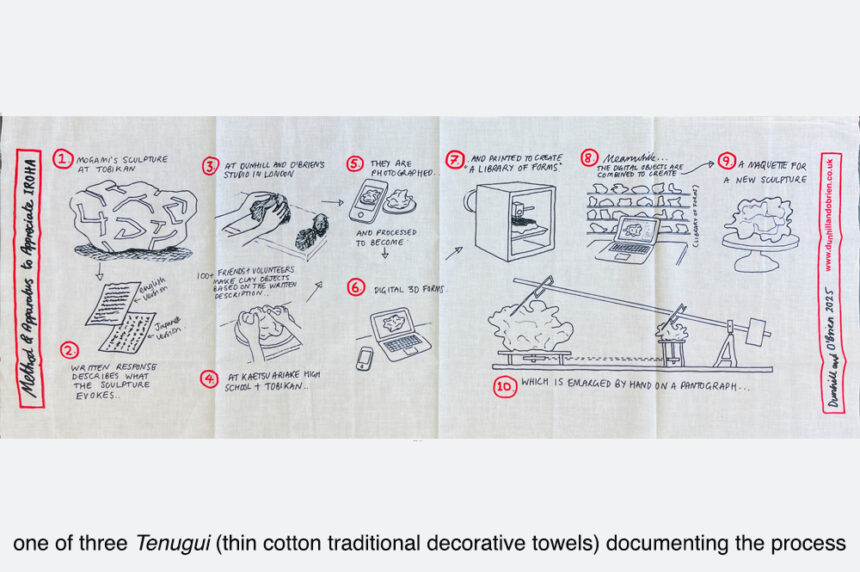
Contemplating Mogami’s sculpture Dunhill and O’Brien wrote a descriptive text reflecting on its physicality. This same text was used by over one hundred people during visits to their studio in London and workshops held in Tokyo. Equipped with just the text, 1 kilo of clay, and thirty minutes, each person created a three-dimensional form, interpreting the description in their own distinctive way.
 

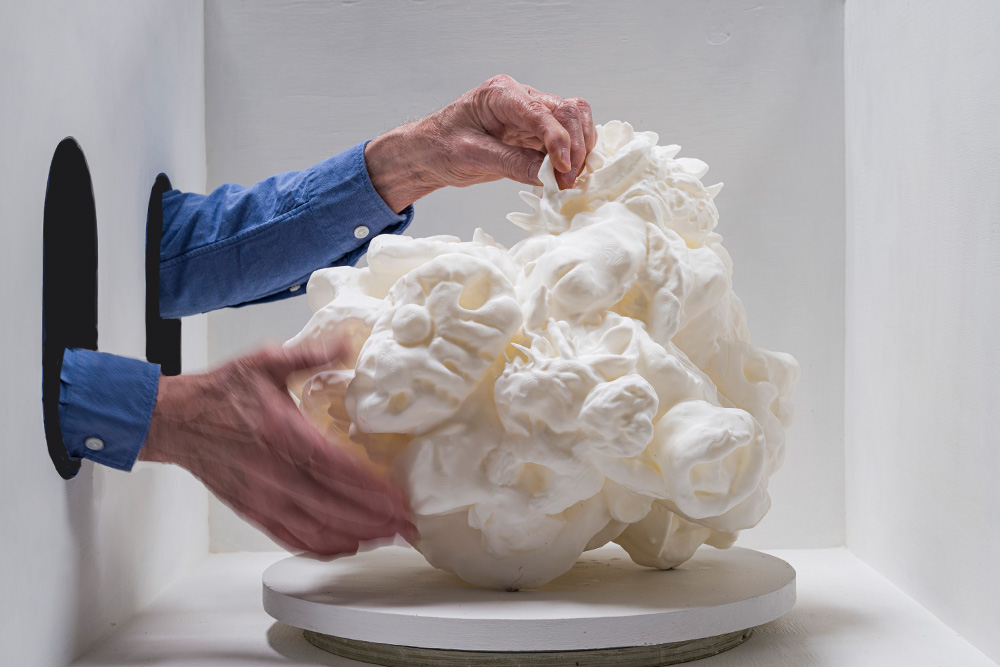
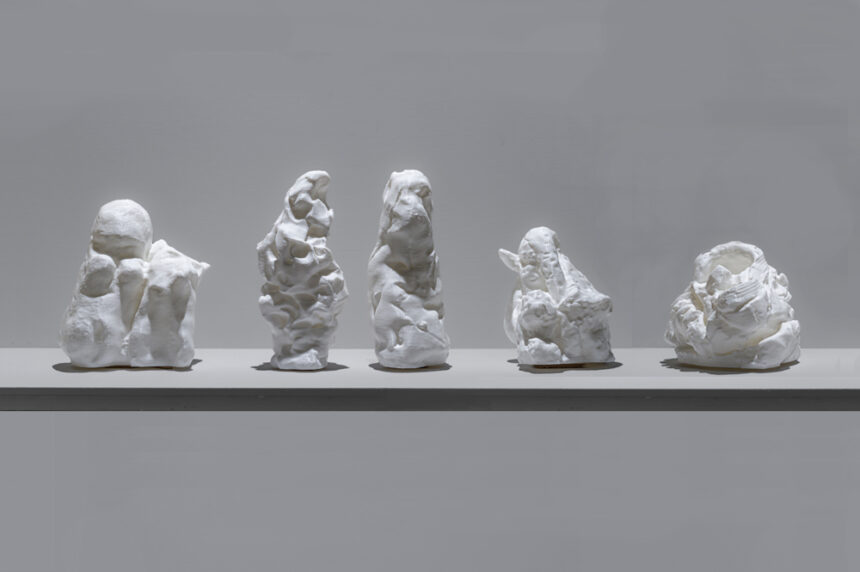
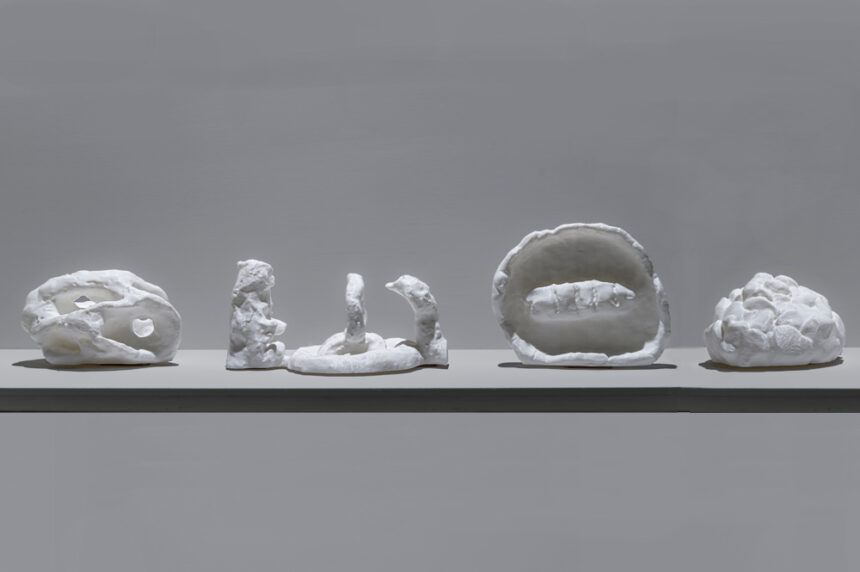
Through photogrammetry each of these clay objects was carefully studied and translated into computer code. A 3D printer transformed this information back into physical form. Then in the virtual space of a computer the same forms were amalgamated to generate a ‘mash-up’, a single collective object.
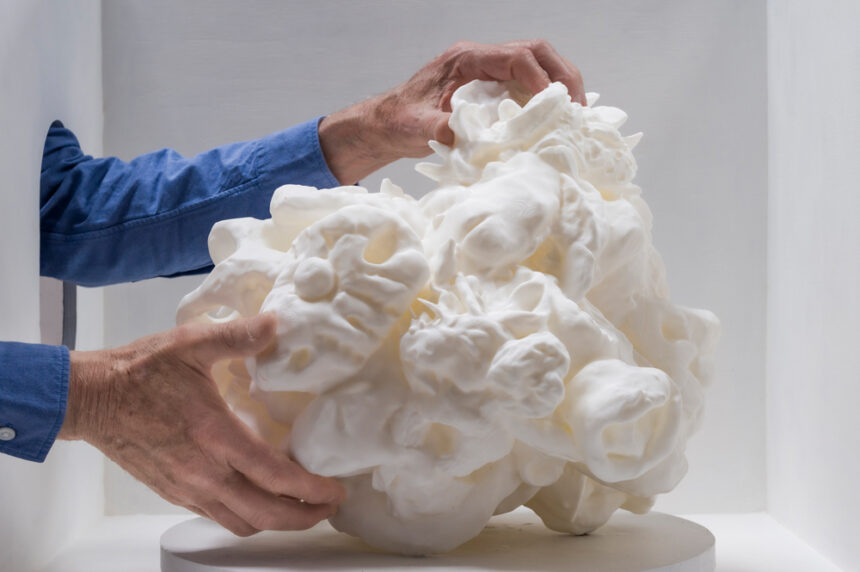
 

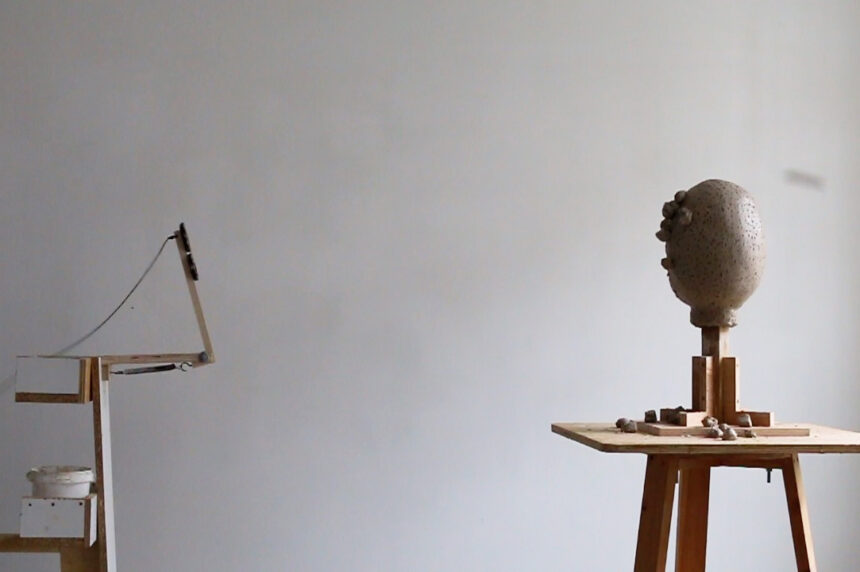
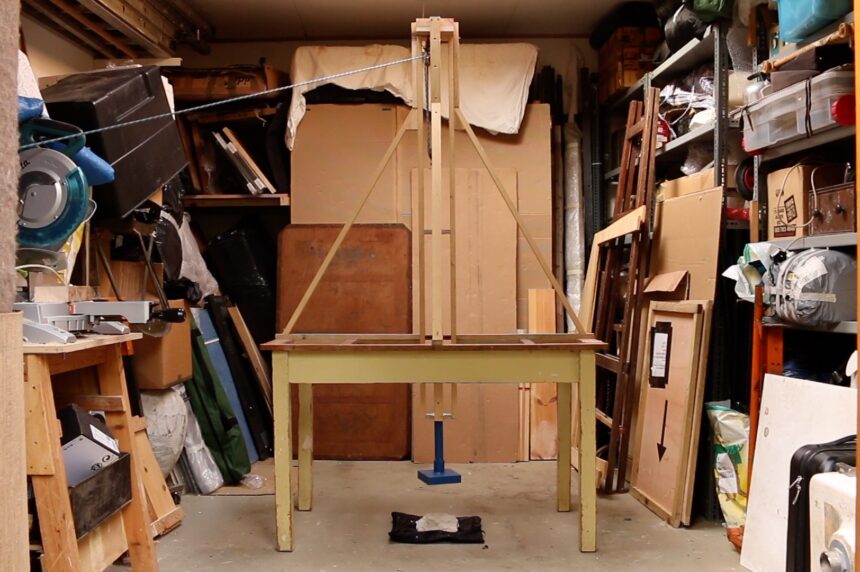
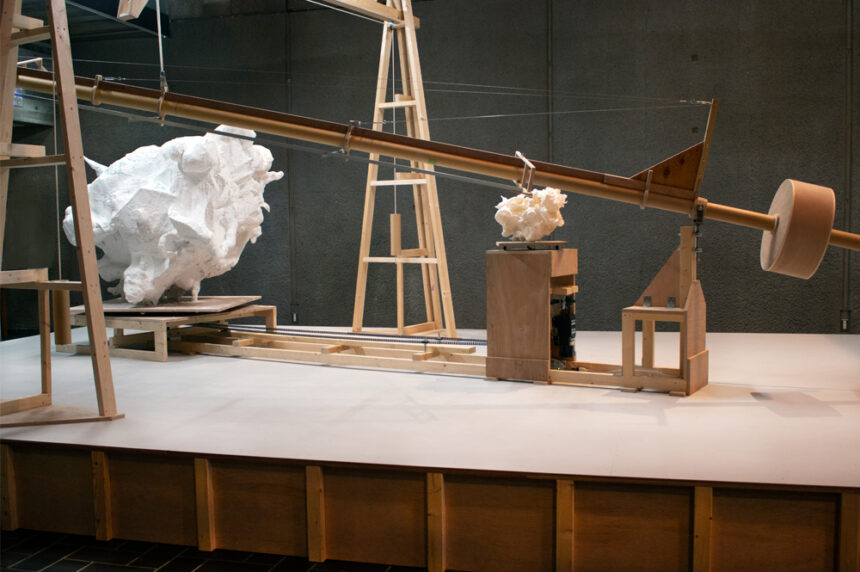
The final stage of the method saw this ‘mash-up’ scrutinised with the help of a 3D pantograph.
 
APPARATUS
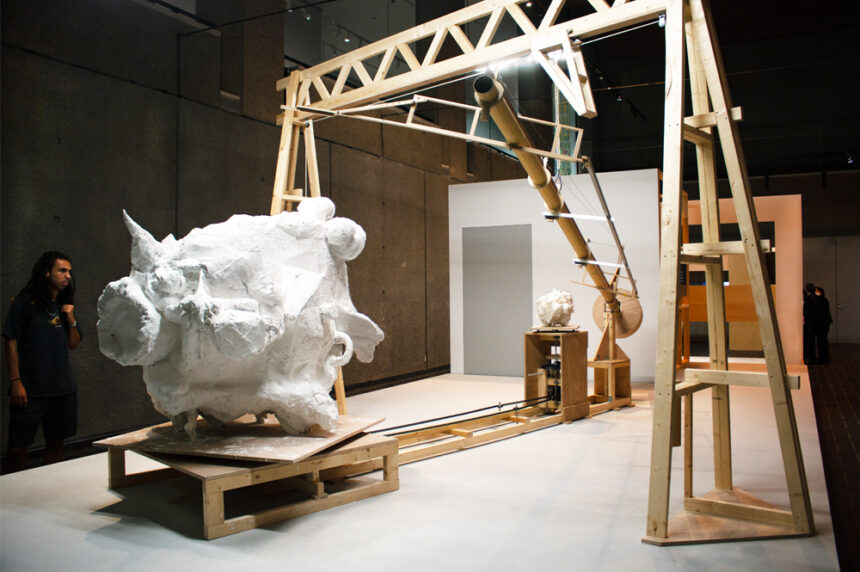
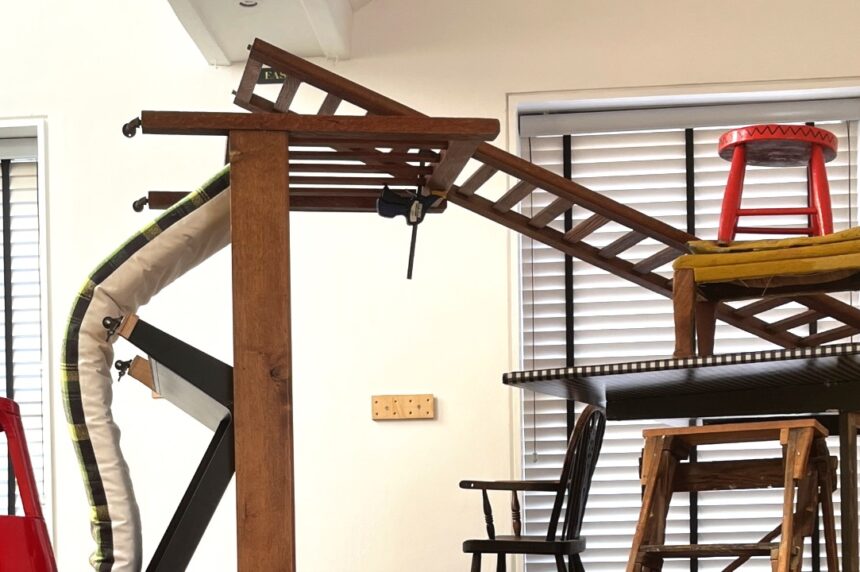
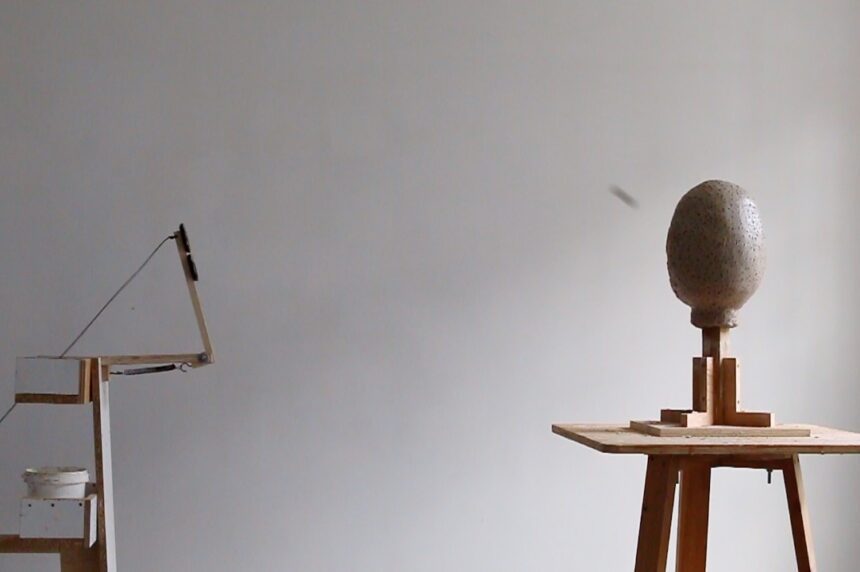
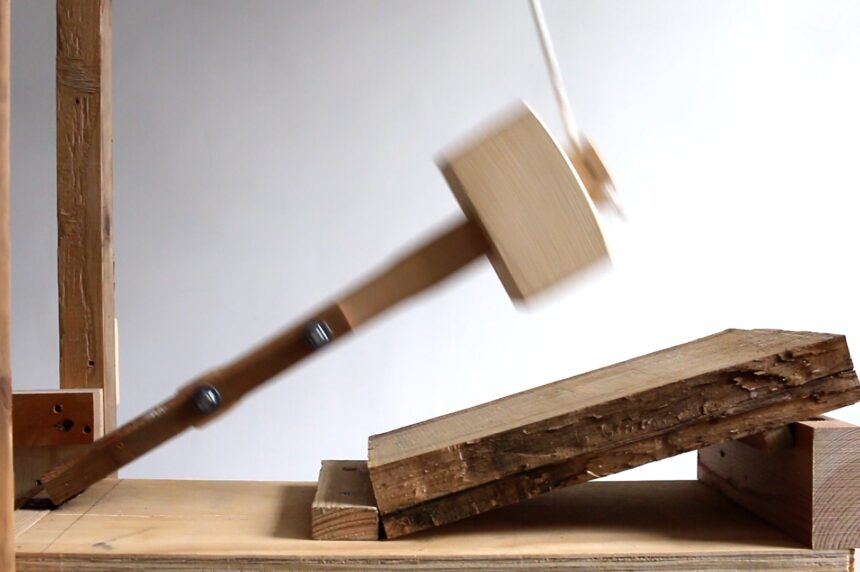
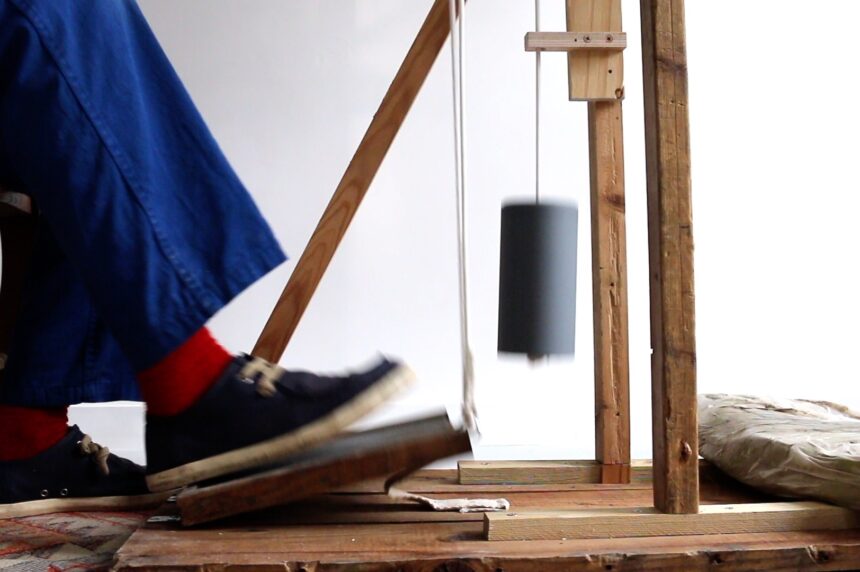
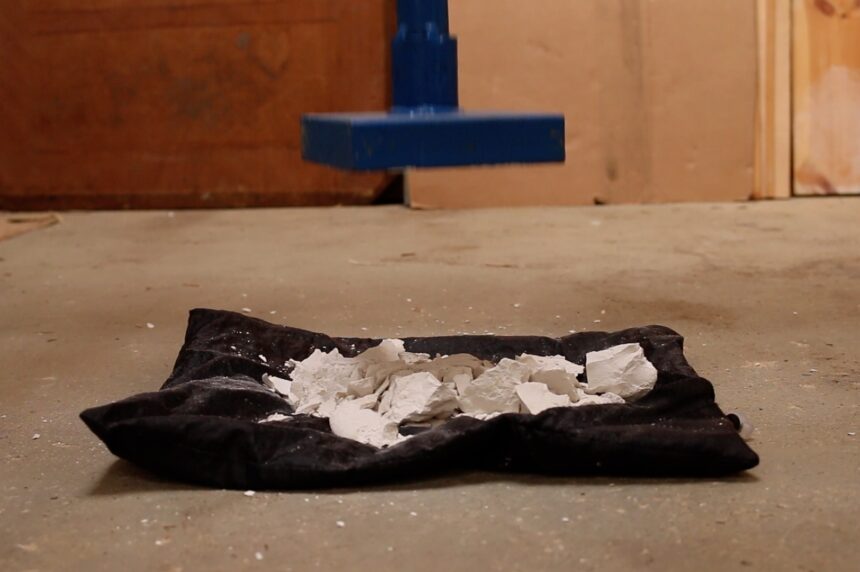
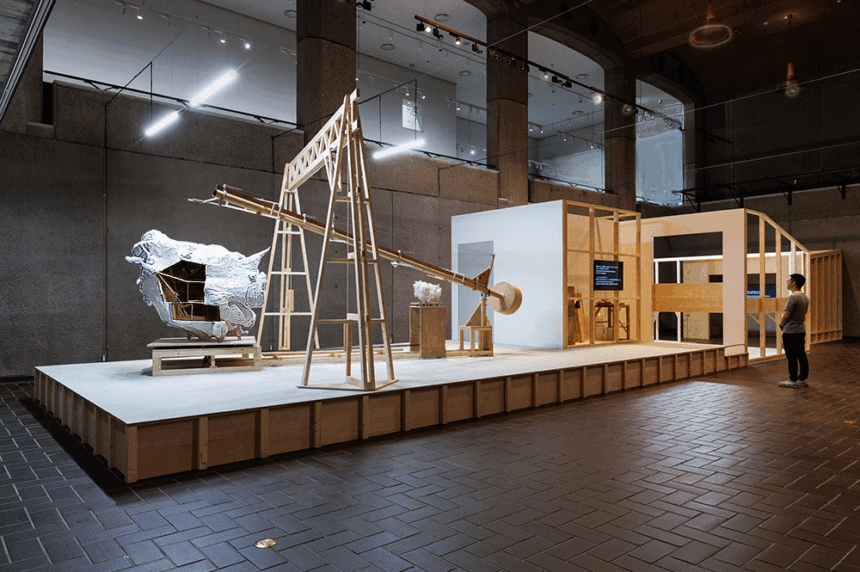
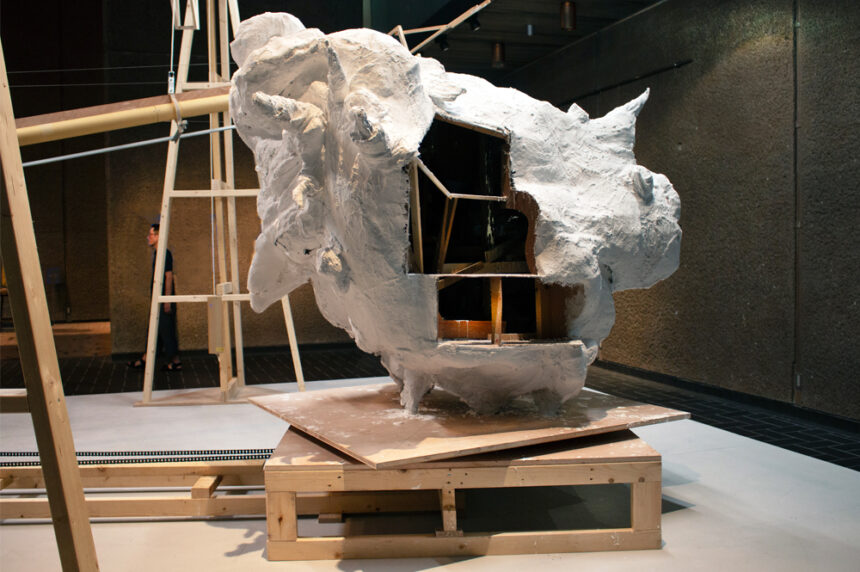
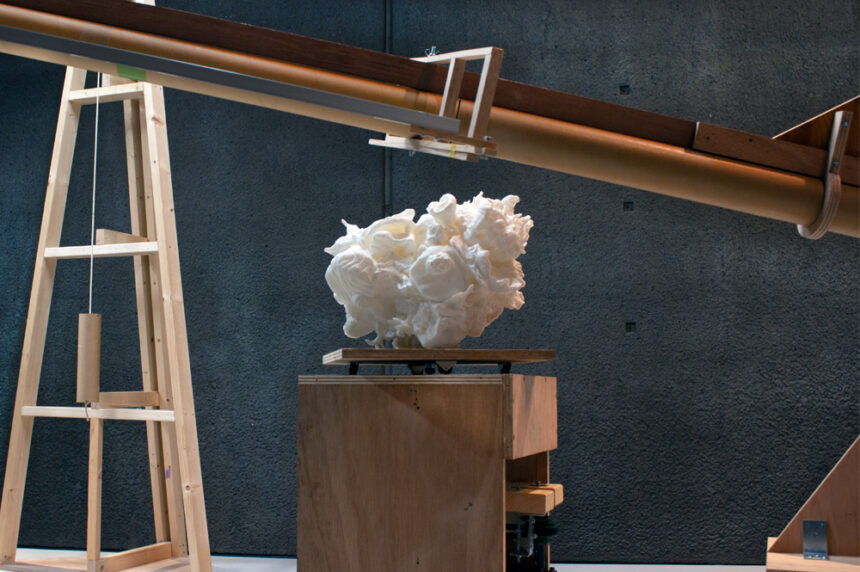
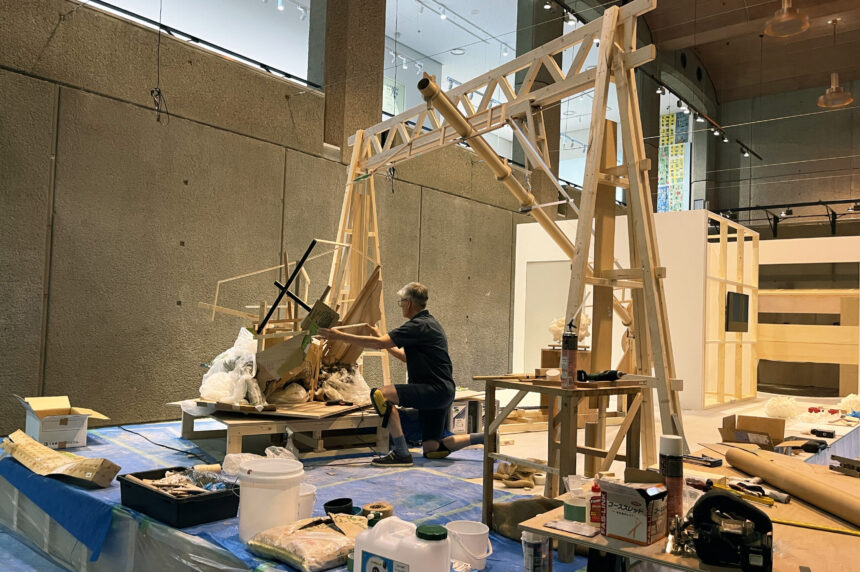
Following the elaborate process involving many acts of interpretation they used this home-made device, loosely based on a 19th Century Sculptors’ tool. Over a 5-day period Dunhill and O’Brien plotted and enlarged the ‘mash-up’ to a scale closer to Mogami’s sculpture employing traditional techniques and materials (wood armature, plaster, scrim etc) to produce a new work.
 

MATA IROHA

Abbreviation ‘MATA IROHA’ また いろは translated back into English becomes ‘Once More the Basics’

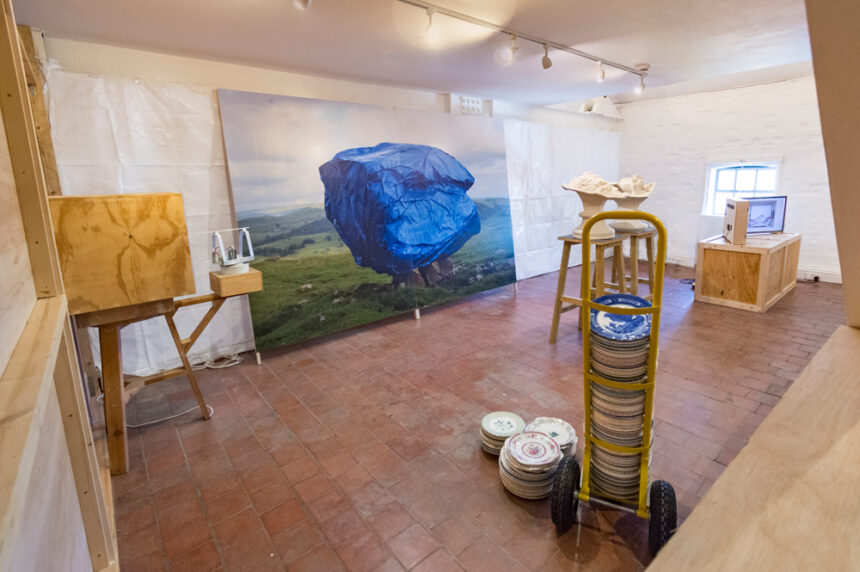
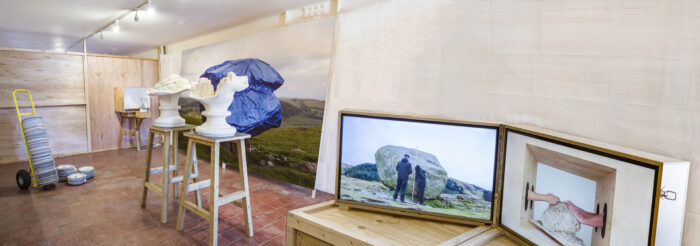
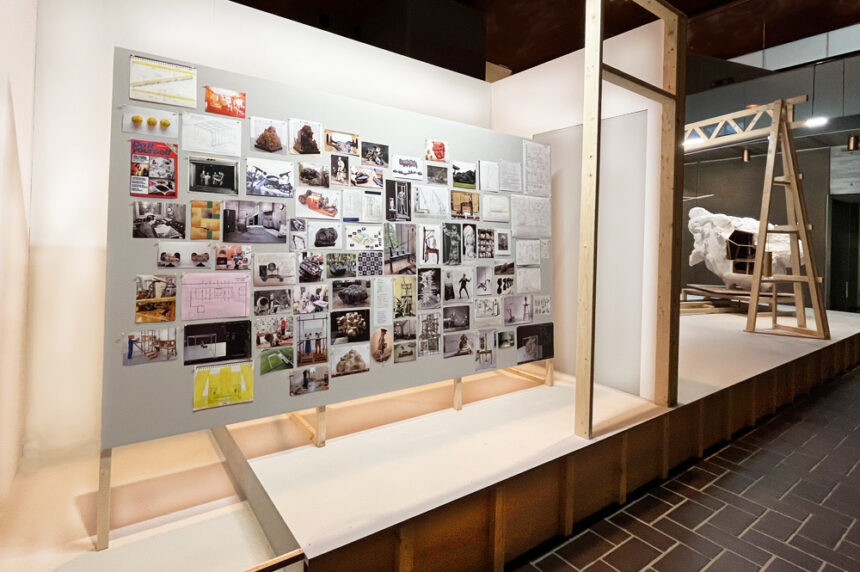
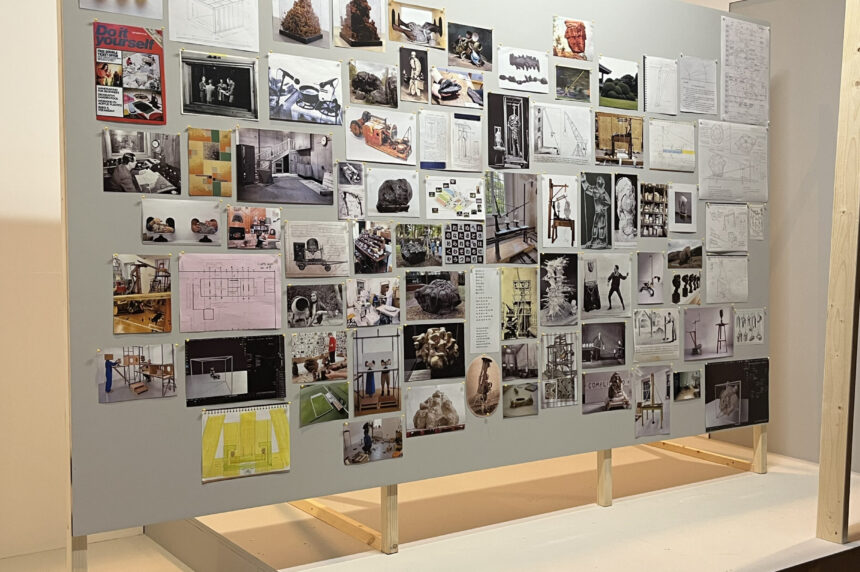
The installation comprised of the platform with framed wall structures, the large-scale plaster sculpture on a motorised turntable attached via a chain and motor to the ‘mash-up’ on a smaller turntable; the 5.5 metre long 3D pantograph with its 3.5 metre high wooden gantry; a 3.33 minute subtitle video of the descriptive text; the library of over one hundred 3D printed forms; and a pin board documenting visual research and references.
Materials employed included wood, plaster, steel, chicken wire, cardboard, plant-based plastic filament, an electric motor geared to run at 1RPM (turning for 1 minute every 30 minutes), rope, sand weights, a monitor, photographic prints and photocopies, and map pins.
ACKNOWLEDGEMENTS:
Dunhill and O’Brien’s participation in the exhibition Pleasure in Making was made possible thanks to financial support from The Daiwa Anglo Japanese Foundation and Tokyo Metropolitan Art Museum.
 
Special thanks are due to: Yoshinori Takakura and the team at Kaetsu Ariake Junior High School; Yousuke Nakazato and the team at HAKUTEN; the exhibition’s curator Hayato Fujioka and the curatorial team and team of Tobira at the Tokyo Metropolitan Museum of Art; sculptor Claire Fujita who acted as project assistant and analogue technician, and architectural technologist Hiroaki Yamane who provided expert digital support.
 
PROJECT PARTICIPANTS
Dunhill and O’Brien would also like to express their thanks to the project participants for their openness and ingenuity:
Tomoko Ido; Mariko Igari; Satoshi Ikeda; Sakuya Ishida; Mayumi Ishizawa; Nick Eagleton; Yumi Hayashi; Keiko Haseyama; Nicolai Hart-Hansen; Jeremy Herbert; Satomi Baba; Angela Baum; John Barker; Parata Kikuchi Kiwa; Akiko Nishida; Mika Nishiyama; Charlotte Hodes; Mick Hawksworth; Nick Haeffner; Nick Heaf; Sarah Baylis; Steve Bell; Deborah Paige; Masami Tougasa; Penny Driver; Lau Tong Han; Owen Leach; Nathalie de Leval; Rempei Washizu; Junpei Kaneko; Marisa Kageyama; Marjorie Allthorpe-Guyton; Julia Galvin; Takumi Takahashi; Yoshinori Takakura; Rie Tanabe; James Dunhill; Becky Leddy; Miyako Someya; Fang Chol Seo; Hiromi Nemoto; Mina Nakagawa; Yosuke Nakazato; Takehide Murakami; Rena Murata; Reo Murase; Junko Uchiyama; Ren Wolfe; Sachiko Ueda; Rie Umemura; Hiroaki Umemura; Sarah Wigglesworth; Reiko Nogami; Sean O’ Brien; Utaha Kurokawa; Hiromi Kubota; Yumiko Kuramochi; Clare Cooper; Graham Cooper; Hiroaki Yamane; Daisuke Yamanaka; Azumi Matsumoto; Agalis Manessi; Sandie Macrae; Dorian McFarland; Rob Kessler; Pat Frik; Helen Frik; Claire Fujita; Hayato Fujioka; Jem Finer; Marcia Farquhar; Mick Finch; George Blacklock; John Plowman; Komada Naoki; Paul Coldwell; Jinx Godfrey; Melanie Gautier; Aya Endo; Judo Tezuka; Jeremy Till; Paul Dale; Richard Ireland; Danielle Arnaud; Yuko Aono; Naoyo Asano; Sonia Ashmore; Jonathan Ashmore; Shuori Saito; Dani Salvatori; Anna Sasaki; Hiroko Kihara; Momoko Kihara; Douglas Gill; Miina Takezawa; Yuki Miyake; Miyoko Shigeta; Kate James; Takako Jin; Nicola Streeten; Gill Smith.

(names listed according to the I, RO, HA ordering system, thanks to Iku Fujioka)
 
The exhibition Pleasure in Making featured works by: Taku Hisamura; Kengo Noguchi; Dunhill and O’Brien; Natsumi Seo; Kurumi Wakiki with architectural practices Akihiro Ito and studiomegane.
SHED: TWELVE STORIES

Posted on Format Gallery

During the research phase for the exhibition Pleasure in Making at Tokyo Metropolitan Art Museum, Dunhill and O’Brien had many illuminating conversations with the exhibition’s curator Hayato Fujioka. Among other things they discussed the curious relationship between sculpture and DIY, and the many ways that DIY infuses their approach to making sculpture.
 
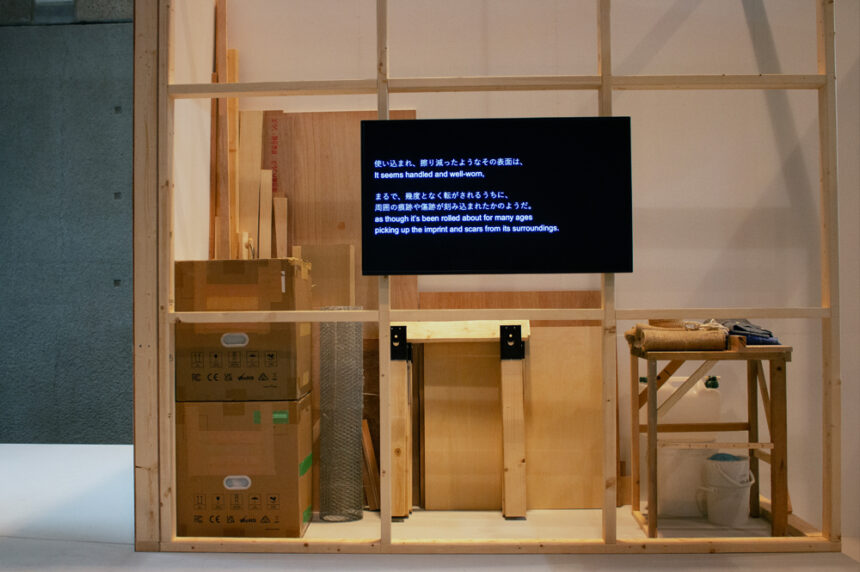
The series of short films collectively titled Shed: Twelve Stories was screened in a structure based on their studio storage shed alongside the large-scale installation Method & Apparatus to Appreciate Iroha.
 
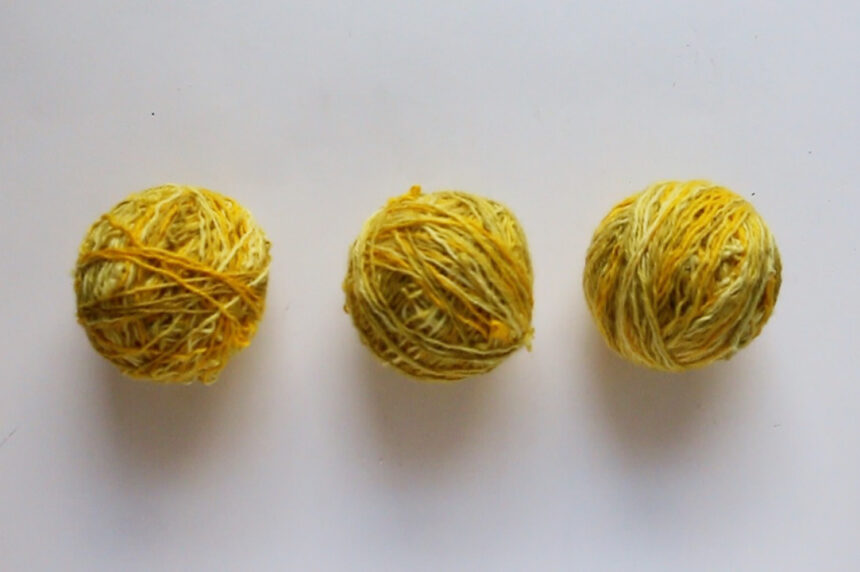
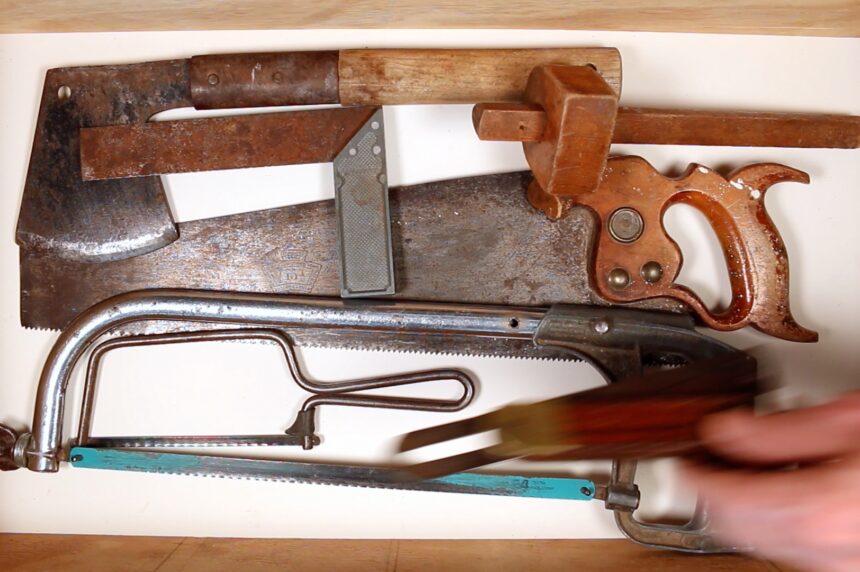
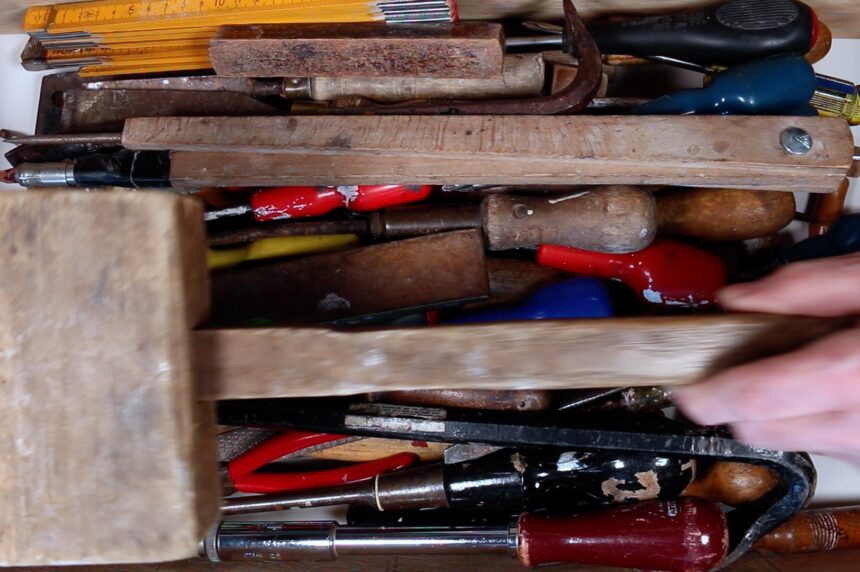
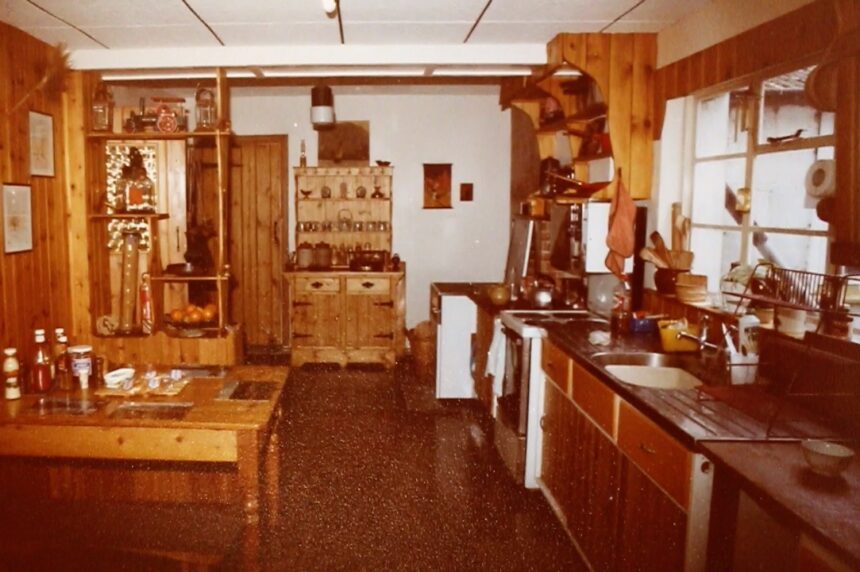
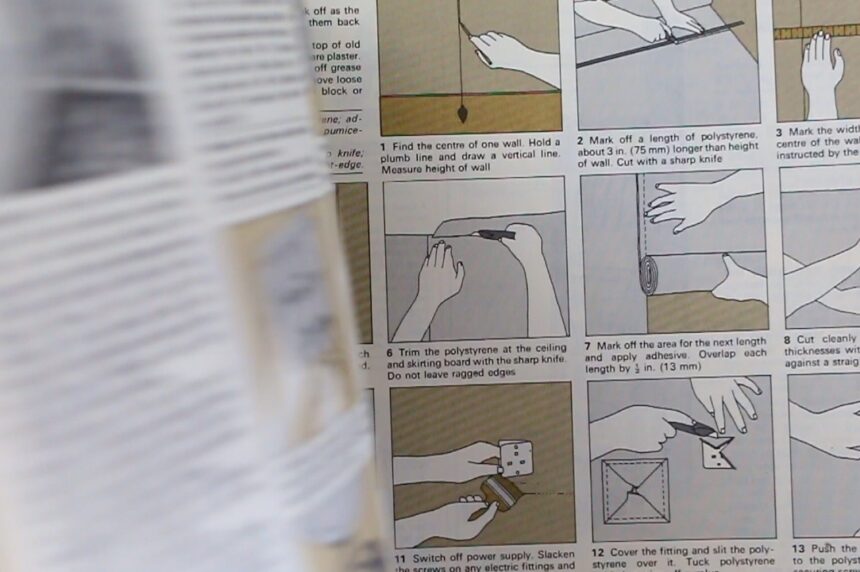
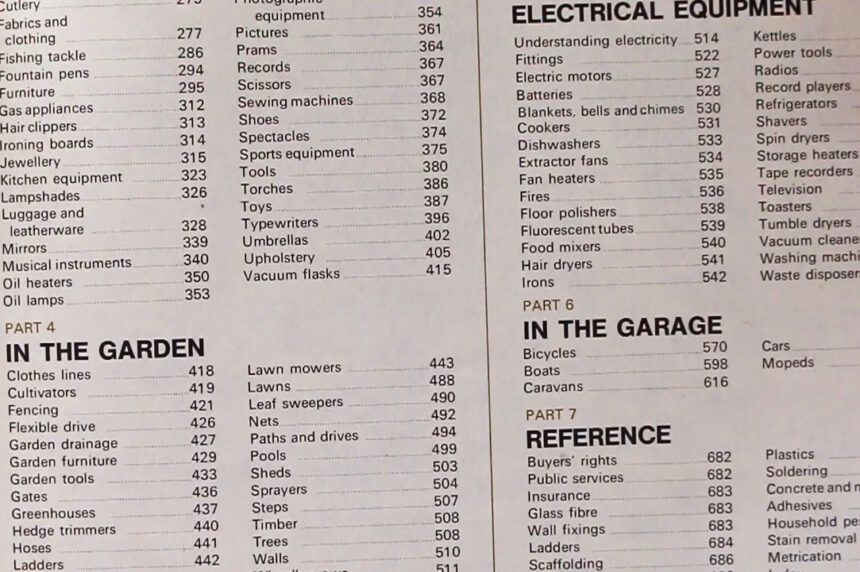
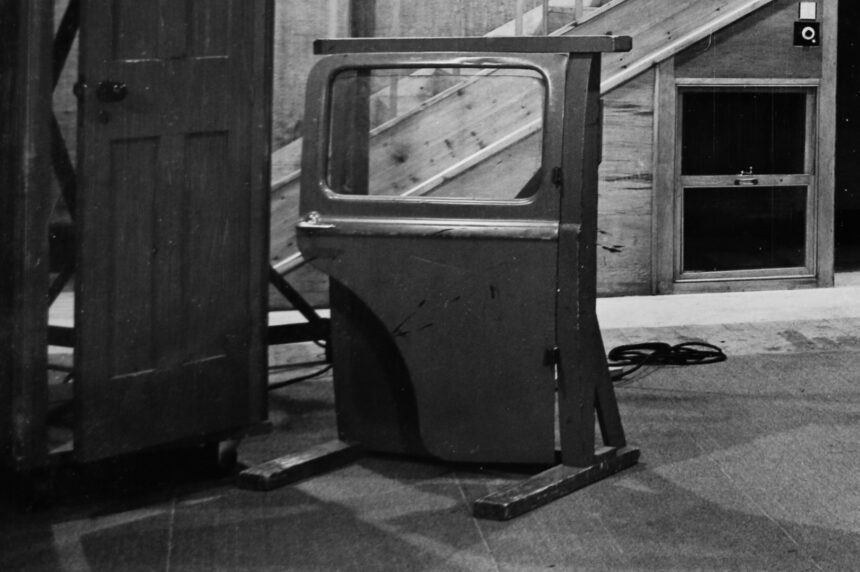
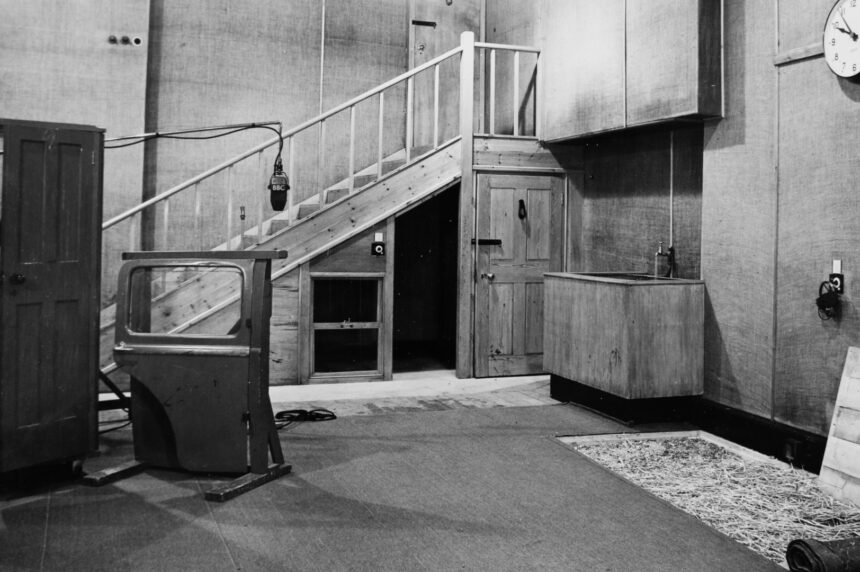
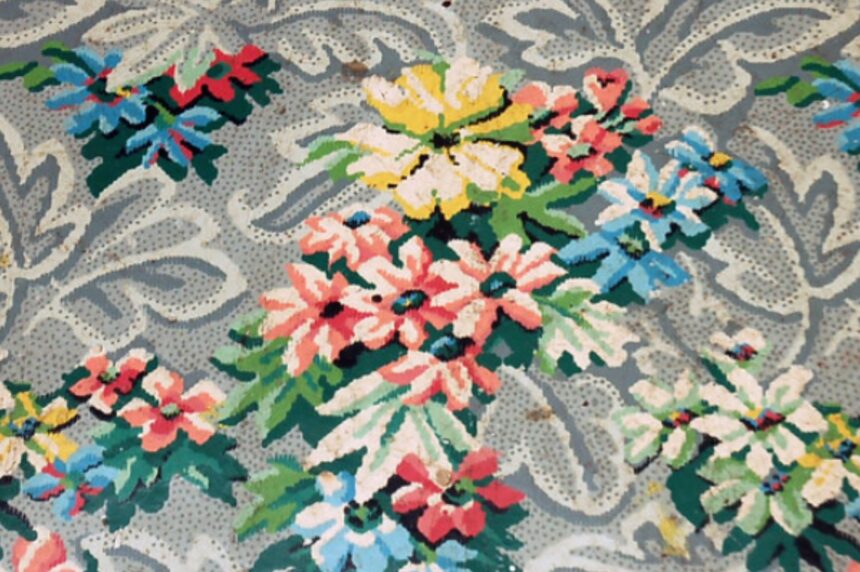
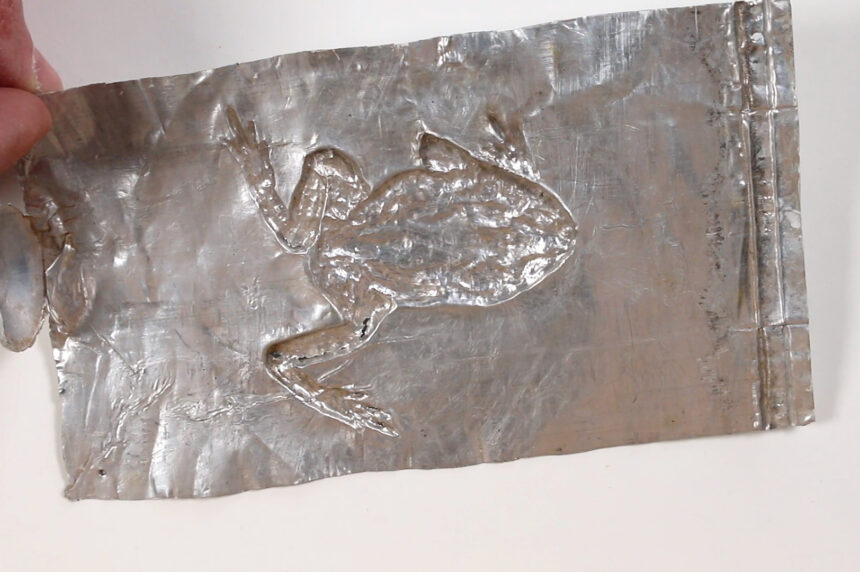
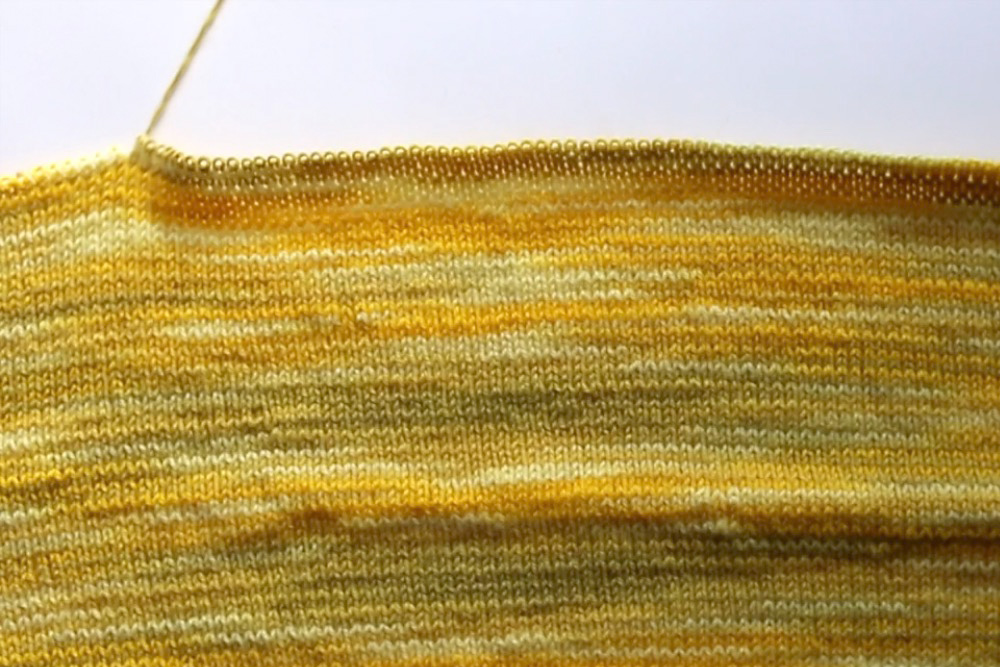
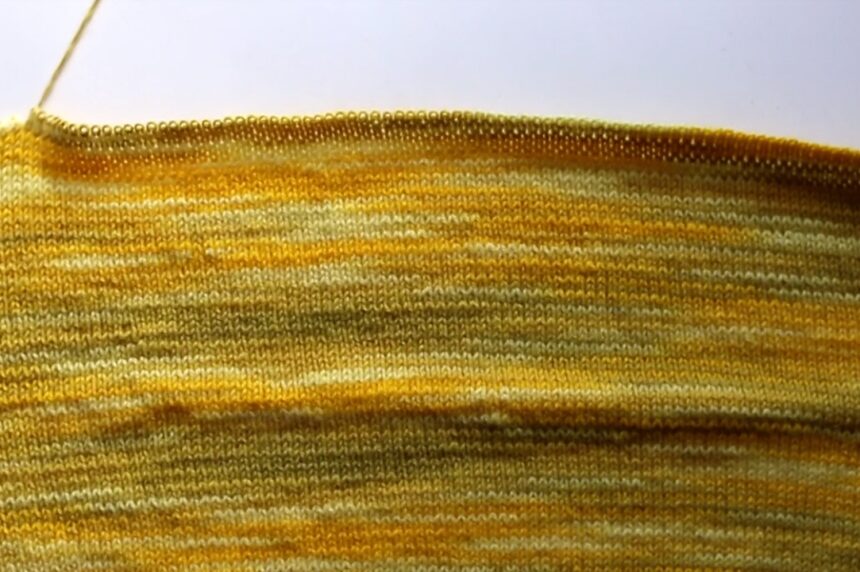
Each film was based on a small everyday epiphany. These epiphanies arrived from a diverse range of triggers – squashed frogs on a road in Indonesia; linoleum samples used as draft proofing by an octogenarian; balls of wool recycled multiple times; a radio sound effects studio visited in 1963; a sleepless night worrying about a sculpture; the process of scraping paint off reclaimed pine floorboards; a cartoon about Henry Moore; an art tutor’s example of how to avoid overworking; a game of pirates using upended gym equipment; tools handled by an eight year old; the Readers Digest Repair Manual; and a sculpture professor’s belief in the transformational power of the plinth.
 
Each film sets out to document a moment when something profoundly sculptural has been revealed about the world, or when something worldly has been revealed about sculpture. Along the way a surprisingly personal story evolves.
 
ACKNOWLEDGEMENTS:
Dunhill and O’Brien’s participation in the exhibition Pleasure in Making was made possible thanks to financial support from The Daiwa Anglo Japanese Foundation and Tokyo Metropolitan Art Museum
 
Special thanks are due to: the exhibition curator Hayato Fujioka; the linguist and translator Satoshi Ikeda; Shimadoya Gonrock for the compilation and final edit; and to voice actors Hiroaki Umemura and Rie Umemura.
 
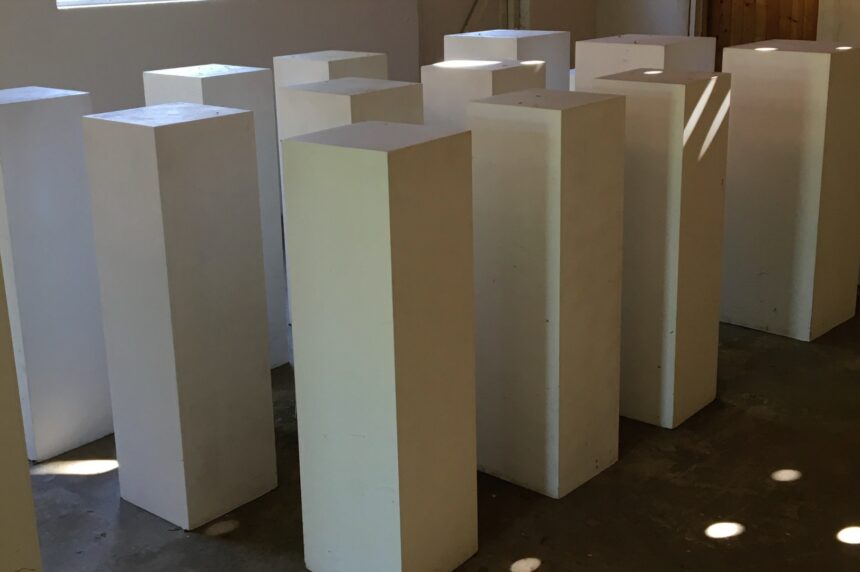
Acknowledgements and thanks for images used in Plinths to Hugh Pilkington and for images used in 12a Bakers Avenue to J.L.Ordaz

FEELING

Posted on Format Gallery

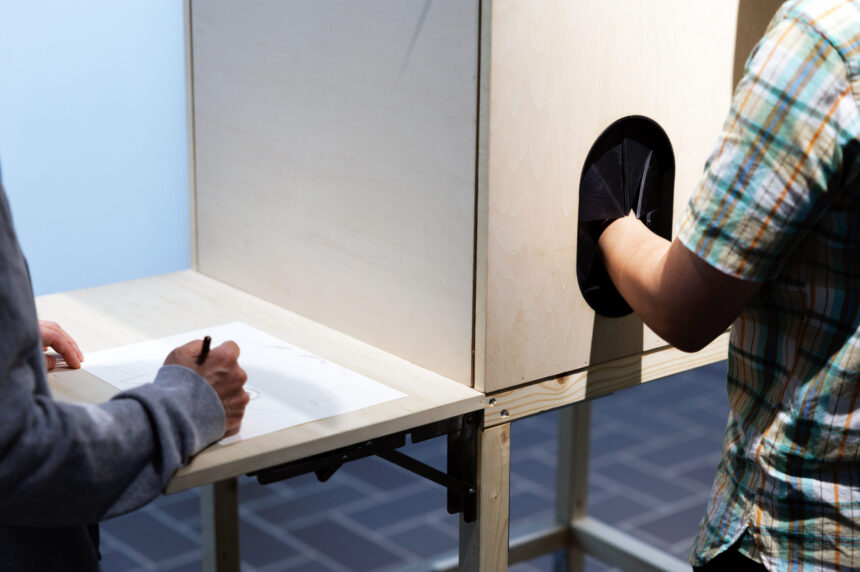
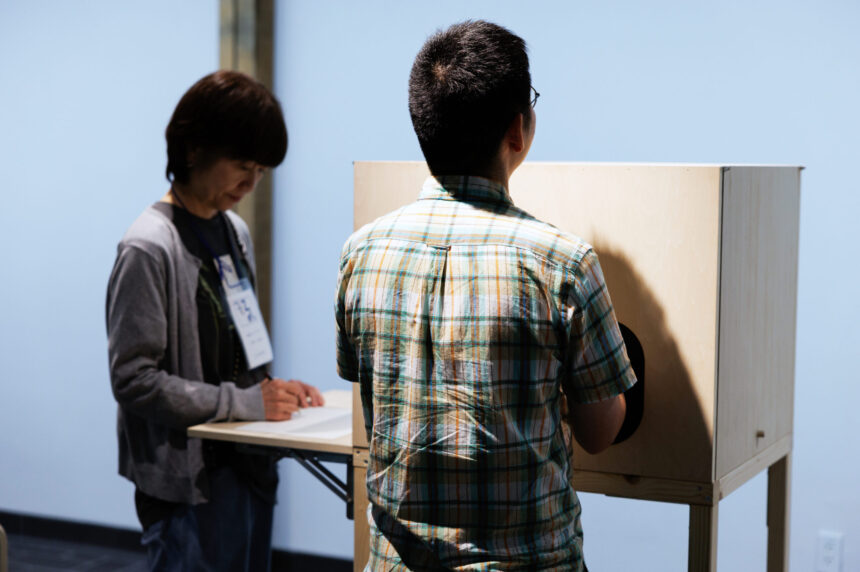
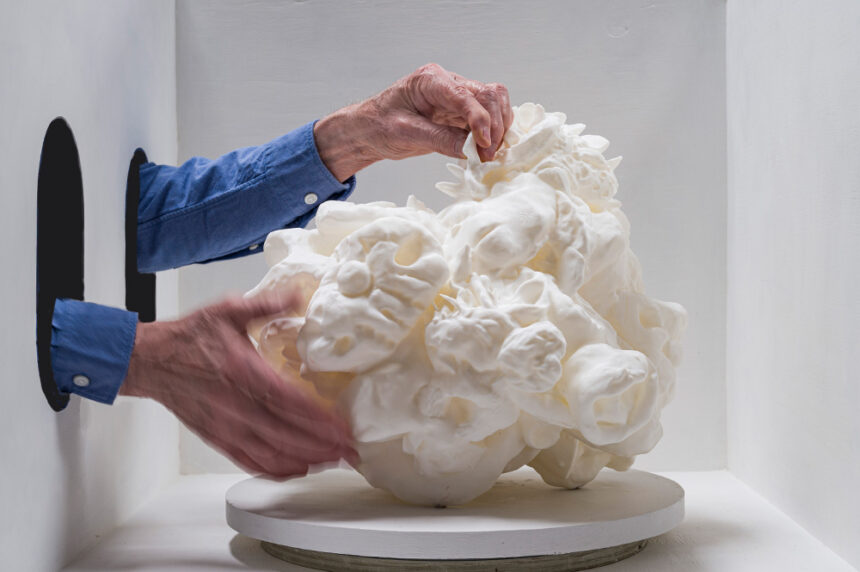
To accompany their large-scale installation, MATA IROHA, in the exhibition Pleasure in Making at Tokyo Metropolitan Art Museum, Dunhill and O’Brien made smaller interactive works. Feeling was sited in a gallery space curated by the architectural labs Akihiro Ito and studiomegane. The following invitation was made to visitors:
 

“We have often overheard visitors to sculpture exhibitions mention that they would like to have a tactile relationship with the work, that they want to be able to touch it. We have even spotted some people quietly reaching out to feel a sculpture when the invigilators back has been turned.
 
We invite you to explore some forms before or after seeing them in the next-door gallery. Please take your time – these are complicated objects that have some pointed details as well as softer undulations. We recommend that you move your hands gently and with some caution over the surface while you become familiar with their varied shapes and textures.
 
If you would like to take this experience to the next level, you could collaborate with a friend or another exhibition visitor. Try describing the object you are feeling in words so that they can make a drawing, why not take it in turns. There is some paper and pencils provided for this purpose..”


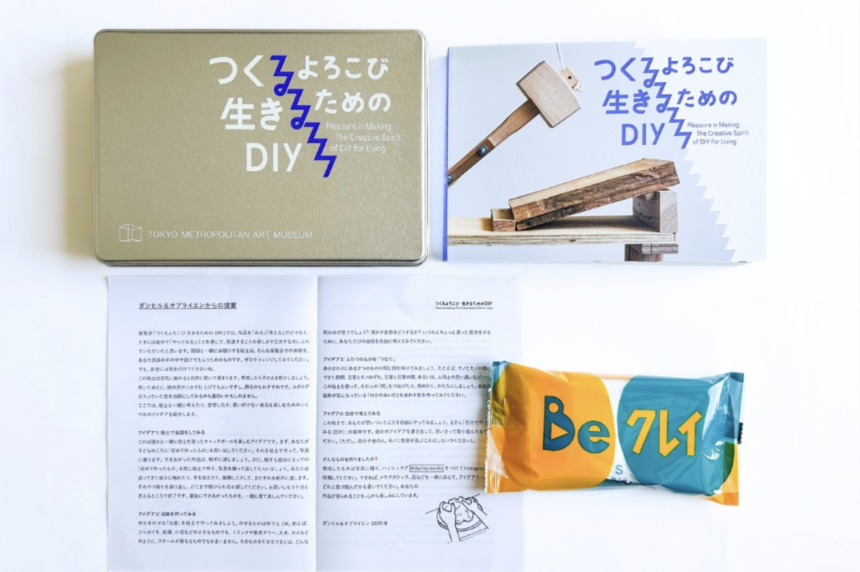
The exhibition catalogue provided another context for an invitation – the catalogue’s box contained a pack of air-drying paper clay and suggestions of how to work with it..
 

TERMS & CONDITIONS

Posted on Format Gallery

TERMS & CONDITIONS

 
Terms & Conditions was a new work made for the AirSpace gallery in Stoke-on-Trent as part of the British Ceramics Biennial 2019.
Following various research visits and workshops in Stoke, Dunhill and O’Brien recruited a team of volunteer participants from the area to work with them during a 3-week residency.


Each member of the group, including a dentist, dressmaker, boulderer, sports masseur, translator, jeweller, baker and engineer, agreed to step outside of their individual comfort zones to explore a range of ‘terms and conditions’ for collaborative making, using raw clay, and methods that tested the limits of verbal and visual communication. Working within a purpose built modular ‘Dexion’ structure, they each employed their unique 3D problem solving skills developed through their occupations and hobbies.


The exhibition that followed the residency consisted of a number of elements: a large custom-made structure forming the workshop/laboratory space; unfired raw clay objects made by the team of participants; video documentation of the processes involved; a wall text, and a 3.5 tonne raw clay form sculpted by Dunhill and O’Brien, and based upon information gathered during the workshops.


Sitting in and among these elements were a number of found rocks as well as images and videos of rocks. These were used as source material and prompts for the various activities, and connect this new work to Dunhill and O’Brien’s long-standing fascination with naturally formed rocks and stones, both as they are represented in popular culture, and as material, physical objects.

Proposition 1 (Window)
Collection of clay objects made collaboratively by participants, kept damp through a sprinkler system, and added to following workshop sessions held during the exhibition.


Proposition 2 (Sitting)
Making spaces for up to 4 seated participants. The central unit designed for two people to model the same clay object together (filmed from above); the two units on either side are for individual making (filmed from the side). Small LED screens show images used as source material. The proposition is to understand and translate the 2-dimensional images into 3 dimensional forms, solely employing tactile interpretation.


Proposition 3 (Standing)
Making space for two participants standing side by side, with a shared tabletop unit (filmed from the front). There are two options with this proposition. In the first, a participant describes how to make a rock they are exploring through touch for up to 20 minutes, while the other uses tactile interpretation to model it in clay. In the second version a participant, at an adjoining workspace, observes and gives instructions to two participants at the standing unit, who model versions of the same object in tandem for approximately 20 minutes.


Proposition 4 (Table)
Making space for up to 5 participants employed for an introductory exercise. This session is not filmed though the outcomes are kept and displayed. In the centre of a large table area a small rock (flint) rotates very slowly on a turntable. Each participant models a clay form based on the flint for 5 minutes before swapping places to work on their neighbour’s clay model for 5 minutes. This exchange continues until each member of the group has been involved in modelling every one of the clay objects. Adjoining the table is a sink as well as a storage area for the aprons and tools used by the participants.


Proposition 5 (Shelf)
Collection of collaborative clay objects made from Proposition 4 (Table). This collection will be added to during the exhibition following further workshop sessions. Stored on the shelf are also various rocks that have been employed in Proposition 3 (Standing).


Proposition 6 (Video monitor)
A video documenting Proposition 3 (Standing), duration 3.5 hours.


Proposition 7 (How to Make a Rock – Object)
3 tonne clay sculpture made over an 8-hour period by Dunhill and O’Brien, employing sound recordings from Proposition 3 (Standing) where different participants describe how to make a rock in clay.

Proposition 8 (How to Make a Rock – Text)
A number of texts transcribing the recorded descriptions made by a number of participants during Proposition 3 (Standing).

Proposition 9 (How to Make a Rock – Video)
A video documenting the process involved in Proposition 7 (How to Make a Rock – Object).  Duration 1hour


With very special thanks to our participants: Ayad Al-Ani, Melissa Beardmore, Silvia Cotelea–Cazacu, Joanna Dawidowska, Sarah Delvari Zadeh, Steve James, Taraneh Noroozi Farsangi, Shelia Podmore, Anna Robinson, Leo Robinson, Len Robinson, John Shapter, Emma Tunnell, Asal Vahedi, and to Sophie Ashcroft, Sandy Auden, Lynn Davis, Genesis Rowley and Claire Stewart for input during preliminary workshop tests. We would also like to thank Gavin Birkin and Pete Smith for pitching in to help shift a tonnage of clay and to John Plowman and Glen Stoker for their practical and professional help and their generous encouragement and insight throughout the development and realisation of the project.


This project was supported by the Arts Council England and Valentine Clays Limited, with professional support from Beacon Projects and AirSpace Gallery.


IN MEMORY OF…

Posted on Format Gallery

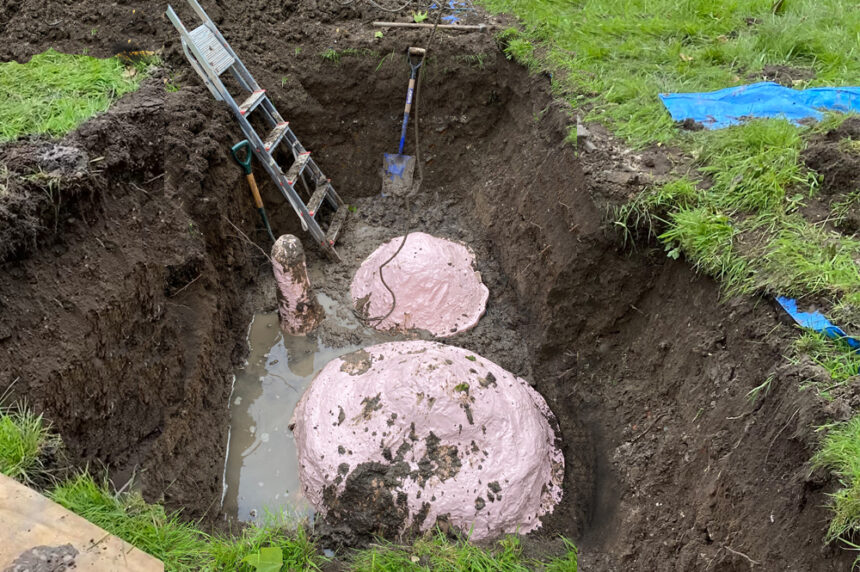
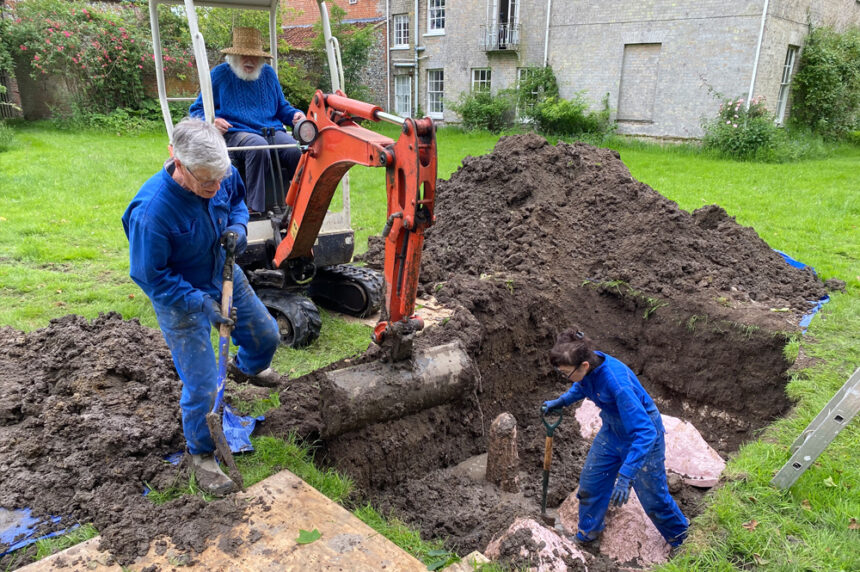
Digging a hole in the ground is a practical task. For millennia humans have dug holes for many reasons: to drain water from land; to lay foundations; to plant food supplies; deal with waste; make storage space, and to create space for tombs and graves.
 

In June 2002 during a residency at the European Ceramic Work Centre (EKWC), Dunhill and O’Brien posted a small ad in the Brabants Dagblad newspaper offering to dig holes for free. Five residents from the s’Hertogenbosch area invited them to their gardens, farms and allotments seeking holes for various purposes.
 

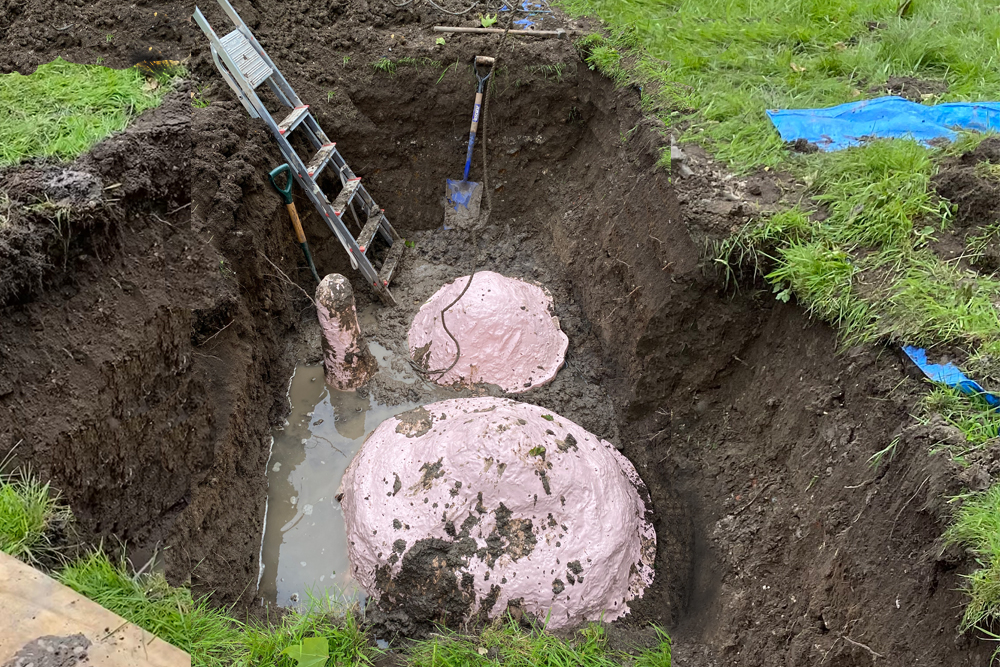
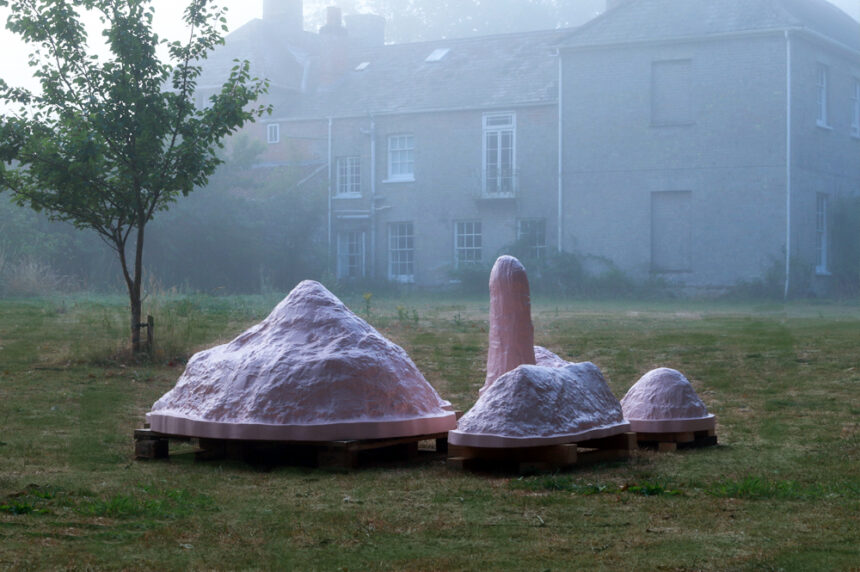
Each time Dunhill and O’Brien dug a hole they cast it in plaster. This resulted in a collection of inverted plaster objects documenting the impressions of their labour. Moulds were made of the resulting abstract sculptural forms and these were cast to become a group of large-scale ceramic sculptures made using locally sourced clay.
 

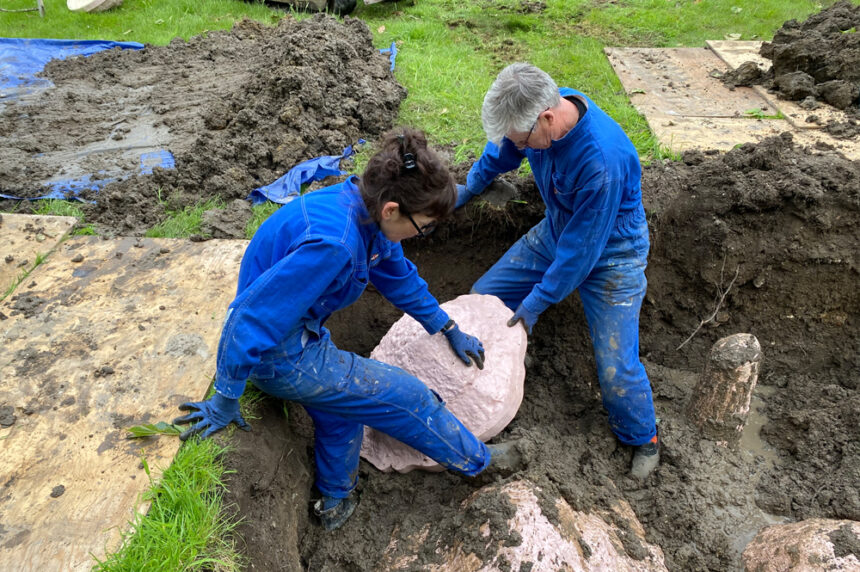
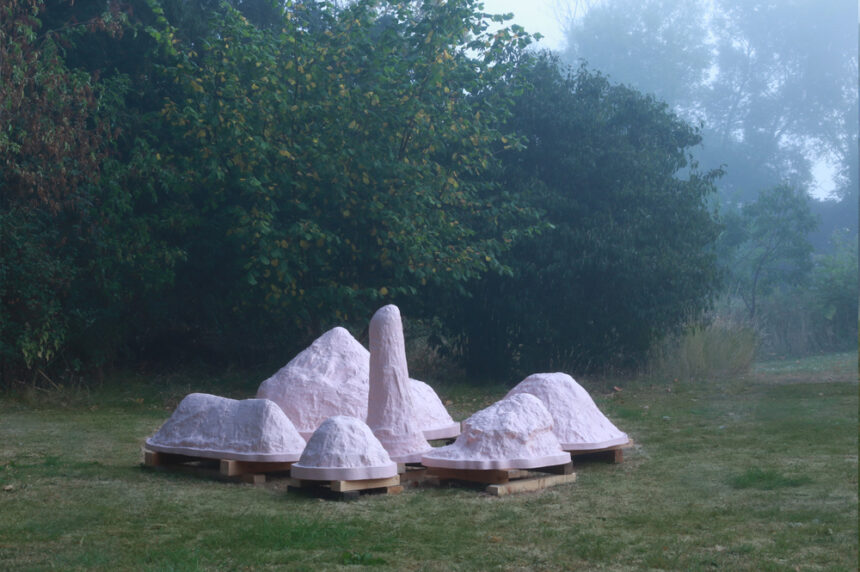
This artwork, HOLES II, was later transported to the UK where it was exhibited a few times before going into storage. In 2022 they were invited to temporarily site the work at the Grange in Norfolk, while they formed an intention to finally return the large multi part sculpture to the earth.
 

Fortunately, the owners of the Grange enjoyed the idea of taking ownership of a sculpture that remained out of sight, and contracts were drawn up to set out both the terms of ownership (i.e. that the artwork should remain buried for at least fifteen years) and the rights of the artists to a burial plot for the same duration.
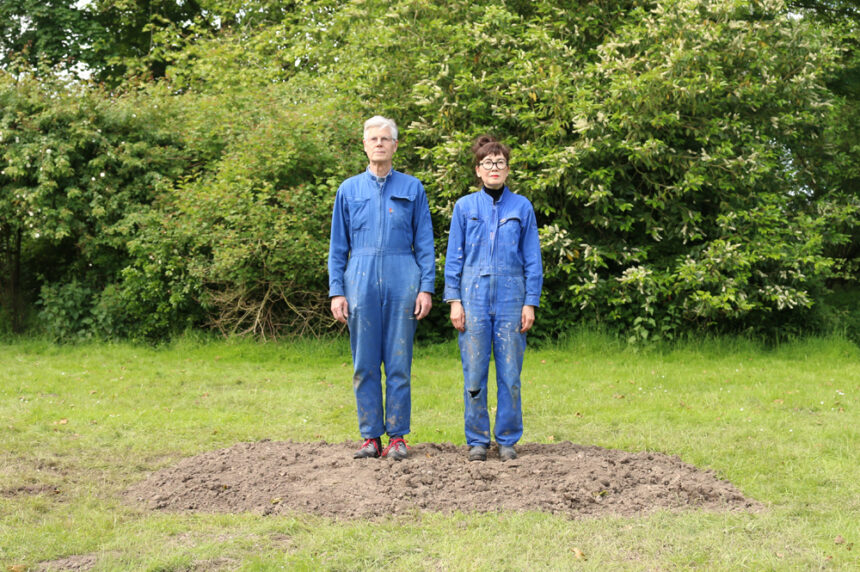
A commemorative plaque and wildflower planting can be visited at the site of the burial at the Grange. The ‘what 3 words’ location is: //bucket.tomb.shook
 

The commemorative booklet produced following the burial in July 2024 is available as a digital flipbook below.


NB. there were in fact two artworks resulting from the hole digging project in s’Hertogenbosch the other work, HOLES I, is documented here.
 

BAD IDEA

Posted on Format Gallery

Dunhill and O’Brien made the short video Bad Idea for the Bad Ideas Collective project curated by Kristaps Ancans and Alex Shady during the Lockdown of 2020.

The full series of Bad Ideas Collective short films can be viewed here alternatively you can watch Bad Idea below.


ANTHOLOGY

Posted on Format Gallery


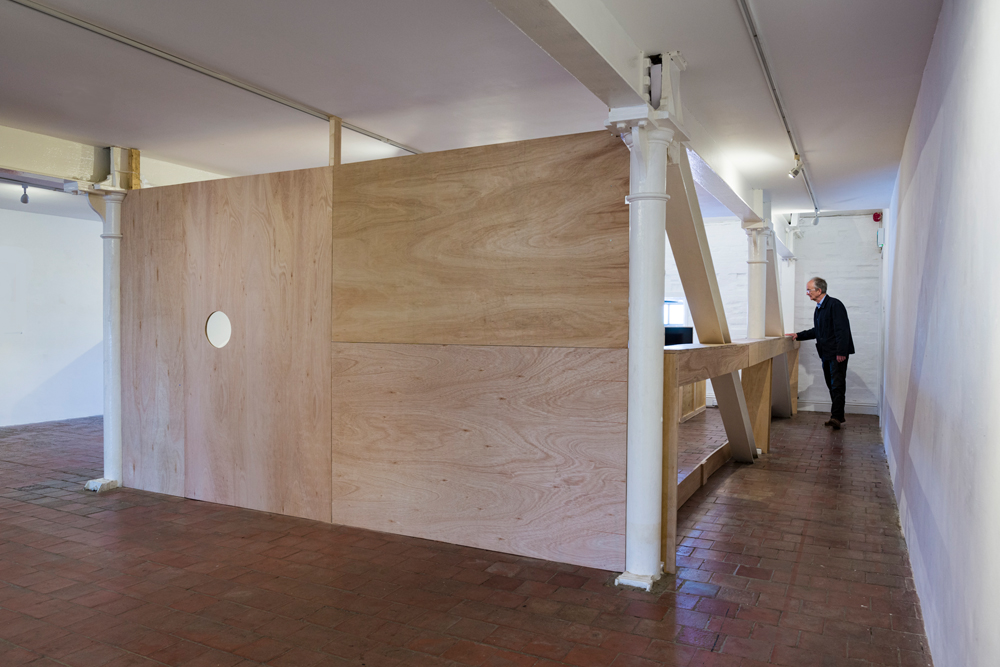
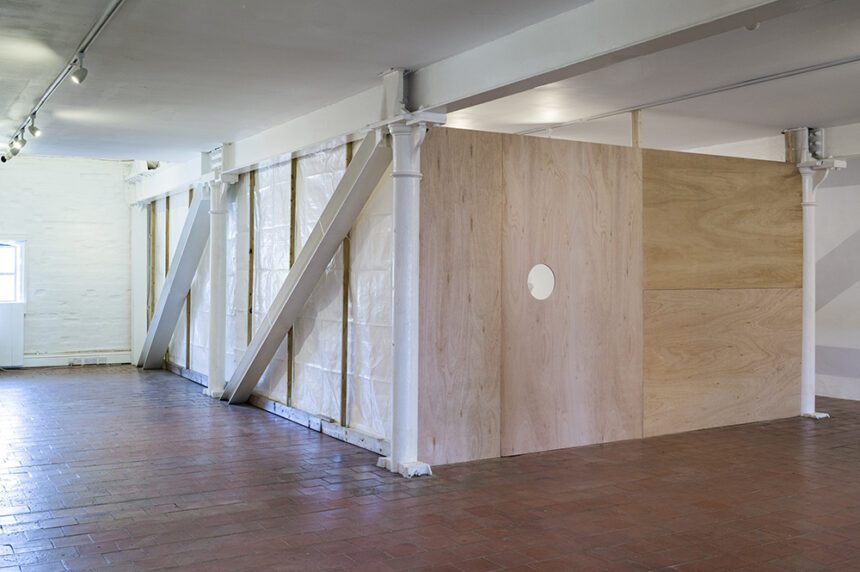
Anthology hovered somewhere between a storage shed, a reconstruction of an artist’s studio and a mini retrospective. It was made in response to a historic malthouse building and a small museum room adjacent to the gallery where scenes from the building’s former function were reconstructed.  

 
The works featured in Anthology related to Dunhill and O’Brien’s preoccupation with naturally formed rocks, stones and boulders.
In Western culture stones and rocks often have negative associations. But there are many other cultures where rocks are venerated and used as a focus for contemplation or pilgrimage. Dunhill and O’Brien have a longstanding interest in the Japanese tradition of Suiseki translated as the Art of Stone Appreciation, here something apparently lowly and ubiquitous is treasured and given great status.
Dunhill and O’Brien have long pondered over how they can best appreciate stones.
 

Image 1: View of shed like structure including a viewing hole
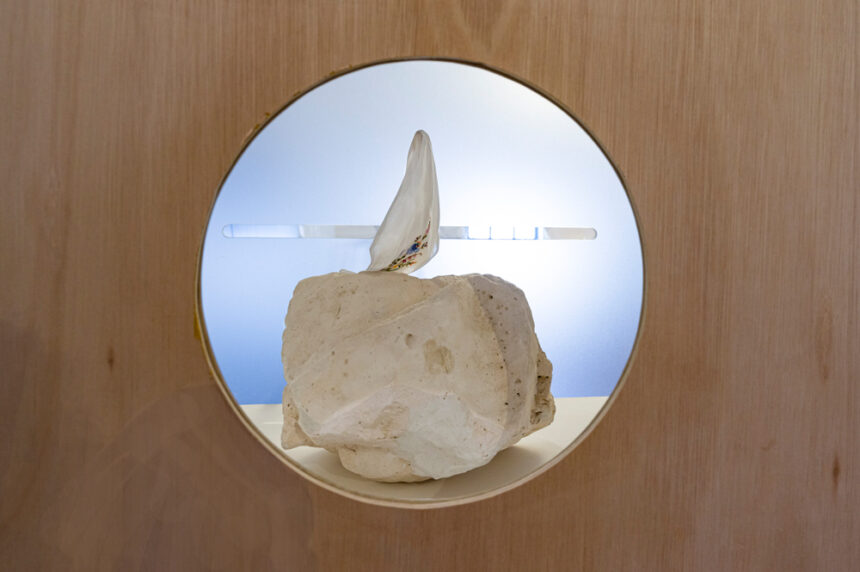
Image 2: View inside the hole of Grasp the Sparrow’s Tail
Image 3: View showing the corridor walkway created by the installation
below the main carousel
Image 4: View from the gallery entrance into the ‘back’ of the installation showing: Stone Appreciation 2; Examples in Sculpture; Balanced Rock: Stack; Grasp the Sparrow’s Tail and Erratic (still)

EIS WORK OUT

Posted on Format Gallery


EIS: work out (10 mins 41 seconds) was made for Danielle Arnaud Gallery’s online exhibition, 25 years. Made during the Lockdown in summer 2020 it relates to the work Examples in Sculpture made during a residency in Rome some twenty years earlier.


HIDE

Posted on Format Gallery

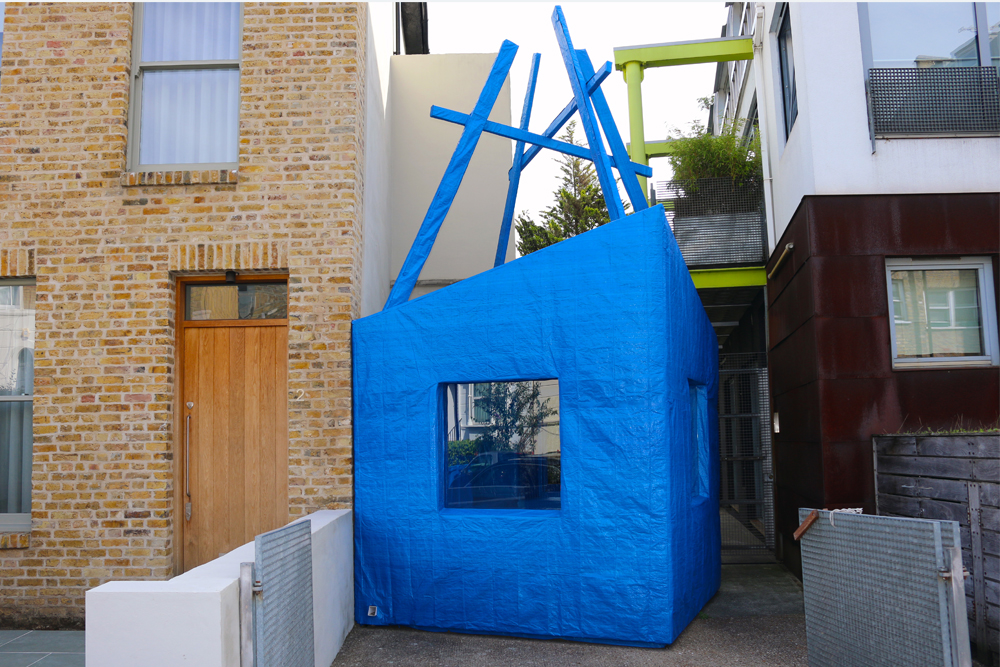
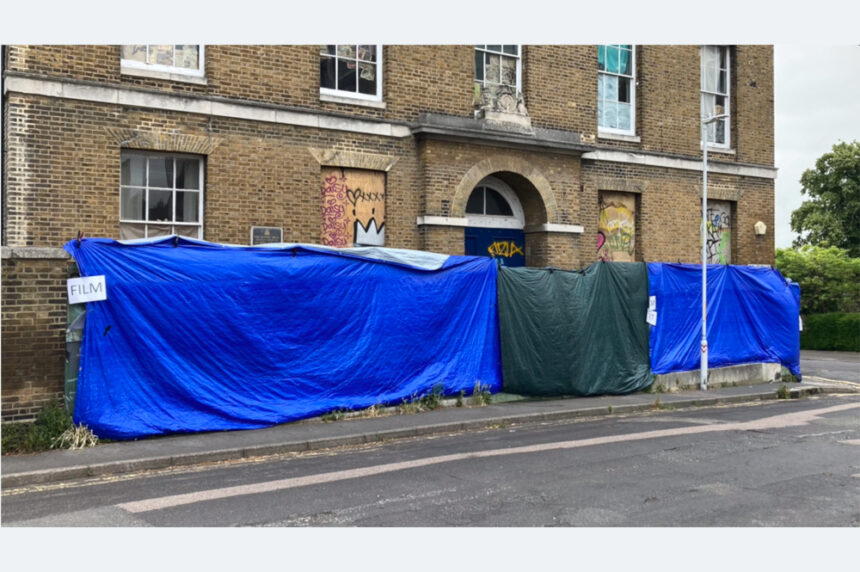
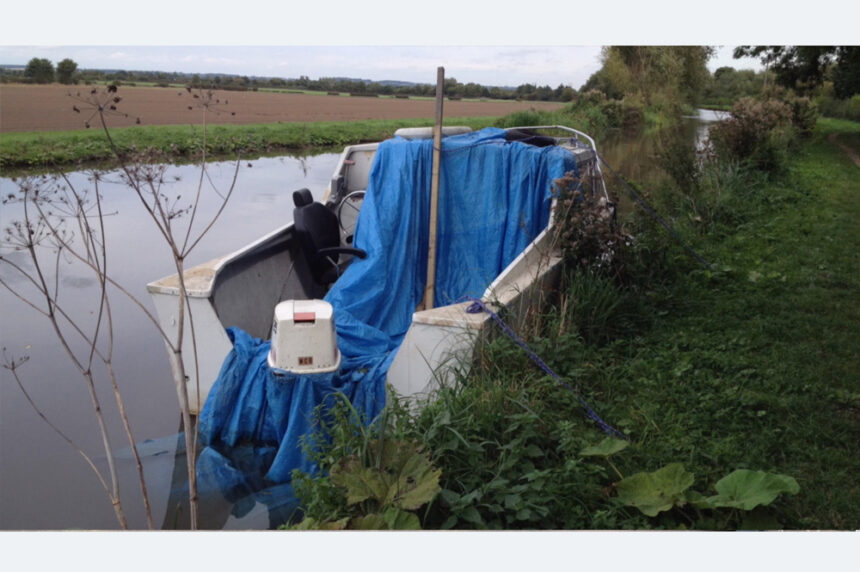
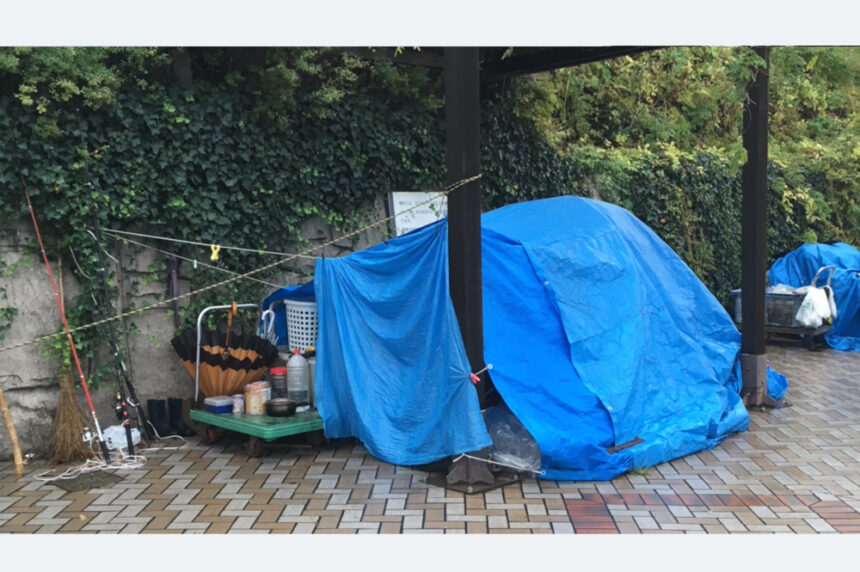
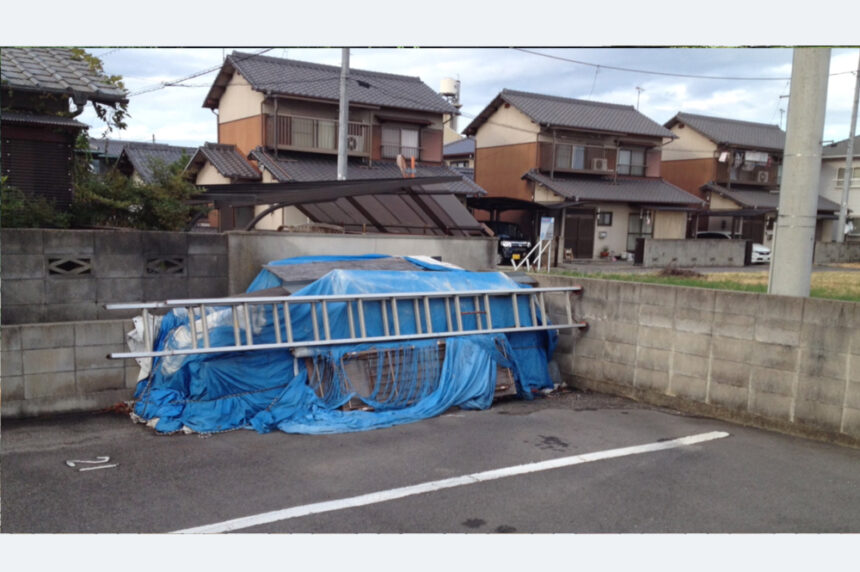
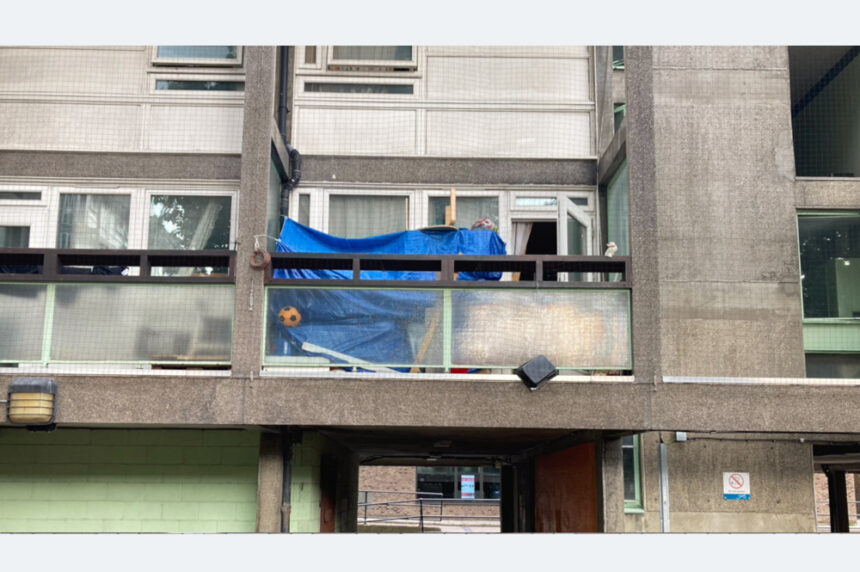
First invented in 1936 polyethylene is an oil-based material. Tarpaulins made of woven polyethylene went into production in the 1970s and are now used on a global scale, with blue tarpaulin as the most lightweight and ubiquitous.
 

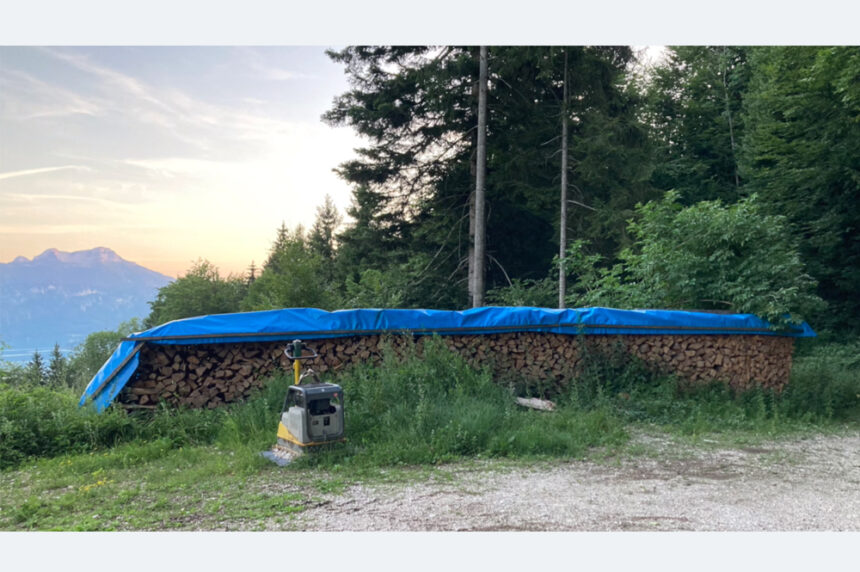
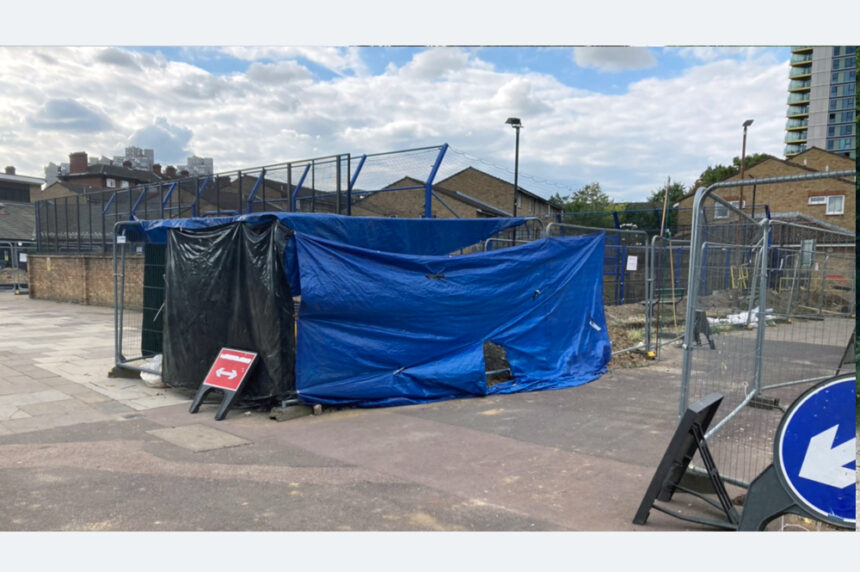
This vivid blue material that so frequently punctuates human habitations has become almost invisible. While providing covering and protecting objects, it hides them in plain sight while creating new and intriguing forms. It is the go-to material for keeping farming equipment dry; providing improvised shelter for post-disaster situations; covering stacks of logs, boats, and freshly made tombs; smothering weeds on allotments; keeping the possessions of homeless people dry; protecting sculpture packing cases in leaking storage units and weather-proofing random items transported on pick-up trucks.
 

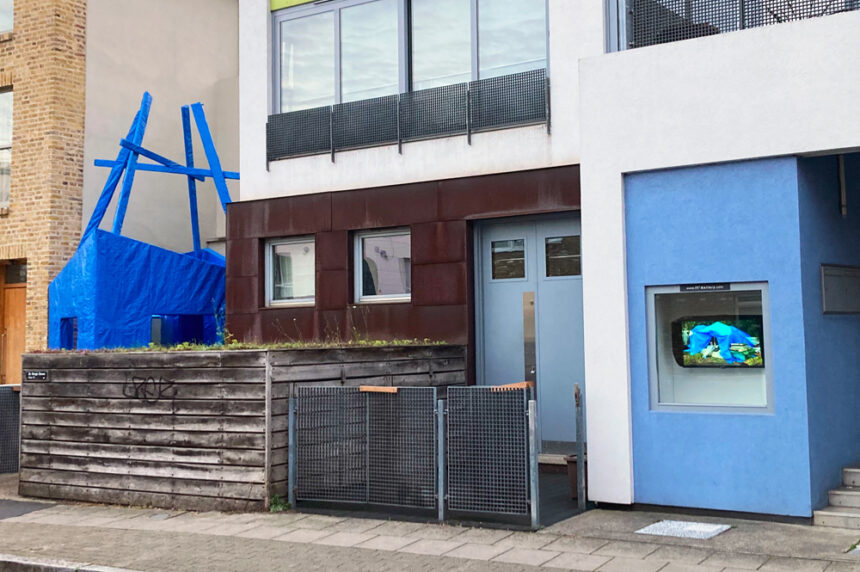
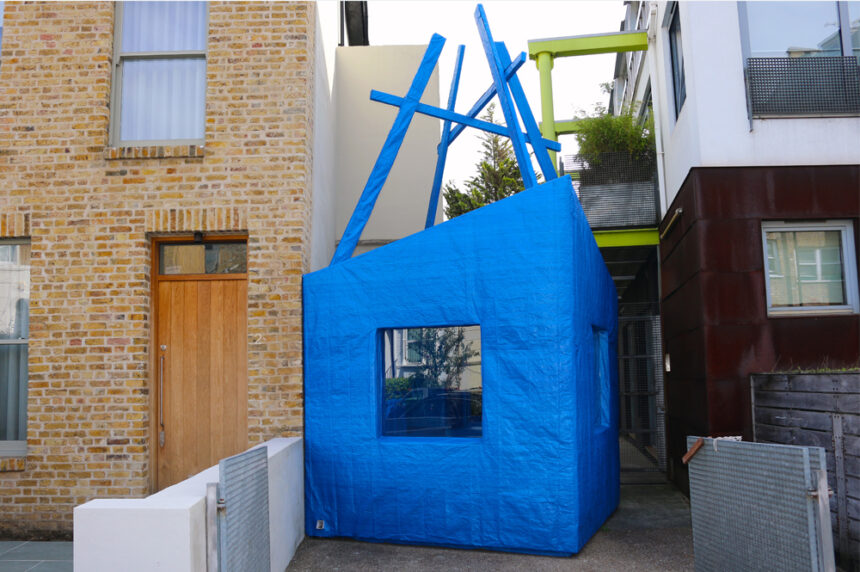
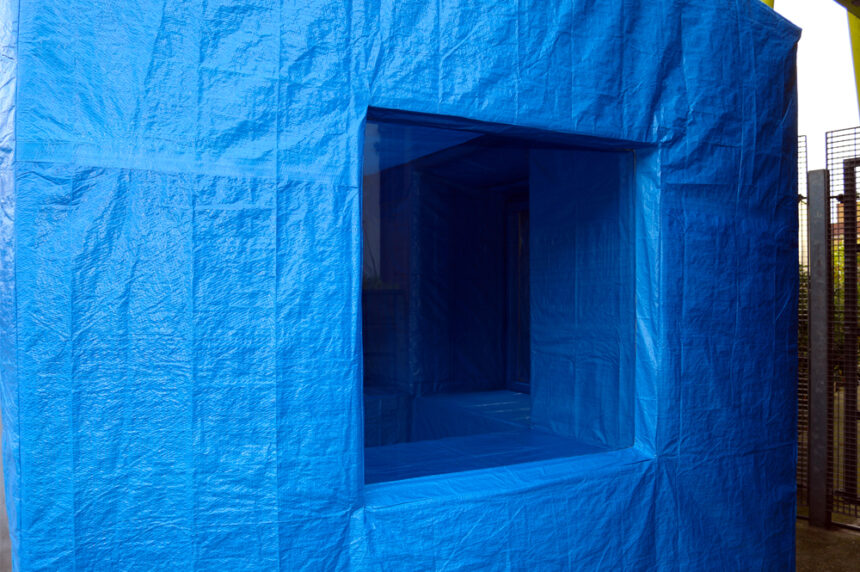
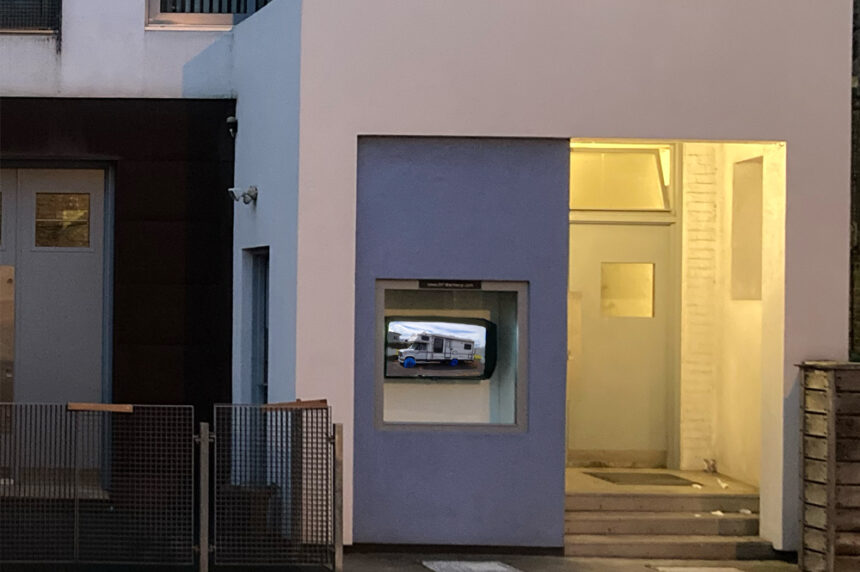
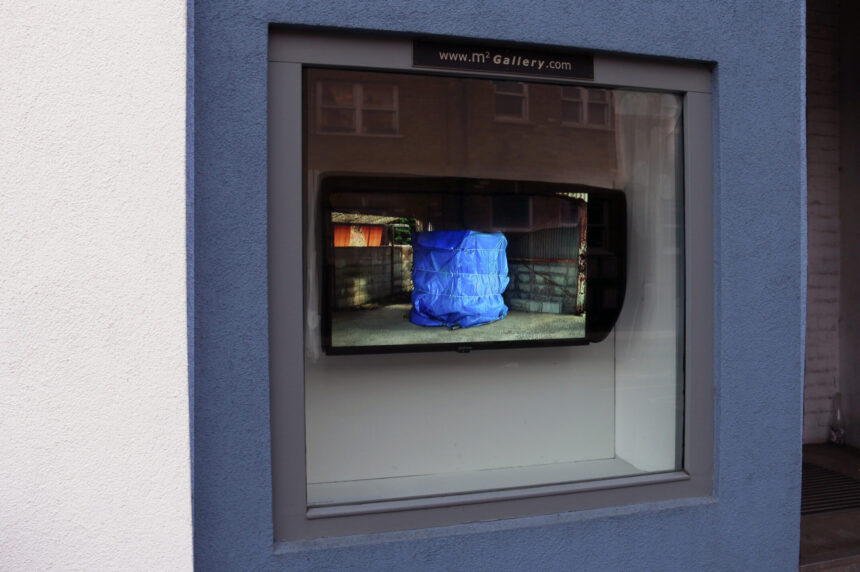
As an architectural object the m2 pavilion hovers between the private and public space of what could otherwise be a driveway. This unique and somewhat eccentric art space temporarily took a rest from presenting artworks in its vitrine windows for the duration of Dunhill and O’Brien’s exhibition. Instead, a tailor-made blue tarpaulin jacket covered all of its external and internal surfaces. Meanwhile, a film of their blue tarpaulin photographic collection was shown in the m2 window gallery.
 

The afterlife of this project will see the tarpaulin jacket packed and taken as luggage during a residency in Tokyo where it will be converted by thermochemical decomposition back to oil.
 

Images 1 – 3: Street views of HIDE at m2 pavilion (photo credits Andrew Watson)
Images 4-5: Window gallery with monitor screening HIDE
Images 6 – 12: Stills from HIDE video

MODERN OBJECT

Posted on Format Gallery

In 2021 peripatetic curator Sandie Macrae established her home off the Essex Road in London as PostROOM, making exhibitions in a functioning domestic space including her kitchen, dining area and garden shed. For their solo show Modern Object at PostROOM in November 2022, Dunhill and O’Brien made new works employing upholstered components to respond to the modernist style of the space and furniture while inserting a number of earlier works and objects from their collection.
 
Click here for a list of titles and other information.


From 750 words a week, a blog by art writer Paul O’Kane
 
“Most of their work reveals a head-on negotiation, not only with each other but with the underlying concepts and context of their duality, their ‘two-ness’ and their collaboration. This includes examination of the way that idea-production, conceptual refinement, design and manufacture all take place in an especially candid and visible arena once artists choose, or are forced to work outside the more private confines of a more typical practice.
Suffice to say that the works of these collaborating artists always provoke intrigue, fascination and amusement while often delivering a special and memorable sense of bathos. Dunhill & O’Brien also demonstrate that much humour tends to derive from such collaboration.”
 
photography by Andrew Watson