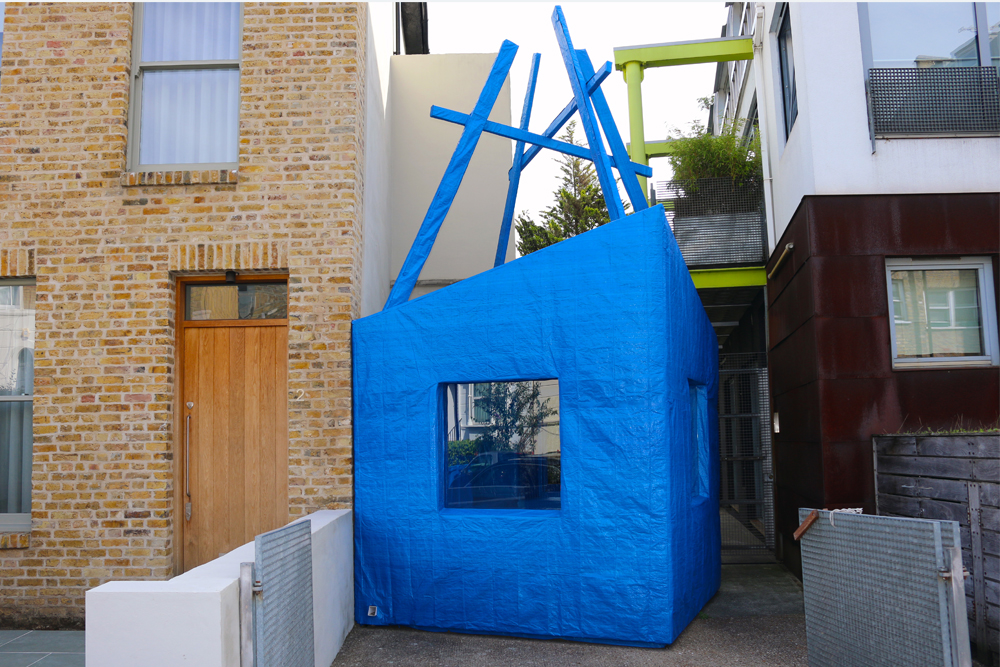
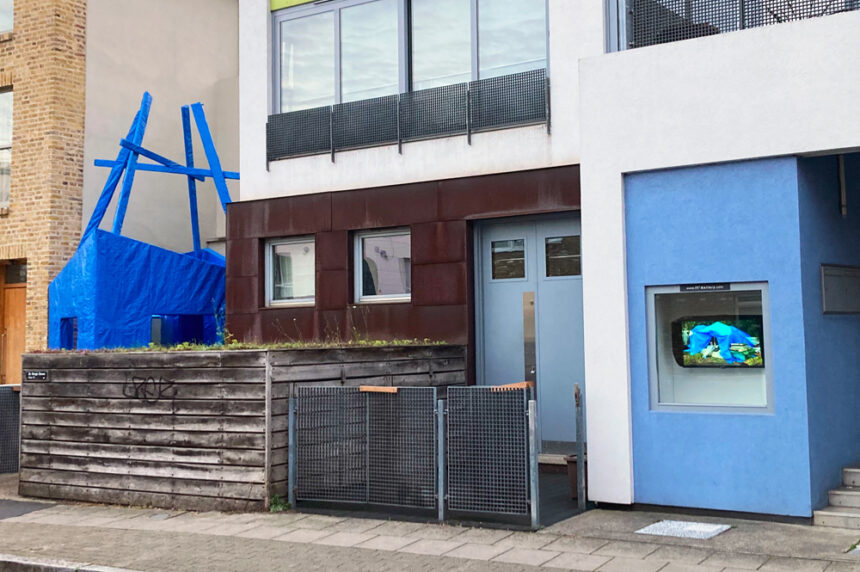
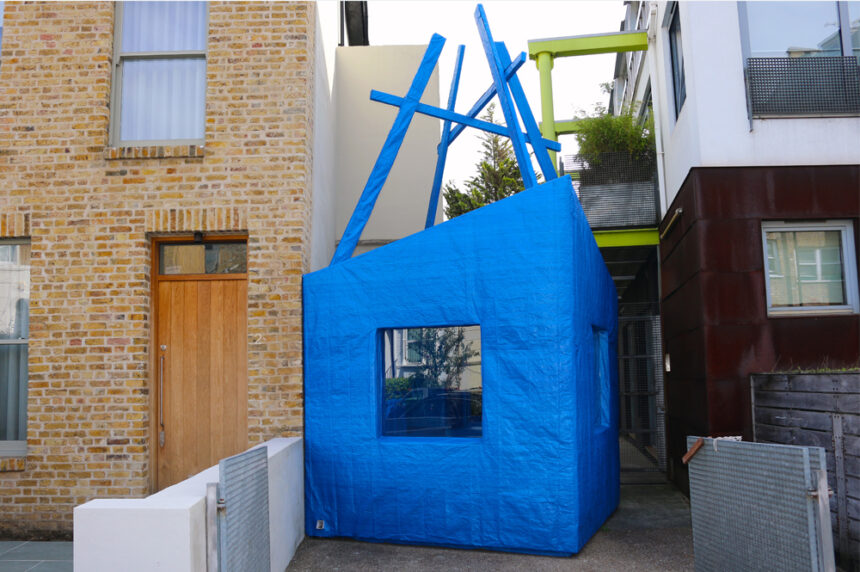
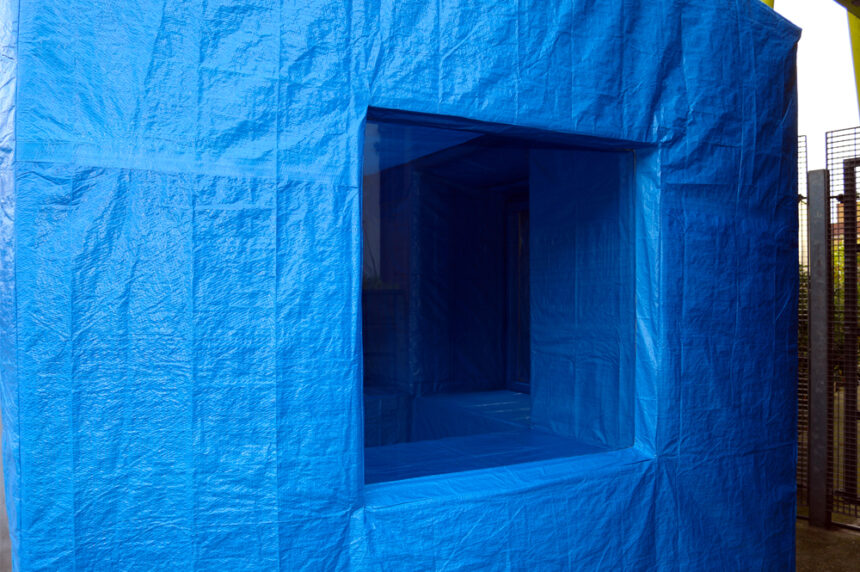
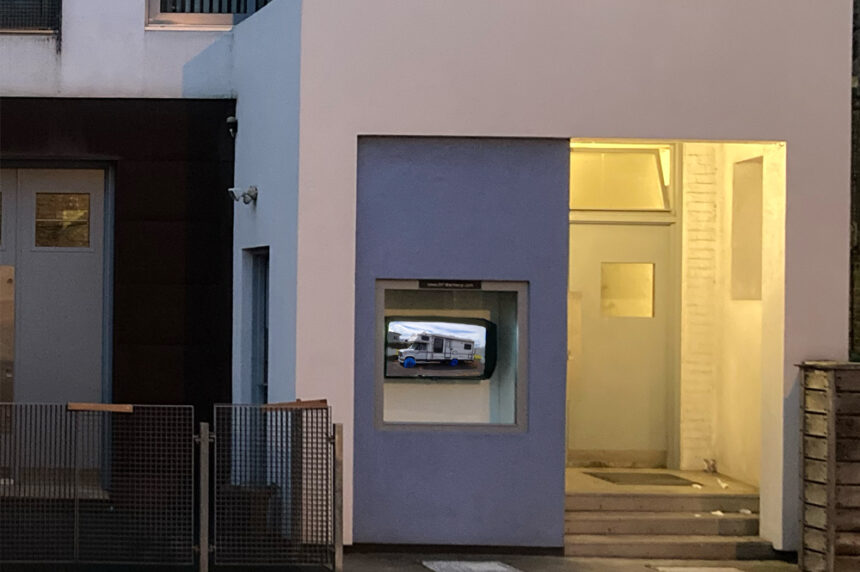
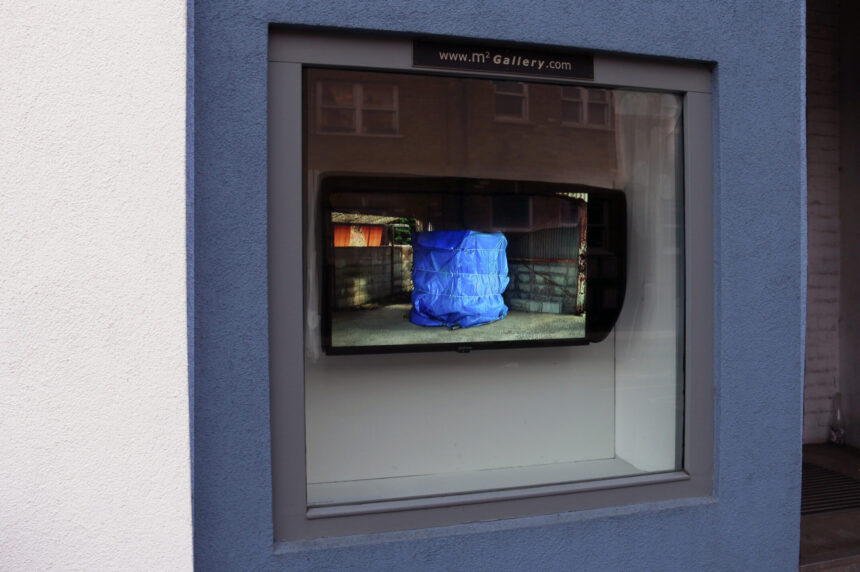
HIDE was made for m2, an architect-designed pavilion that hovers between the private and public space of what could otherwise be a driveway in Peckham. For the duration of the exhibition, the pavilion took a rest from presenting artworks in its vitrine windows. Instead, Dunhill and O’Brien crafted a tailor-made blue tarpaulin jacket that covered all its external and internal surfaces. Meanwhile, a film made from their growing collection of photographs of blue tarpaulin encountered on their travels was shown in the window gallery next to the pavilion.
Polyethylene is an oil-based material. Woven polyethylene tarpaulins are used globally, with lightweight blue tarpaulin among the most ubiquitous.This vivid blue material frequently punctuates human habitation while somehow remaining almost invisible. It covers and protects things, hiding them in plain sight while creating new and sometimes intriguing forms. It is used to keep farming equipment dry; provide improvised shelter after disasters; cover stacks of logs, boats and freshly made tombs; smother weeds on allotments; protect the possessions of homeless people; cover sculpture packing cases in leaking storage units; and weatherproof random objects transported on pick-up trucks.
The intended afterlife of the m2 pavilion jacket proved rather more complicated. Dunhill and O’Brien researched how the used tarpaulin could be reprocessed rather than simply discarded. Their eventual plan was to take it to Tokyo during a later residency and work with a laboratory using thermochemical decomposition to convert the polyethylene back into oil. The jacket was cleaned, cut into 30 cm squares, packed and transported to Tokyo, but changes to the residency schedule and other circumstances intervened and the process never happened. Eventually they accepted defeat and the material entered Tokyo’s recycling system.
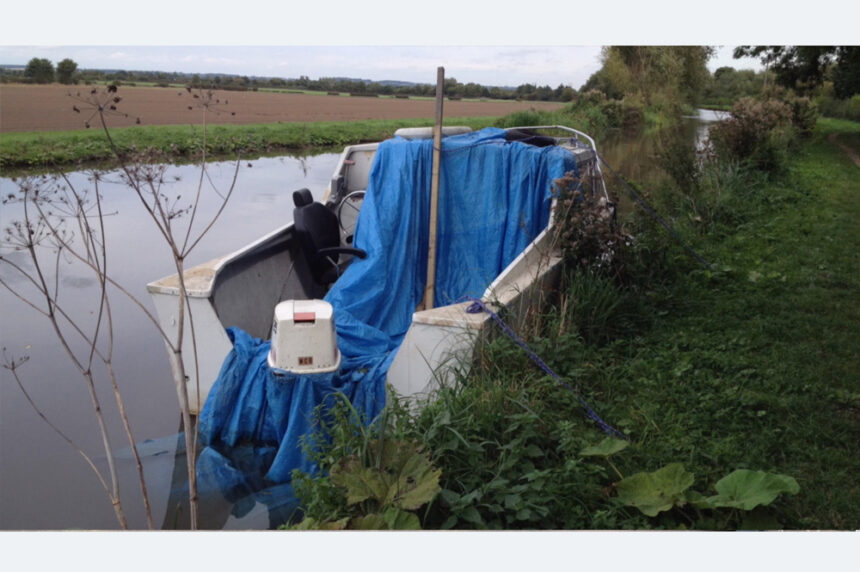
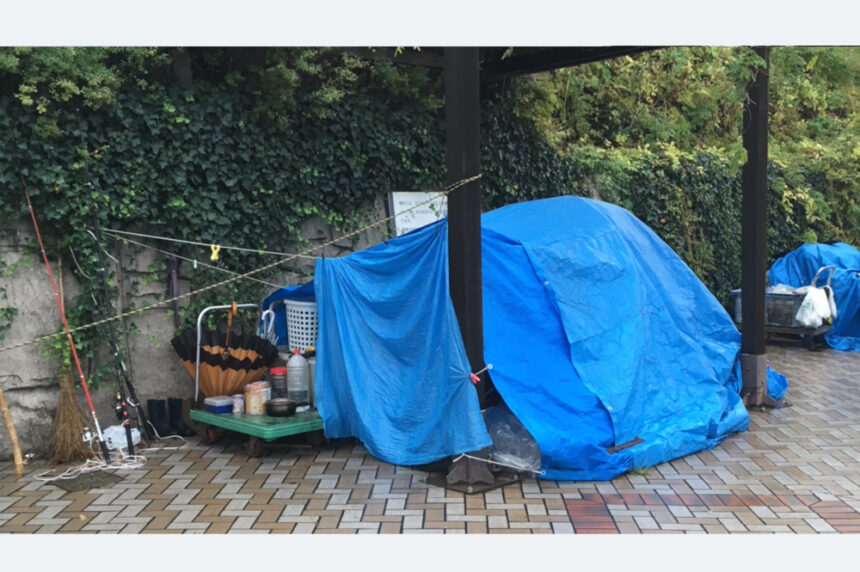
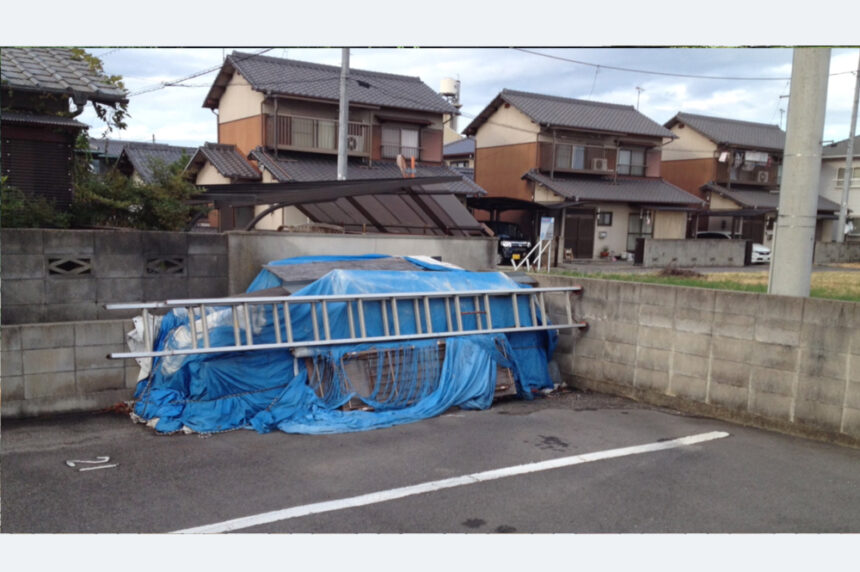
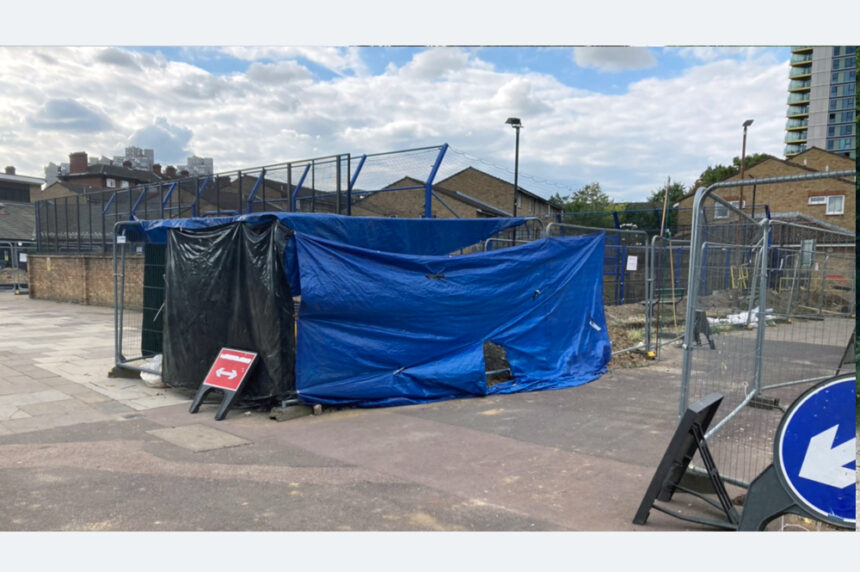
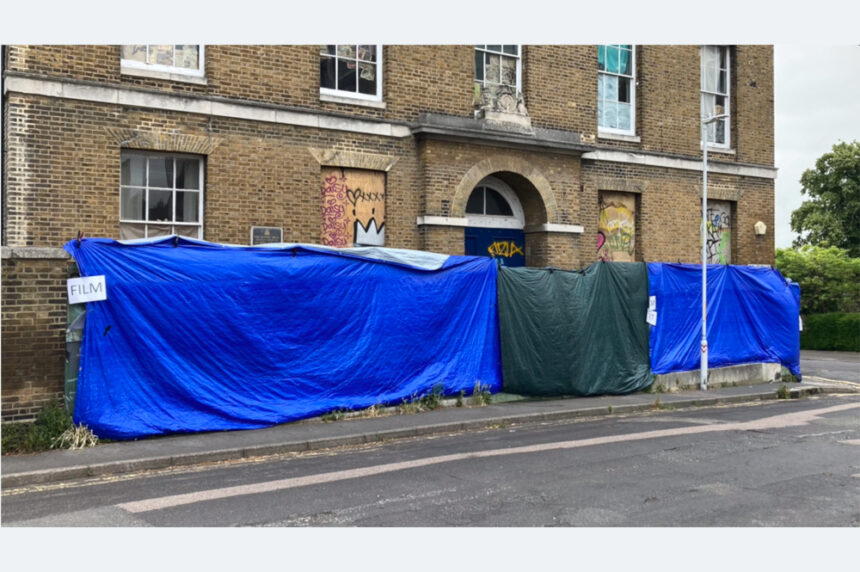
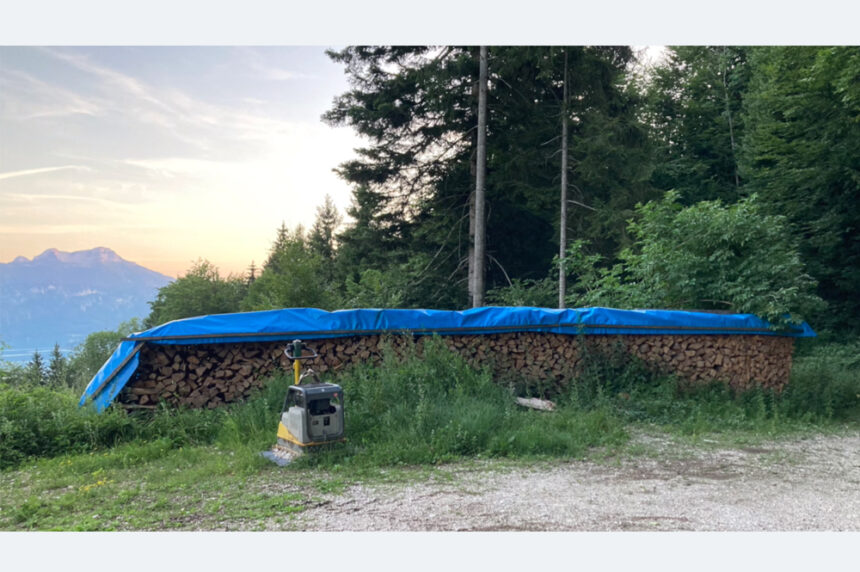
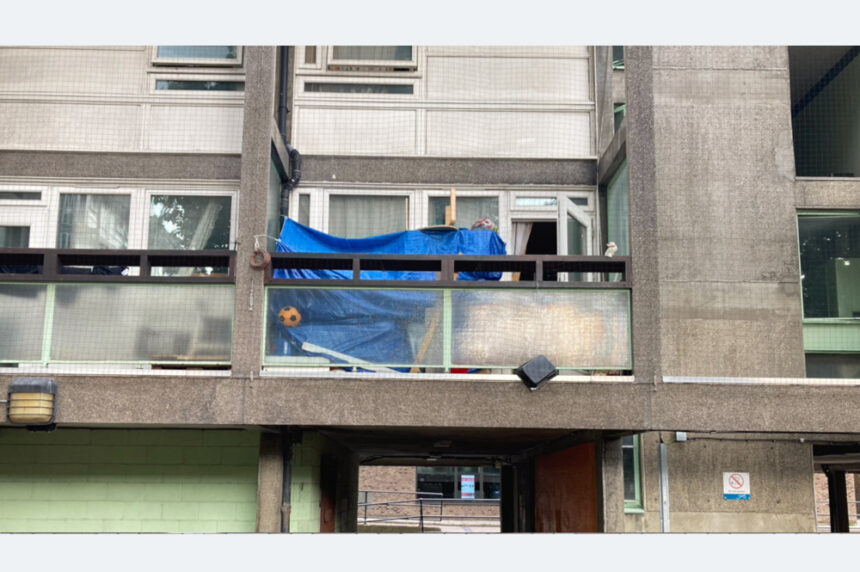
video stills from HIDE