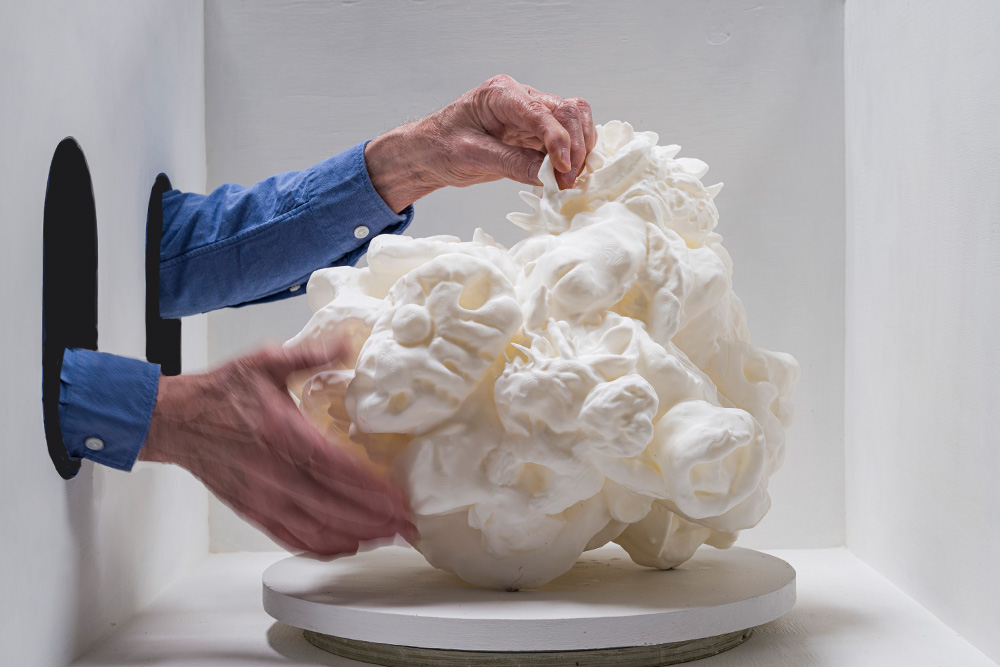
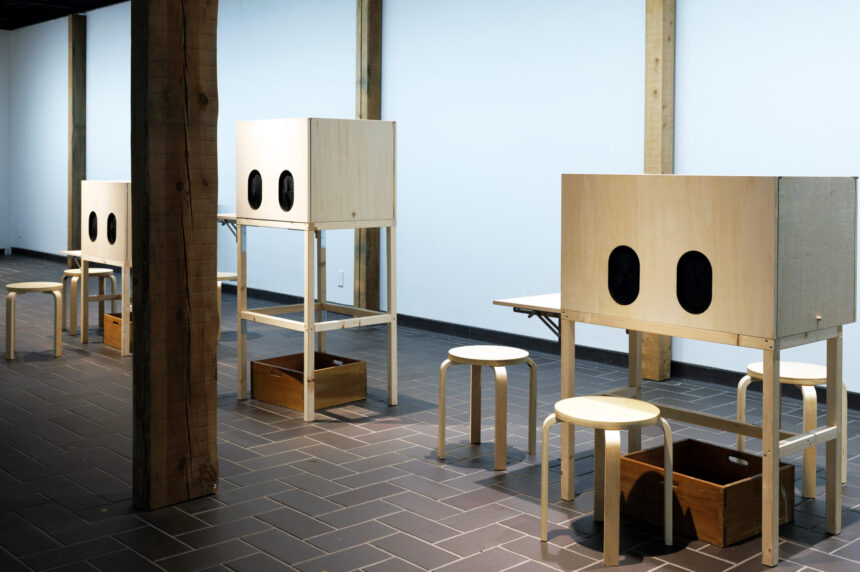
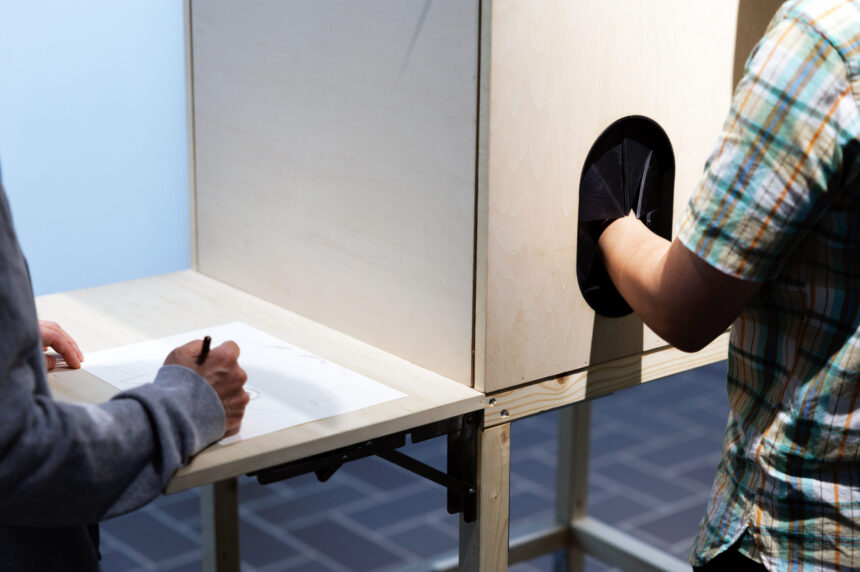
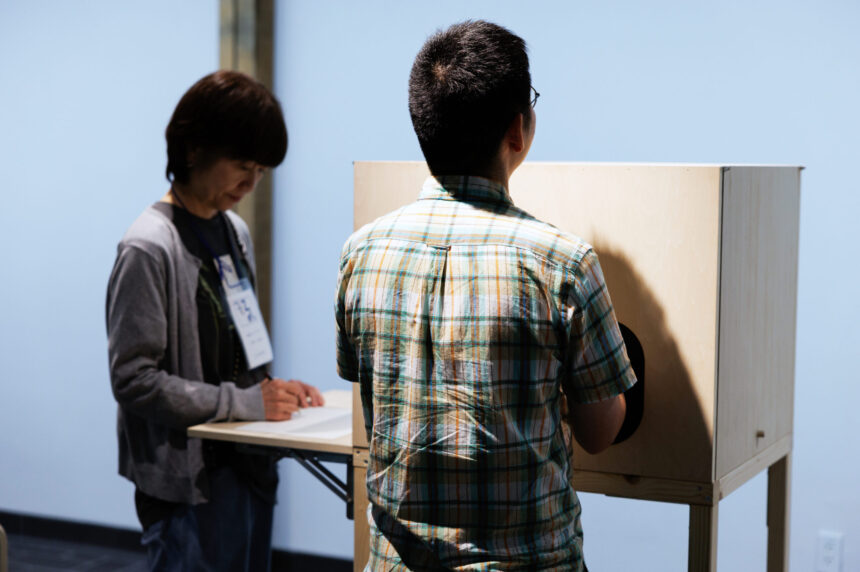
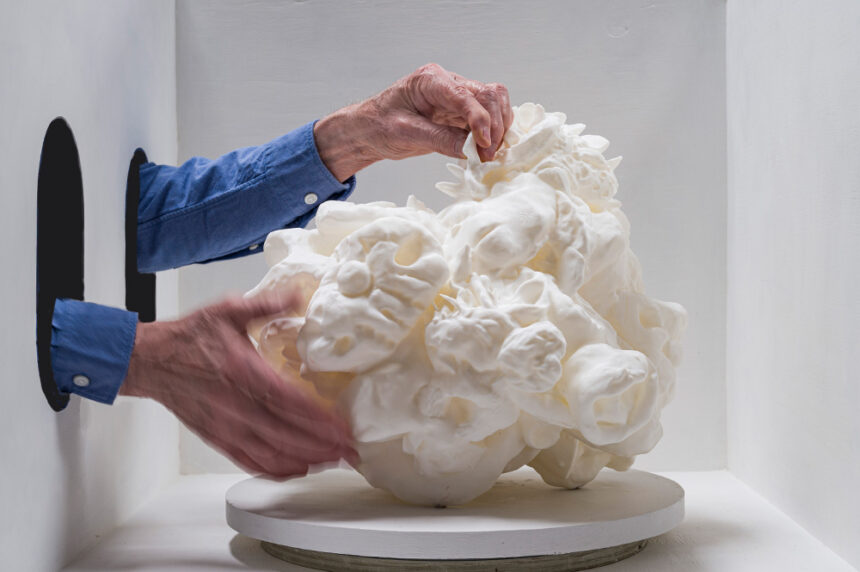
To accompany their large-scale installation MATA IROHA in the exhibition Pleasure in Making at Tokyo Metropolitan Art Museum, Dunhill and O’Brien created a series of smaller interactive works. Rather than asking visitors simply to look at sculpture, Feeling invited them to explore it through touch, conversation and collaborative description. Sited in a gallery space curated by the architectural labs Akihiro Ito and studiomegane, the following invitation was made to visitors:
“We have often overheard visitors to sculpture exhibitions mention that they would like to have a tactile relationship with the work, that they want to be able to touch it. We have even spotted some people quietly reaching out to feel a sculpture when the invigilator’s back has been turned.
We invite you to explore some forms before or after seeing them in the next-door gallery. Please take your time – these are complicated objects that have some pointed details as well as softer undulations. We recommend that you move your hands gently and with some caution over the surface while you become familiar with their varied shapes and textures.
If you would like to take this experience to the next level, you could collaborate with a friend or another exhibition visitor. Try describing the object you are feeling in words so that they can make a drawing, why not take it in turns. There are some paper and pencils provided for this purpose…”
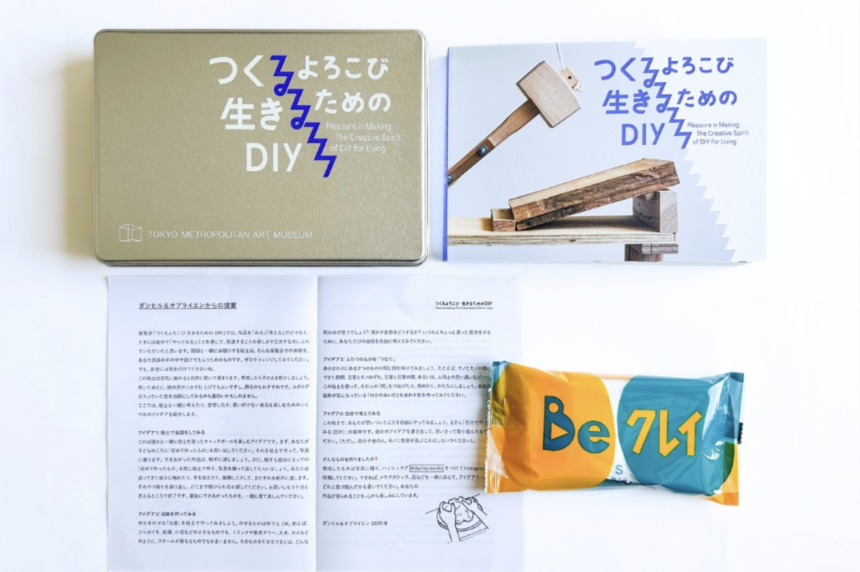
The invitation extended beyond the gallery. Each exhibition catalogue contained a pack of air-drying paper clay together with suggestions for making, allowing visitors to continue the experience of handling and thinking through sculpture at home.
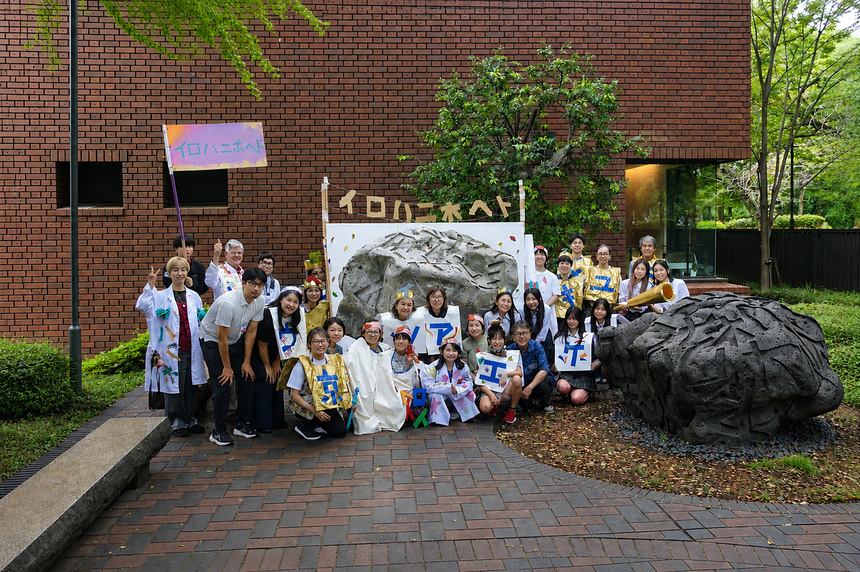
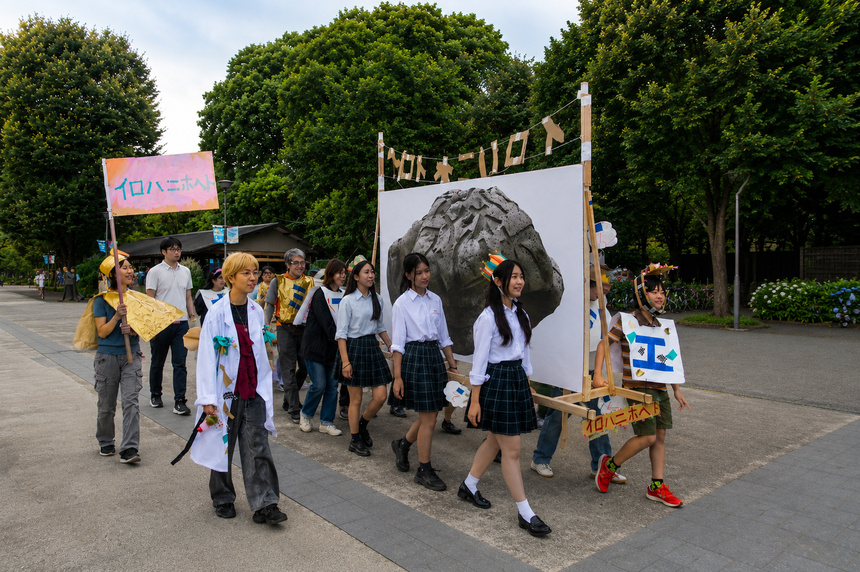
A half day public workshop resulted in the Iroha Parade, another way of appreciating Mogami’s sculpture. Working with recycled materials, participants of all ages made costumes and improvised artefacts, and worked with a portable structure carrying an image of the sculpture. Together these were taken in procession from Tokyo Metropolitan Art Museum into Ueno Park and back again.
The parade drew on Dunhill and O’Brien’s longstanding interest in processions in which sculpture and other significant objects are transported. From local carnivals and religious festivals to civic celebrations, these events shift sculpture away from the distance of contemplation. Instead, it steps away from its perch and enters the crowd, where it may be carried, jostled and even manhandled.
with project support from the Tokyo Metropolitan Art Museum and the Daiwa Anglo-Japanese Foundation