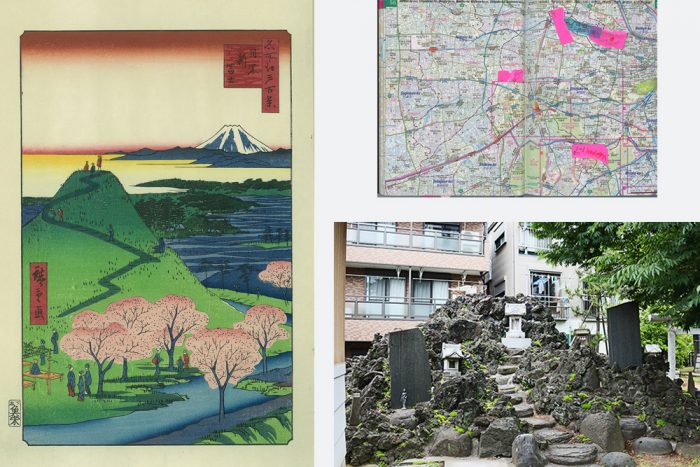
Dunhill and O’Brien’s first residency in Japan took place at Youkobo Art Space in Tokyo during a sweltering summer. They arrived wanting to climb Japan’s sacred mountains, but also with the nagging sense that a residency ought to involve maximum time devoted to working in the studio.
At the same time they became fascinated by the extraordinary range of tools, gadgets and specialist accessories available in Japanese hardware shops, and by the elaborate etiquette surrounding footwear: shoes continually removed and replaced by different kinds of indoor slipper depending on where one was permitted to walk. This combination of mountain longing, practical ingenuity and the urge to be productive presented a useful quandary. If they could not spend all their time climbing mountains, perhaps they could devise tools with which to experience Japan’s mountainous topography in the studio instead.
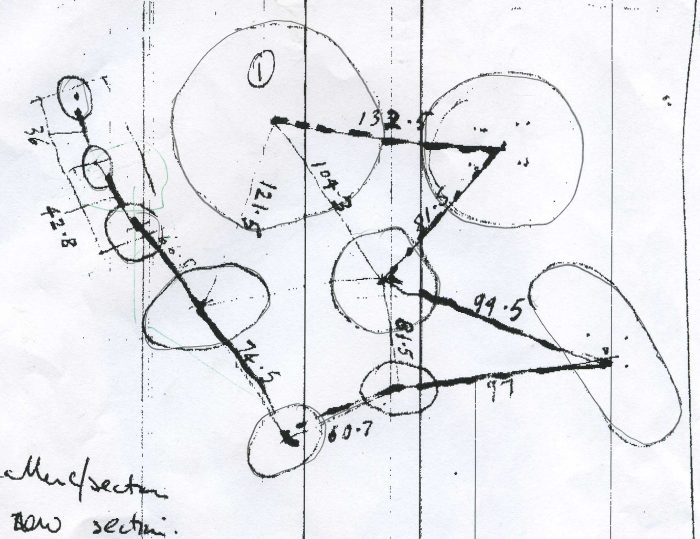
They made a pair of highly impractical geta whose soles were based on the contours of two different Japanese mountain ranges. Because the gallery’s wooden floor could not be walked on in outdoor footwear, the clogs required a territory of their own: a specially built platform on which the clay modelling could take place.
Dressed in white paper overalls and tabi socks, and using bamboo staffs simply to remain upright, Dunhill and O’Brien had twenty minutes to transform a carefully prepared, smooth mound of clay using only the soles of the geta. The procedure was tightly controlled, yet the treatment of the clay was deliberately perverse — kicking, pressing and grinding a material more usually handled with care. Each artist was effectively modelling with a different mountain underfoot, while simultaneously interfering with what the other was trying to make.
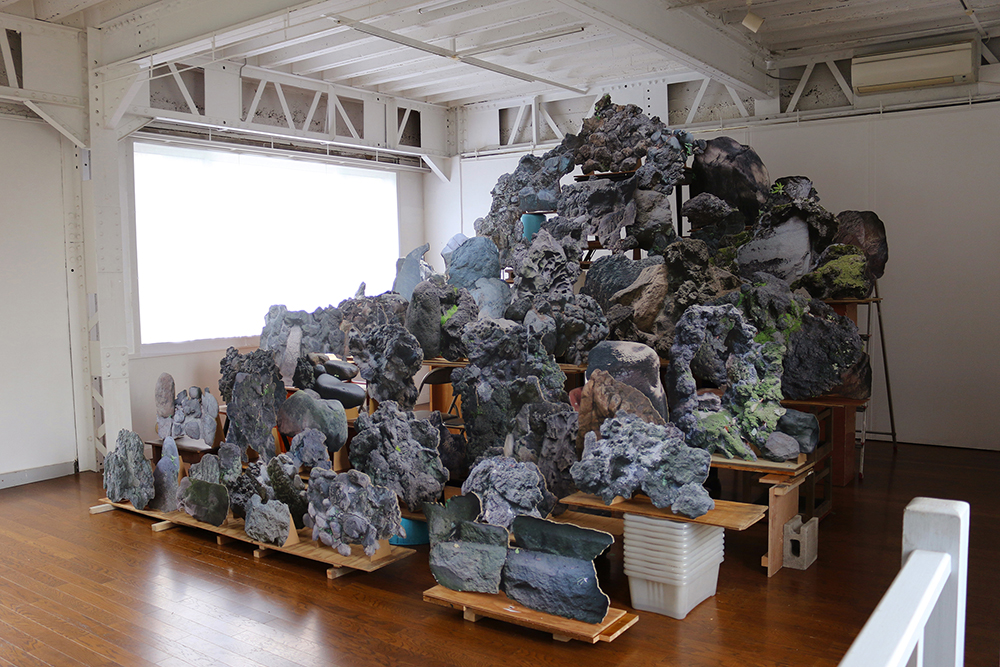
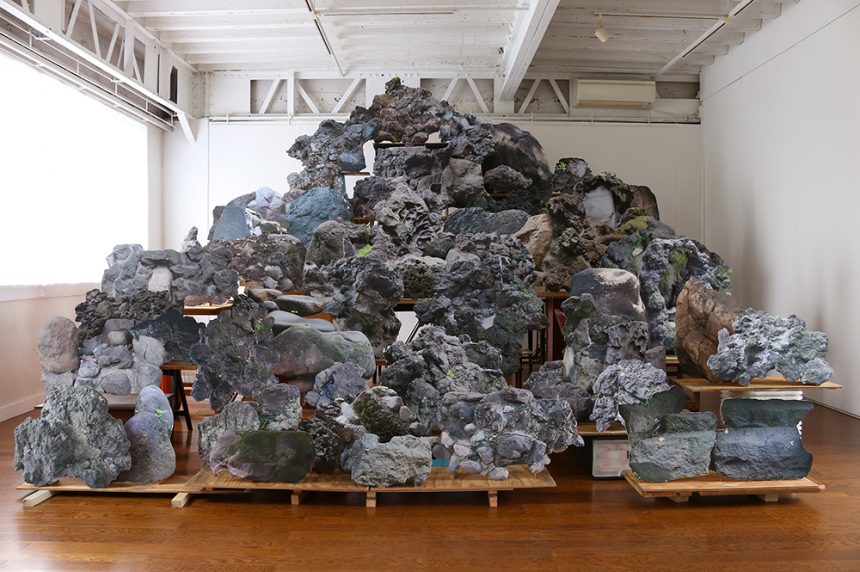
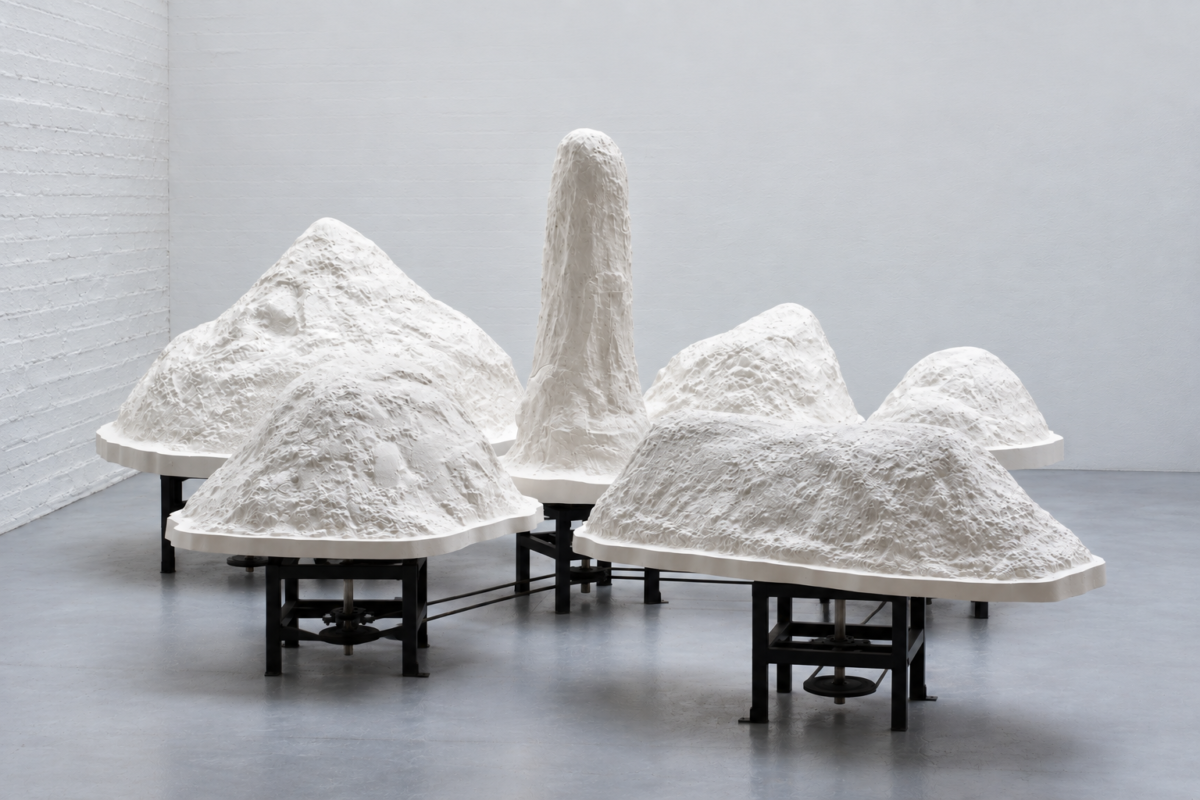
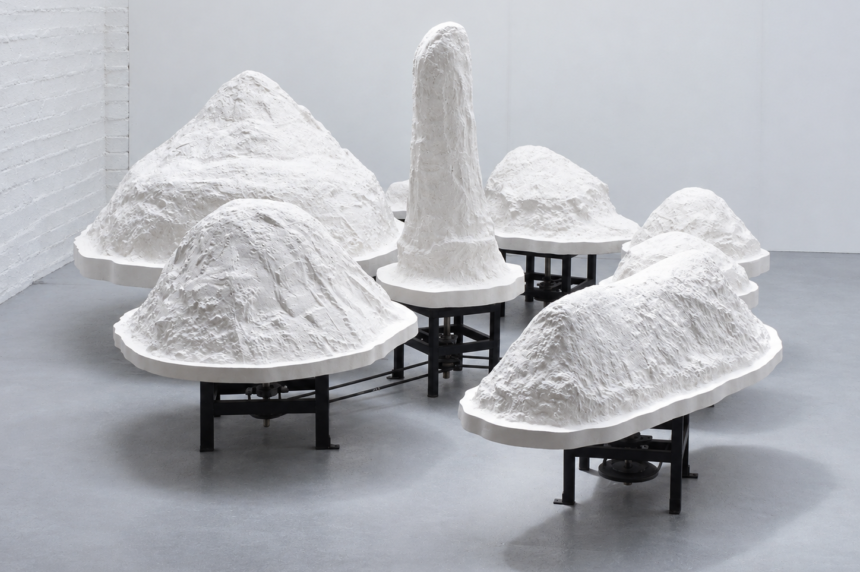
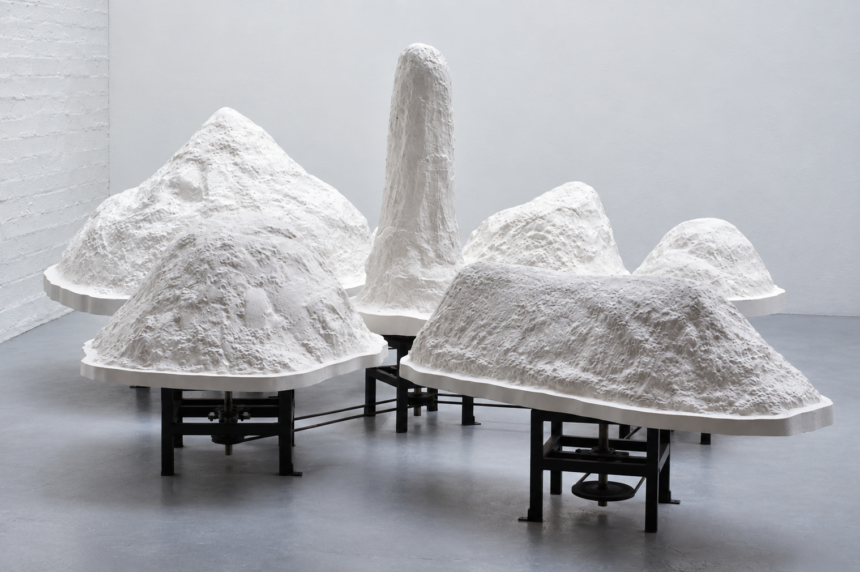
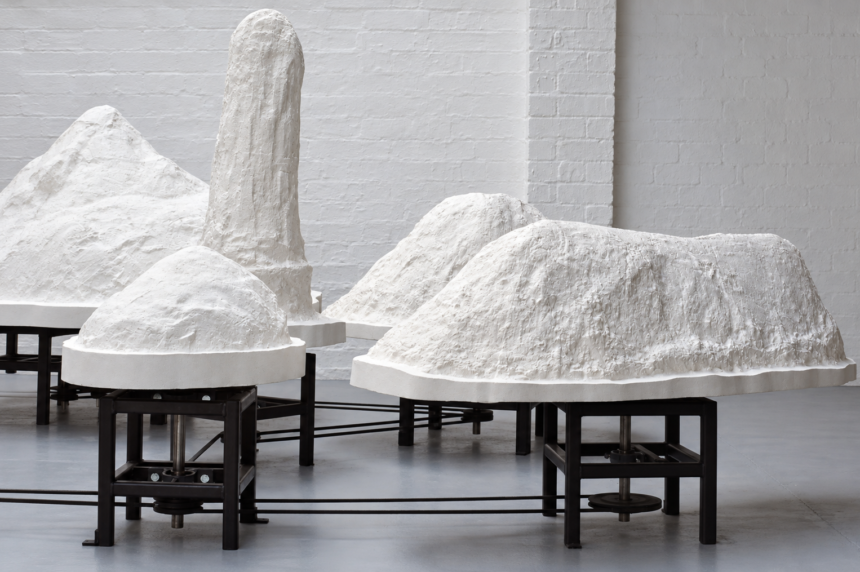
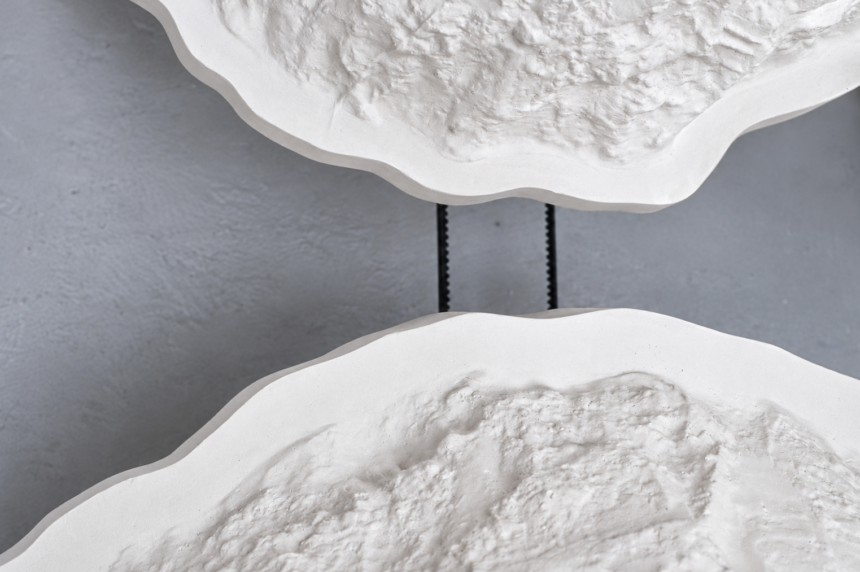
The resulting Mountain Object was therefore less a representation of a landscape than a small-scale contest between two of them. The installation brought together the clay form, the geta, staffs and other apparatus used in its making, alongside a video of this precarious and increasingly competitive encounter.
This project was made possible thanks to the support of Arts Council England and a research grant from the University of the Arts London.