HOLES II

Posted on Format Gallery

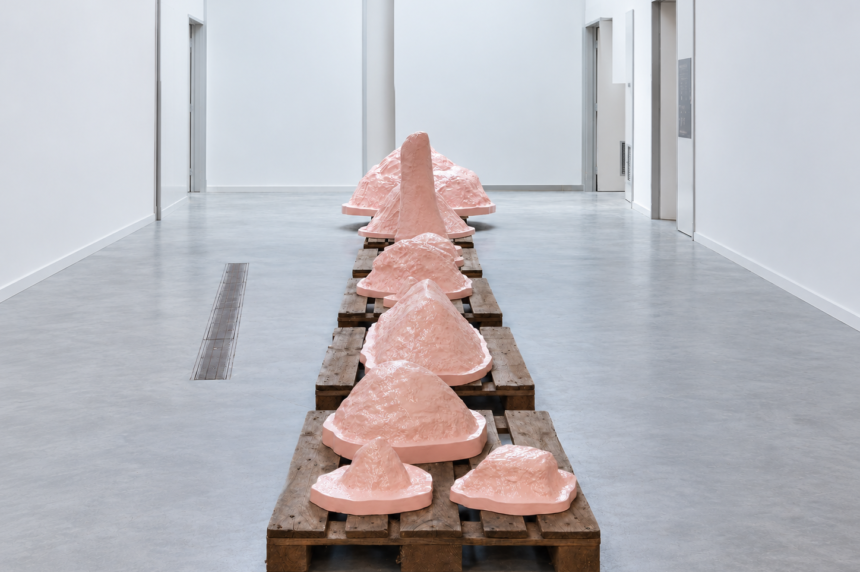
Dunhill and O’Brien’s residency at the European Ceramic Work Centre produced two works from the same initial fieldwork: advertising in a local newspaper as artists who would dig holes for free, then visiting local gardens, allotments and farmland to dig and cast the holes people actually required.
 
Once the casts had been made, Dunhill and O’Brien found themselves with two quite different ideas about what should happen next and, unable to agree on which to pursue, decided to make both.
 
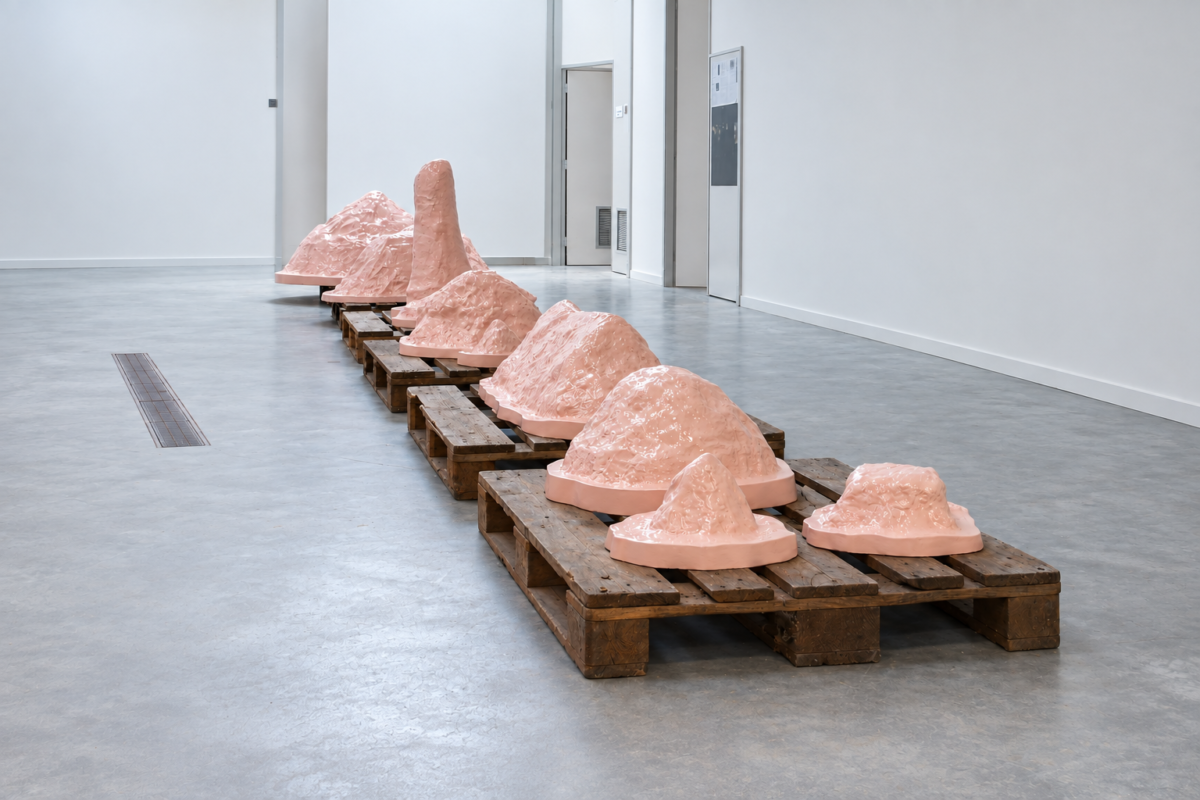
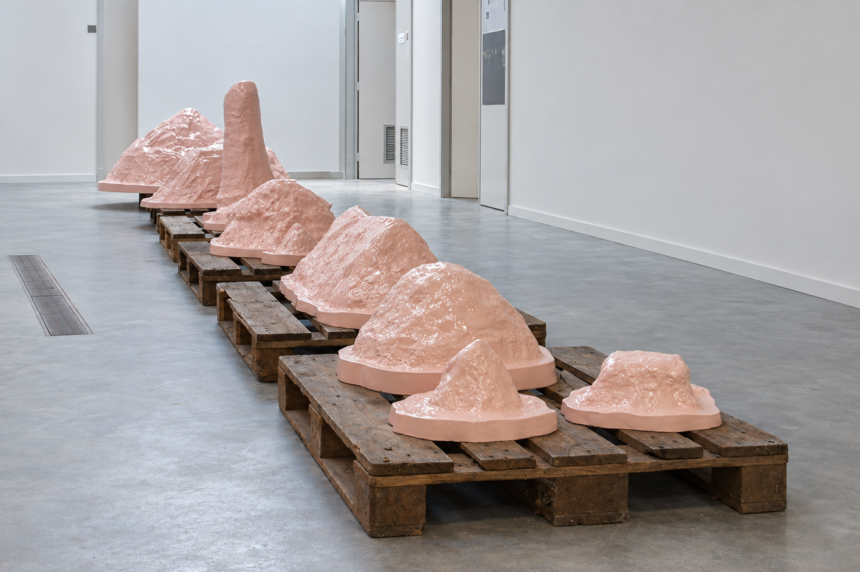
For Holes II, the opportunity of working with clay — and the inevitability of firing and glazing it — got the better of their more practical instincts. The large kilns at EKWC set the scale for the biggest form, based on a hole dug for a local farmer.
 
Where Holes I remained in constant movement, Holes II became heavy, static and emphatically material, its inert mass slightly contradicted by a sugary pink glaze.
 

This project was supported by South West Arts and University of the West of England.

USEFUL BENCH

Posted on Format Gallery

Useful Bench developed from an attempt by Dunhill and O’Brien to collaborate on small clay sculptures. They constructed a long bench that allowed a clay form to travel between them via a pulley, each artist given twenty minutes to work before it was conveyed to the other end.
 
Faced with a form already partly modelled by the other, each repeatedly altered and defaced it until it felt recognisably their own again. Unsurprisingly, they were also unable to agree on when the sculpture was finished, each preferring their own most recent version.
 
Useful Bench became a souvenir of this process. At timed intervals, a plasticine lump travels almost imperceptibly slowly along the shelf, taking twenty minutes to reach the opposite end. As it moves, its shadow passes between the two artists, becoming almost as present as the lump itself, while a miniature billboard carries a projected image of them at work.


This work was one element in Dunhill and O’Brien’s project Holes & Other Undertakings supported by Nottingham Trent University.

GATES

Posted on Format Gallery

During a residency at the British School at Rome, Dunhill and O’Brien became fascinated by the slow, stately movement of the electric gates behind the studios — a pace that seemed noticeably at odds with almost everything else in Rome.
 
Rome’s foreign academies and institutes each function as cultural outposts, established to support the study of the city while also representing their own national culture. Dunhill and O’Brien began to notice that many of them also possessed rather fine examples of slow-moving electric gates.
 
With varying degrees of success, they sought permission to film them. The American, French and Egyptian Academies declined on security grounds. Those that agreed were filmed opening and closing without any traffic passing through: once from the outside looking in, and once from the inside looking out.
 
As the gates repeatedly opened and closed, the viewer’s position shifted between outsider and insider, audience and participant. There was a certain collector’s enthusiasm to the exercise, but the differences between the institutions — including who was willing to let the gates be filmed at all — inevitably became part of the work.

CONVEY

Posted on Format Gallery

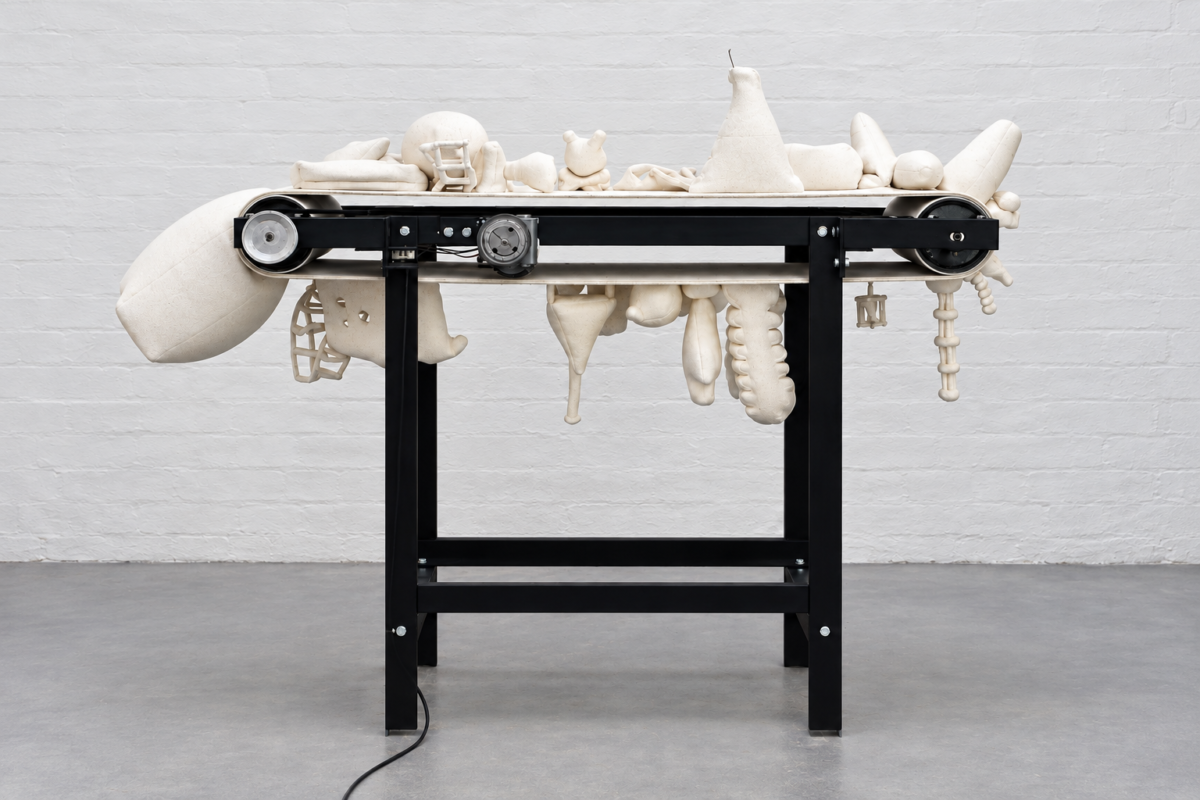
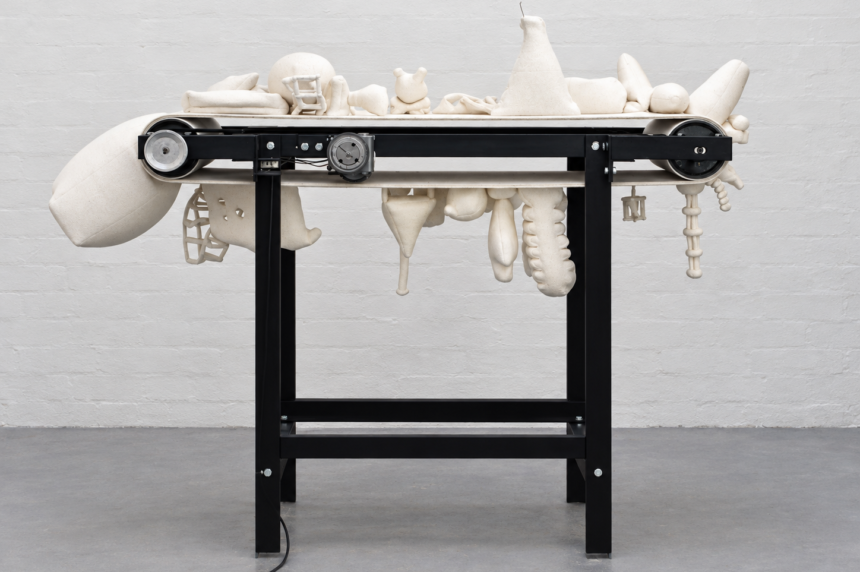
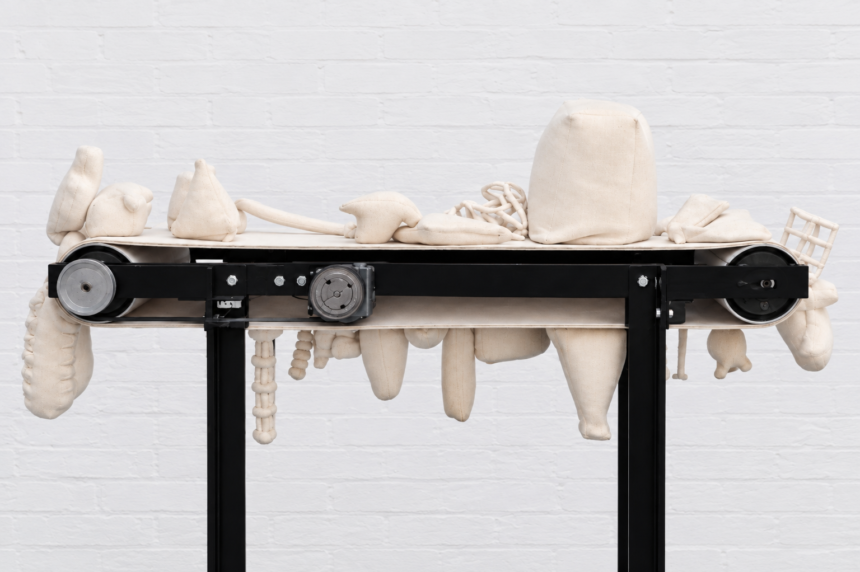
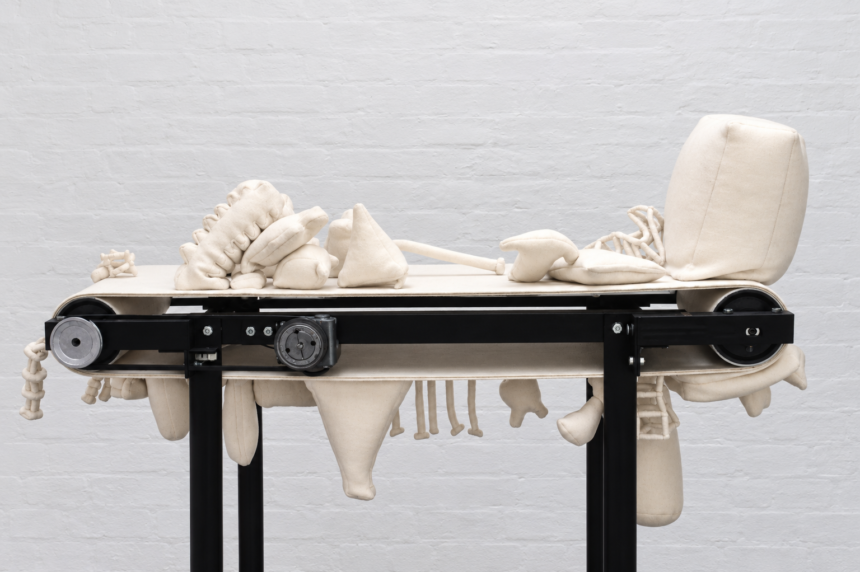
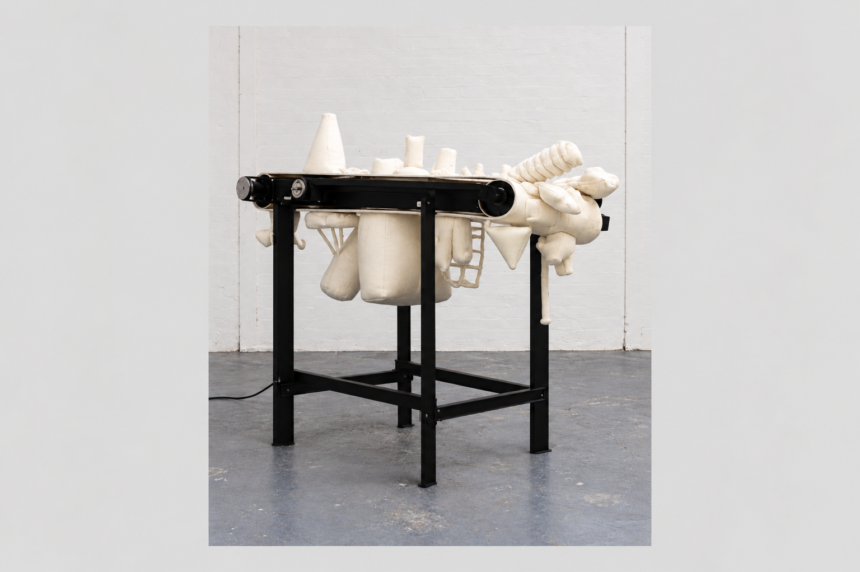
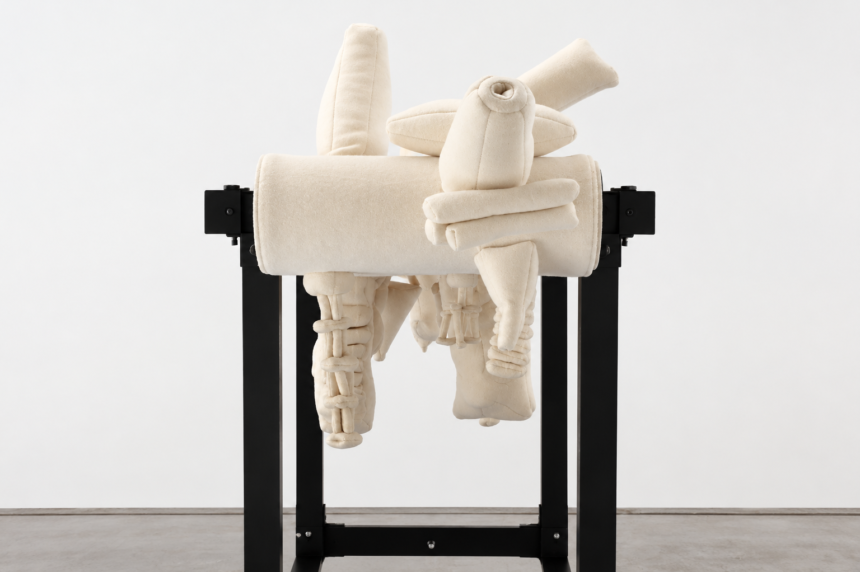
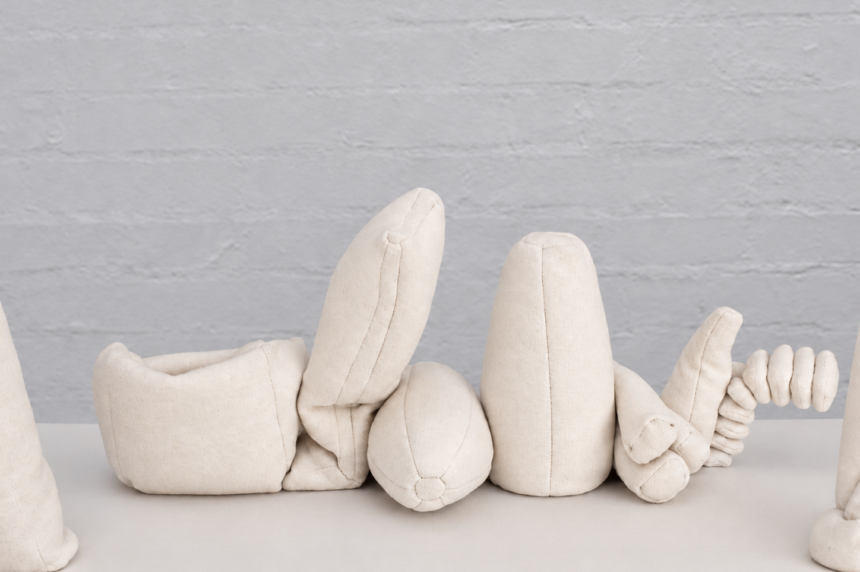
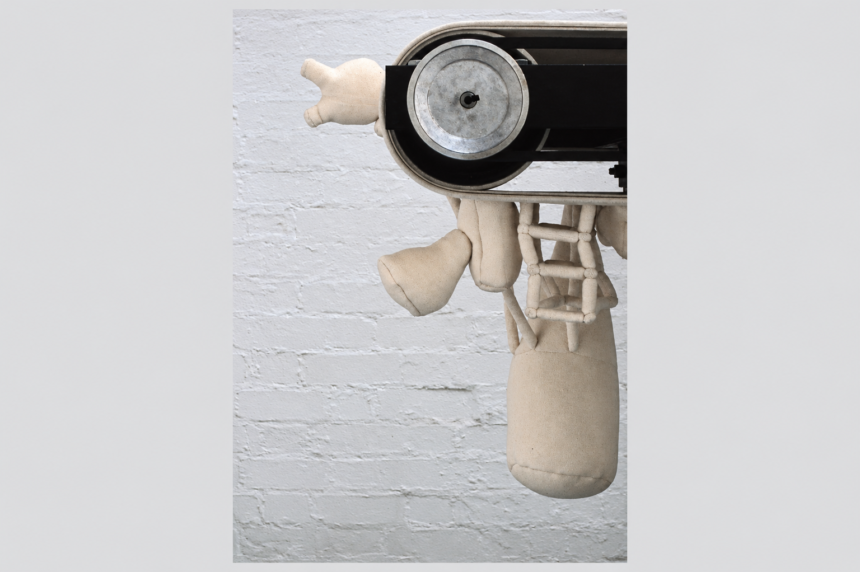
Convey brings together a number of soft forms based on Dunhill and O’Brien’s lost works, travelling slowly in procession around a motorised conveyor belt.
 
As each loosely stuffed object passes beneath the belt, its structure is temporarily pulled into shape and made legible, only to collapse again as it returns to the top.
 
As with Dunhill and O’Brien’s other motorised works, the movement is deliberately geared down to an almost unnatural slowness. The procession acquires a certain stately elegance and purposefulness, while remaining relentless, awkward and faintly hopeless.


TRACK

Posted on Format Gallery

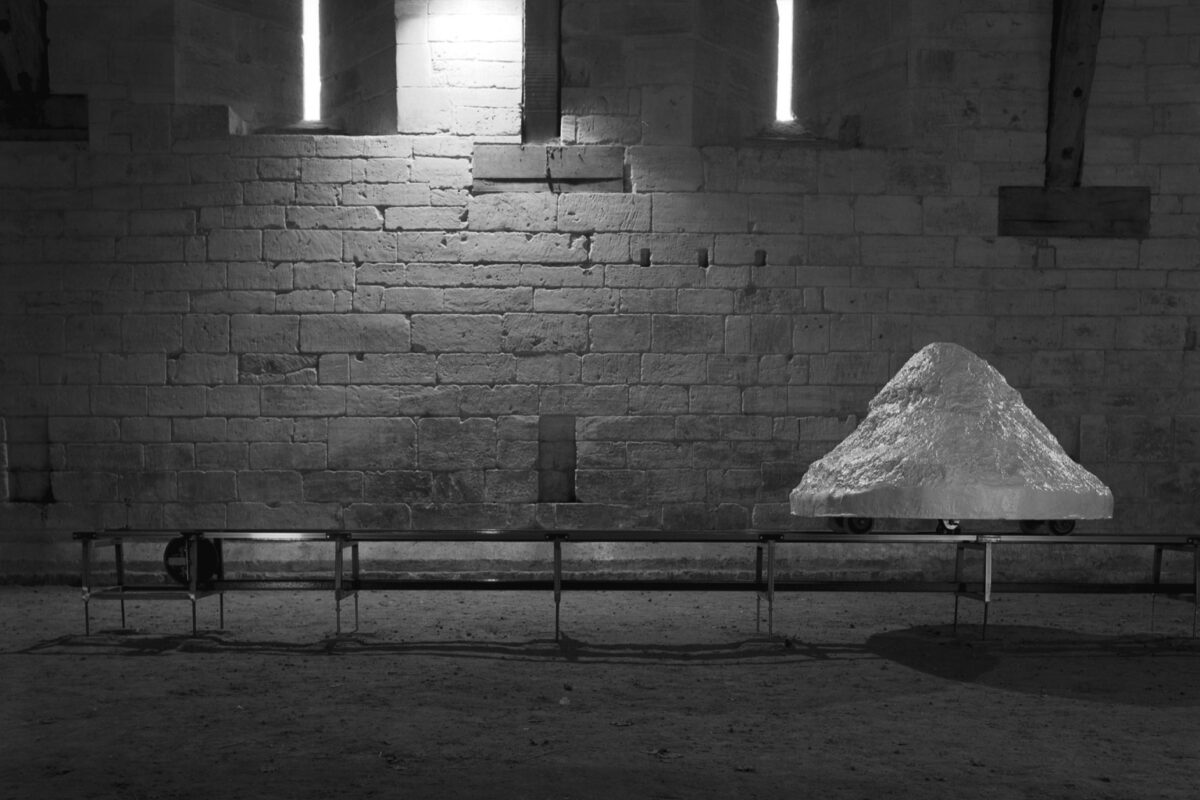
Track was originally made as a temporary installation for the Saxon Tithe Barn in Bradford-on-Avon in 2000. A white form travelled almost imperceptibly slowly along a 15-metre horizontal track, powered by an electric motor. It took twenty minutes to reach the end, paused briefly, then reversed and began the journey again.
 
The form itself was derived from a day’s hole-digging and had something of the appearance of a small mountain or land mass. Its slow, repetitive journey gave it a peculiar combination of purpose and futility.


The important thing about Track that a photograph cannot show, is the slowness of the white form’s progress back and forth along the rails.
 
The slowness is slower than the special halting march made before the cenotaph on Poppy Day. It is slower than Kung Fu walking on a rice paper scroll. It is slower than the shuffling gait of the oldest and most infirm pet dog. It is slower than the plaster original of G.F. Watt’s ‘Physical Energy’ as it is winched out of the shed at the back of the Watts Gallery in Compton once a year.
 
It is so slow that it is almost unbearable to watch.
 
Unlike the unclaimed luggage currently circumnavigating rubber conveyors at airports around the world, there is no hope that this object will ever arrive. 


From the catalogue essay of EV+A 2002


This project was funded by the Arts & Humanities Research Board and Southern Arts (Arts Council of England)

THE LEFTOVERS

Posted on Format Gallery

Dunhill and O’Brien wanted to put their studio waste to good use.
 
The Leftovers brought together the test pieces, mock-ups, abandoned experiments and unused components that had accumulated over a two-year period. All 567 objects, ranging in size from a few centimetres to two metres, were coated in thick grey ‘tarmac scatter granules’ of the kind used for model railway scenery, then arranged inside a tailor-made cart with glazed panels.
 
The cart was both a display case and a means of moving the disparate objects. Reminiscent of a bier, it gave this collection of redundant and failed objects a slightly mournful, though also somewhat pompous, air.
 
The dusty grey flocking created a peculiar consistency, allowing the many things that had outlived their usefulness to sit alongside one another without distinction. Leftover became an inventory of sculptural dead ends and near misses — a thesaurus of sculptural dysfunction.


LOST WORKS: MULTIPLES

Posted on Format Gallery

Lost Works: Multiples is a series of small resins in which earlier lost works are remade in miniature and placed in imagined ‘idyllic’ settings.
 
At first glance they resemble gift-shop souvenirs or commemorative mementoes. Their function, however, may be closer to that of grave goods: small objects made to accompany something that has disappeared.
 
The series was first shown in Hanover, Germany, alongside a food-related ‘budget range’ sold through an Art Vending Machine.


LOST WORKS: PINK

Posted on Format Gallery

The Lost Works: Pink reimagines a number of Dunhill and O’Brien’s earlier lost works as soft, wall-hung forms. Suspended in a row, they begin to resemble a collection of tools, accessories or oddly specialised equipment.
 
Their stuffed, almost cuddly character is undercut by the intensity of the hot pink fabric, which gives the group a slightly overbearing and faintly repellent presence.

LOST WORKS

Posted on Format Gallery


The Lost Works
formed the other half of PLOT, Dunhill and O’Brien’s first collaborative exhibition at Cable Street Gallery in 1998.
 
One hundred small plasticine sculptures were made from memory, based on lost artworks and fragments of installations that the two artists had produced separately over previous years. These miniature reconstructions were arranged on shelves according to shape and structure rather than authorship, chronology or original context.
 
No information was given about the scale, material or motivation of the missing works, and nothing identified which artist had made either the original or its plasticine replacement. The only clue was a date pencilled on the wall above each object, marking the year in which the original work had been completed.
 
Shown alongside Stored, the work reversed its logic: there, existing artworks were hidden from view; here, absent works were brought back as small, uncertain substitutes.
 

STORED

Posted on Format Gallery

Stored formed one half of PLOT at Cable Street Gallery, London, in 1998, Dunhill and O’Brien’s first collaborative exhibition.
 
What had initially seemed like a temporary excursion from their individual practices began to raise more awkward questions about the impulse to keep making new work. For Stored, they perversely brought a large number of earlier artworks out of storage — almost enough to make a small retrospective — then mixed them up and grouped them together, concealing them beneath tailor-made vinyl covers.
 
The coverings created new, looming and slightly peculiar forms. Words taken from the titles of the hidden works were printed at either end; detached from their original context, they began to read like instructions for how the covered objects might be approached.
 
Shown alongside The Lost Works, the installation treated the artists’ previous work less as material to be displayed than as lumber caught in an awkward procession.