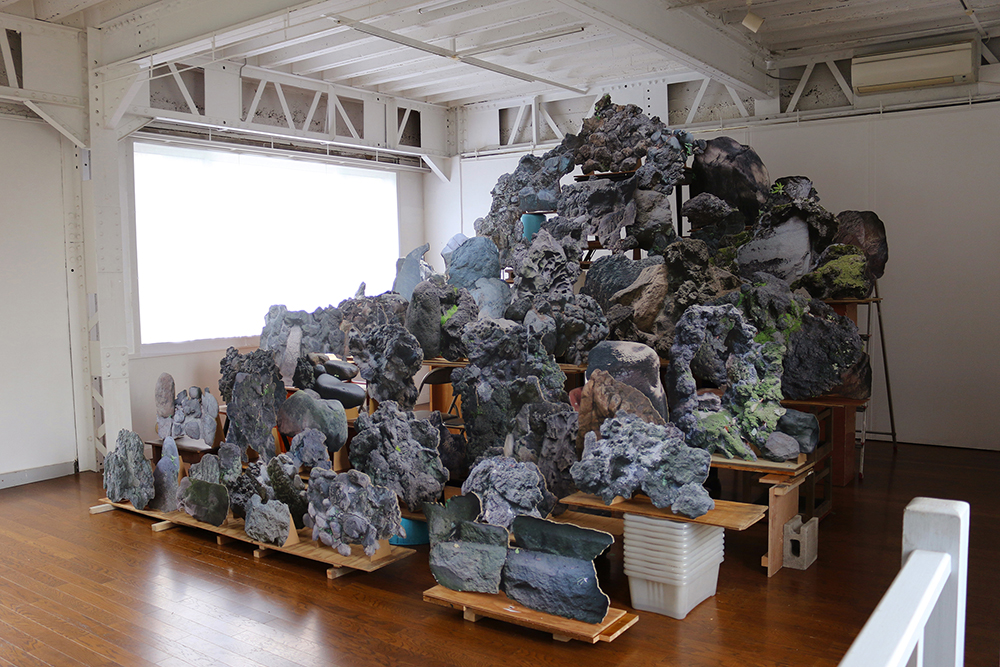
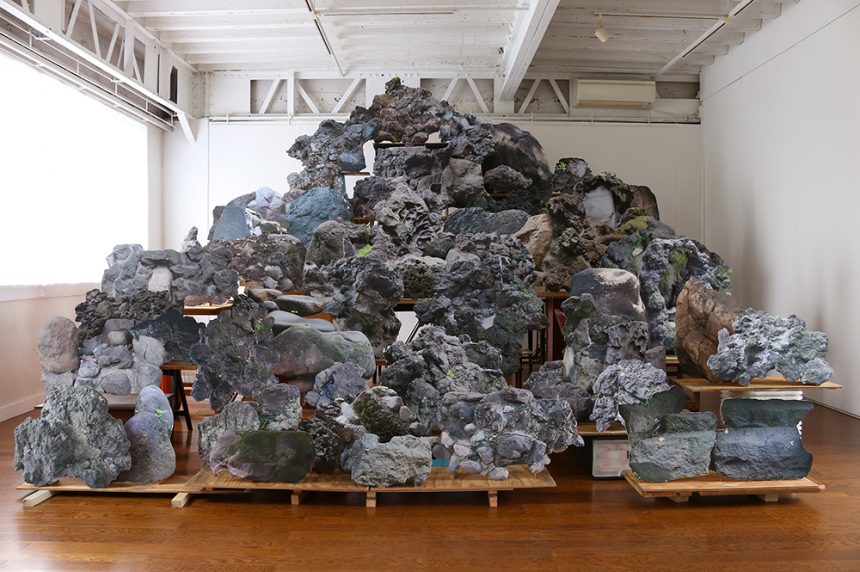
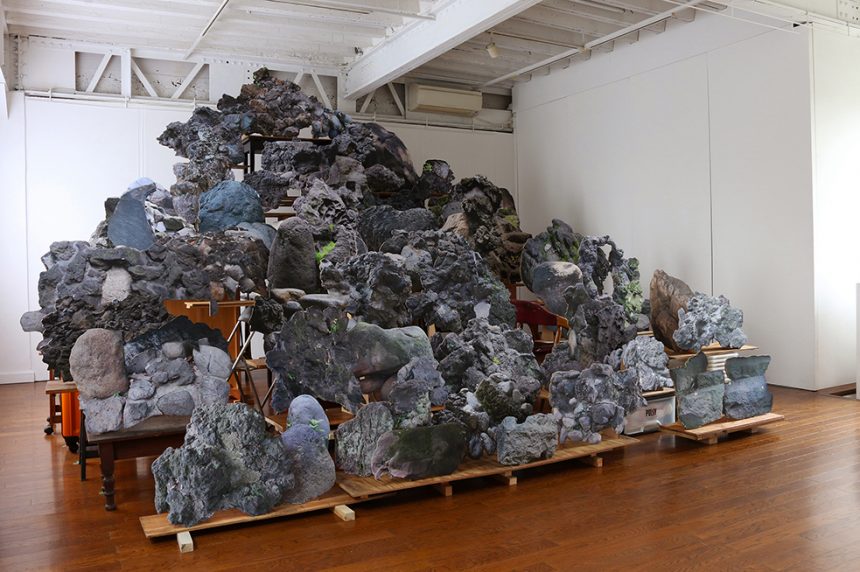

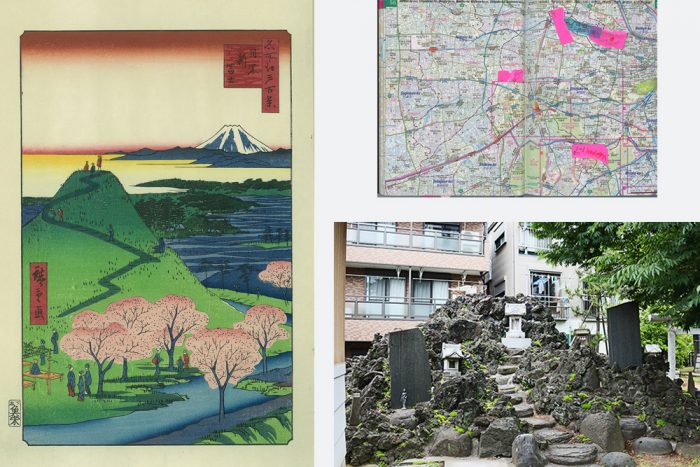
New Japanese Object grew out of Dunhill and O’Brien’s search for surviving fujizuka across Tokyo. These miniature Mount Fujis were built during the Edo period by Fuji-ko devotional groups, often using lava brought back from the sacred mountain itself. Each was a particular, human-scale interpretation of Fuji, made to allow those unable to undertake the pilgrimage to experience something of its final ascent.
Using maps, local knowledge and chance encounters, O’Brien visited and photographed thirty-six surviving fujizuka. Often half-hidden among apartment blocks, offices and suburban streets, they became a way of encountering Mount Fuji without leaving the city.
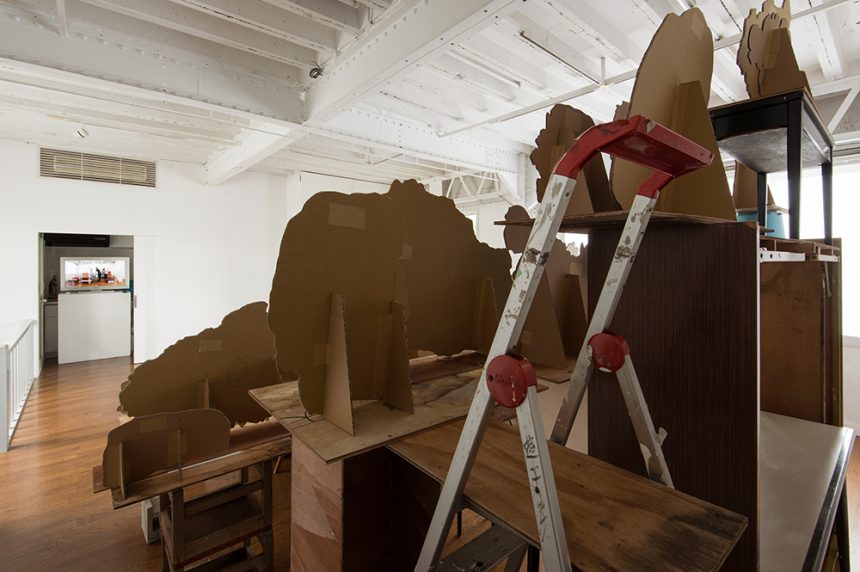
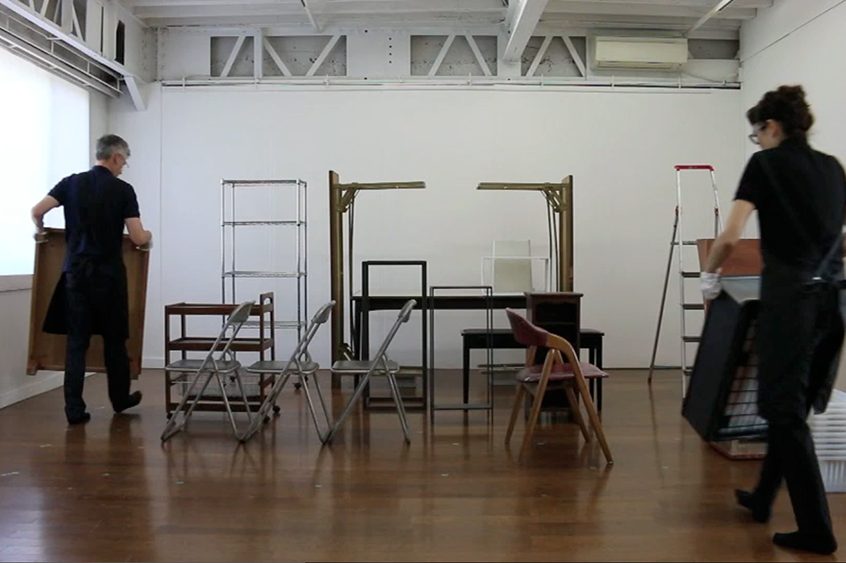
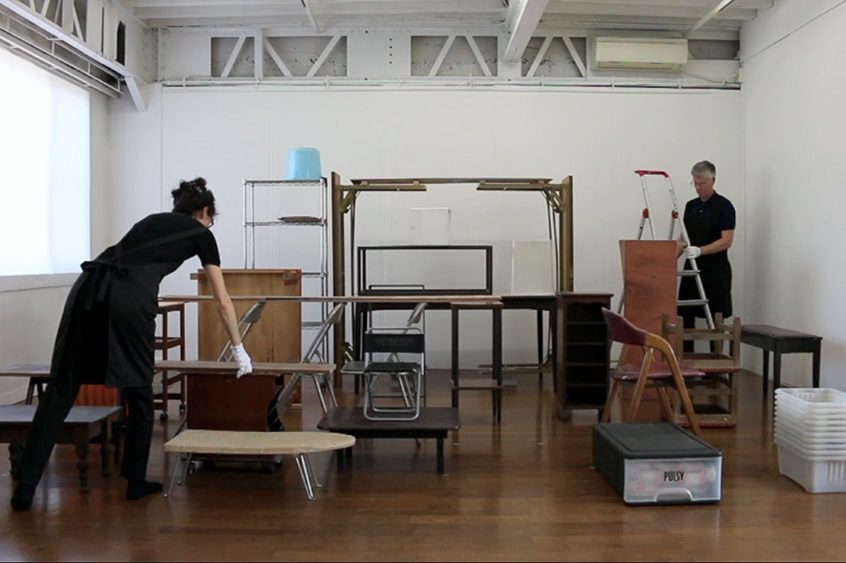
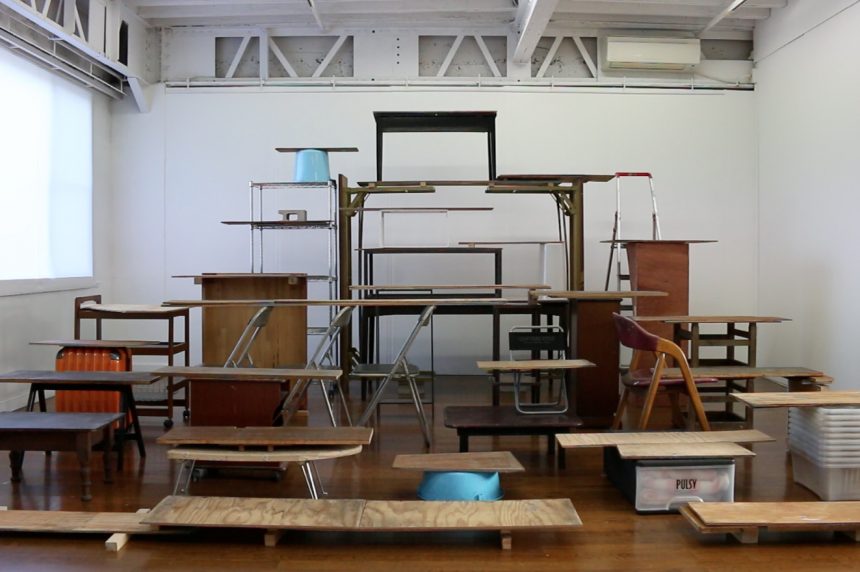
These photographs later became the raw material for New Japanese Object. Life-size images of individual lava rocks were printed, mounted on cardboard and arranged across a structure assembled from furniture and salvaged timber found in the artists’ studio and apartment. Tables, shelving units, suitcases and laundry baskets were pressed into service, followed eventually by smaller and increasingly improvised pieces of wood.
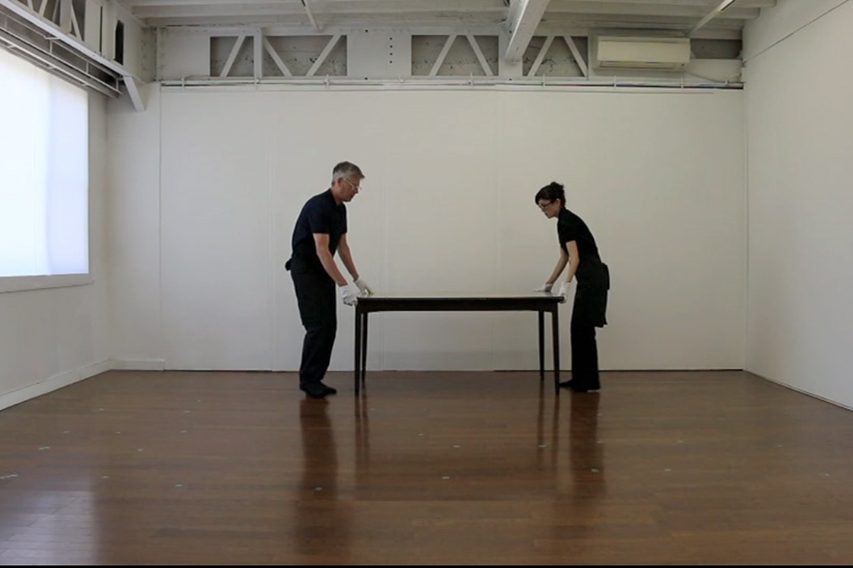
A video records Dunhill and O’Brien constructing the work. Echoing the careful handling practices of Tokyo removal workers they had observed, they move through a sequence of actions that became increasingly choreographed through repetition. At times they work together to manoeuvre something large or awkward; more often they seem to know independently what needs to happen next, like two stallholders setting out familiar wares without discussion.
The resulting accumulation of ‘rocks’ gradually filled the remaining space. The work emerged through a combination of rehearsal, practical ingenuity and tacit collaboration, with increasingly unlikely domestic objects recruited to support the illusion.
Parts of New Japanese Object later travelled to London, where its flat-pack rocks and improvised display structures were reconfigured as Rockery at White Conduit Projects.
This project was made possible due to the generous support of Youkobo Art Space and The Japanese Agency for Cultural Affairs.
With special thanks to: Tatsuhiko and Hiroko Murata (joint Directors of Youkobo Art Space); Yoko Arisaka (Artist and Fujizuka expert); Satoshi Ikeda and Jaime Humphreys (expert translation for research).
Edit