


Terms & Conditions grew out of a year of repeat visits to Stoke-on-Trent, during which Dunhill and O’Brien interviewed local people, ran workshops, tested ideas and generally tried to discover what other people’s hands knew that theirs did not. Made for AirSpace Gallery as part of the British Ceramics Biennial 2019, the project culminated in a three-week residency working with people they had come to know over the preceding year, including a dentist, dressmaker, boulderer, sports masseur, translator, jeweller, baker and engineer.
Each participant brought a different store of practical knowledge: ways of judging pressure, balance, texture, fit, weight, resistance and the occasional awkward gap. Working with raw clay, they agreed to leave the safer ground of their own expertise and take part in a sequence of propositions.
For example:
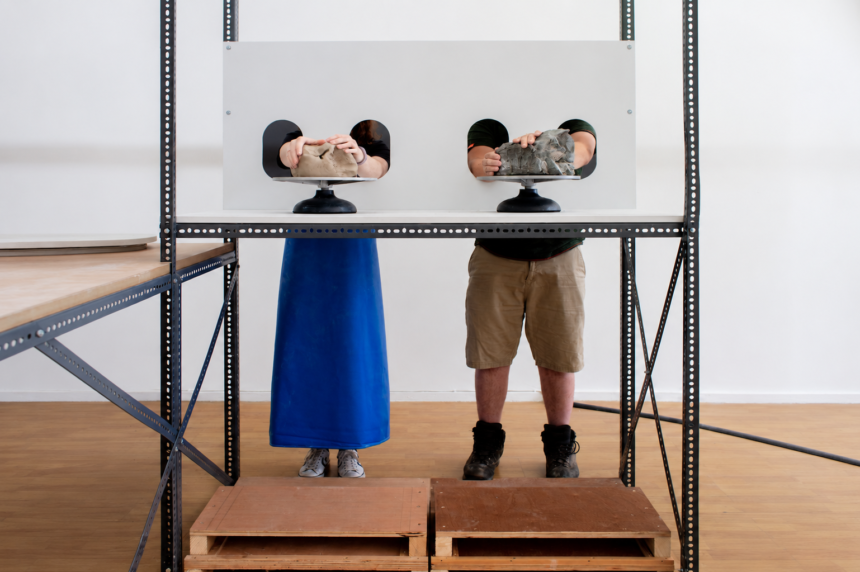
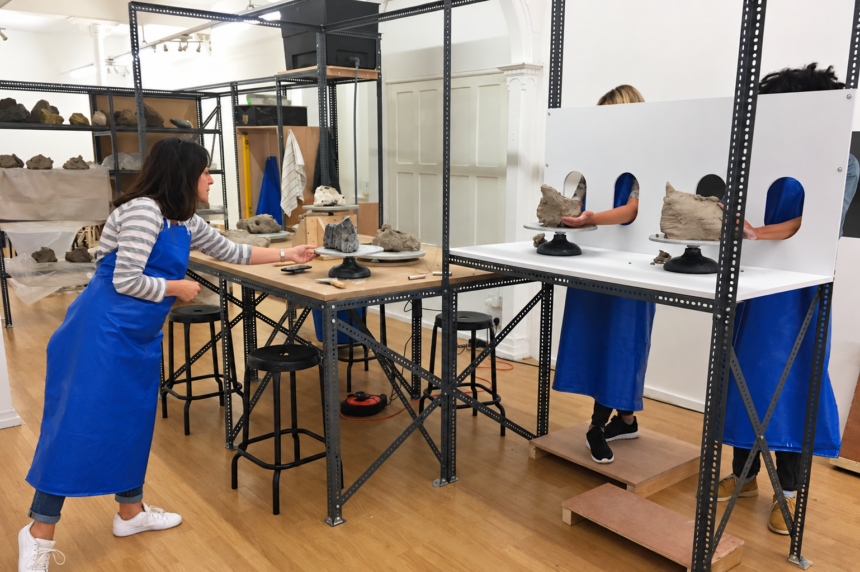
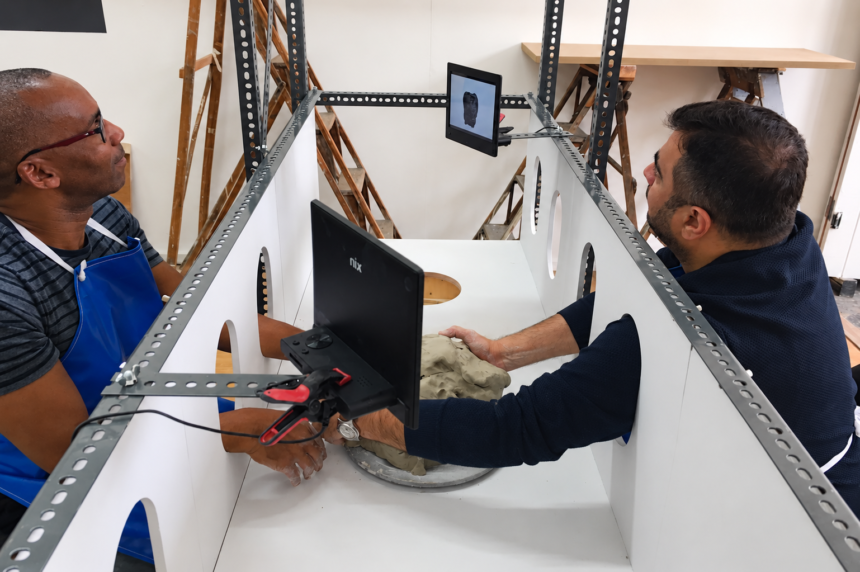
Two people stand behind a screen. One person feels a rock and describes how to make a portrait of it; the other has a block of clay and attempts to follow the instructions. Meanwhile, all the instructions are recorded for future use.
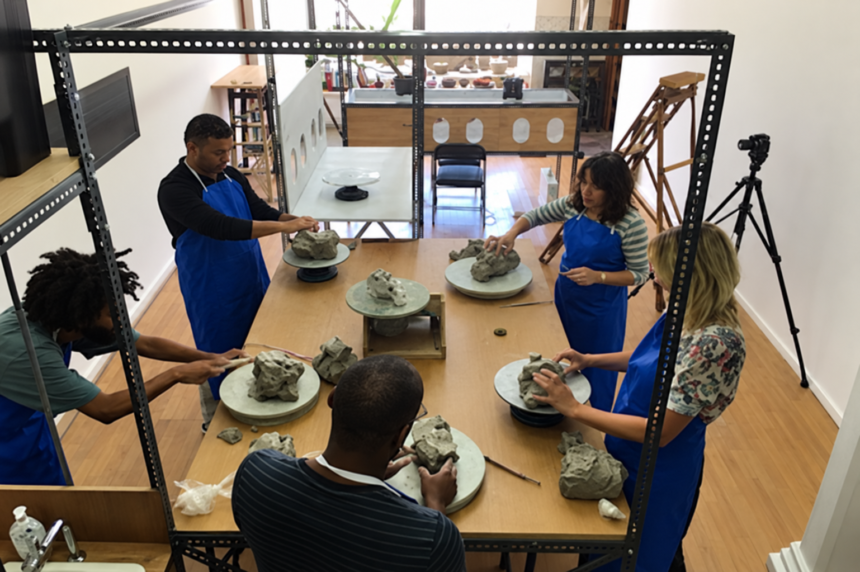
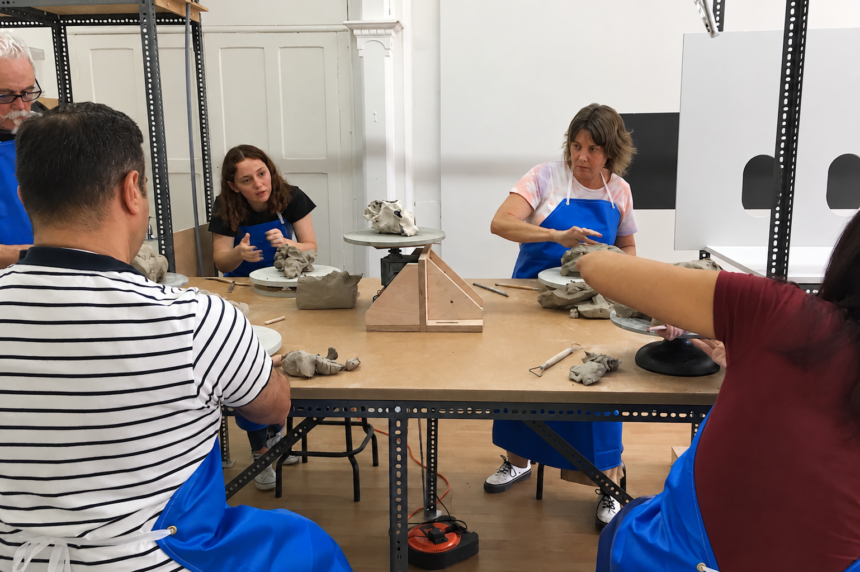
Five people sit in a circle with a rock before them on a slowly moving turntable. They begin with a block of clay and modelling tools and, at five-minute intervals, pass the partly formed object to the person on their right. After everyone has worked on every form, they stop and look at their collaborative sculptures. These are then displayed together in a damp-store shelving system.
The propositions took place inside a purpose-built modular Dexion structure: workshop, laboratory and storage system.
In the final proposition, Dunhill and O’Brien placed themselves back inside the process, attempting to make together from the tangle of other people’s instructions. What began with a few apparently modest rocks became a way of thinking about touch, translation, creative ownership and the peculiar business of making something with somebody else.
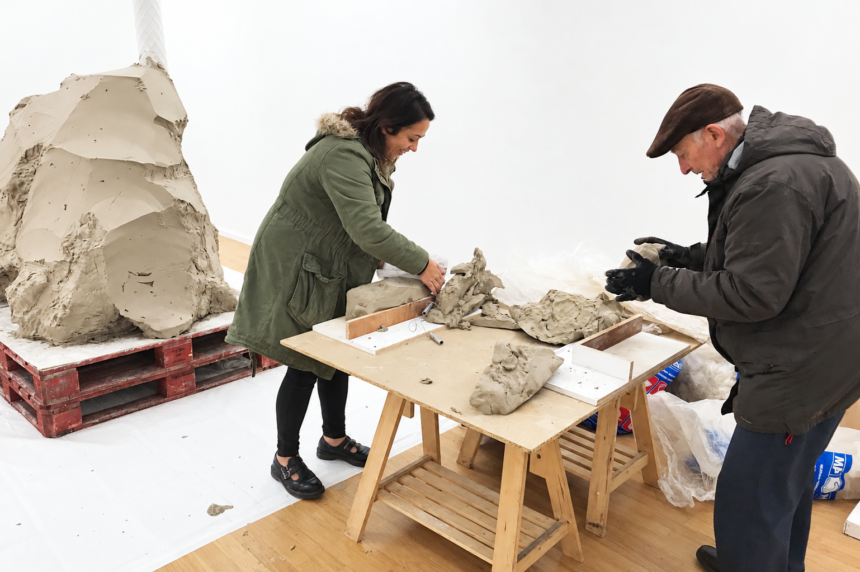
The exhibition gathered together the unfired clay objects, films and transcribed instructions, alongside the three and a half tonne clay sculpture within and around the construction. Meanwhile, workshops continued, offering visitors a range of opportunities to explore the propositions and add their own interpretations to the growing collection.
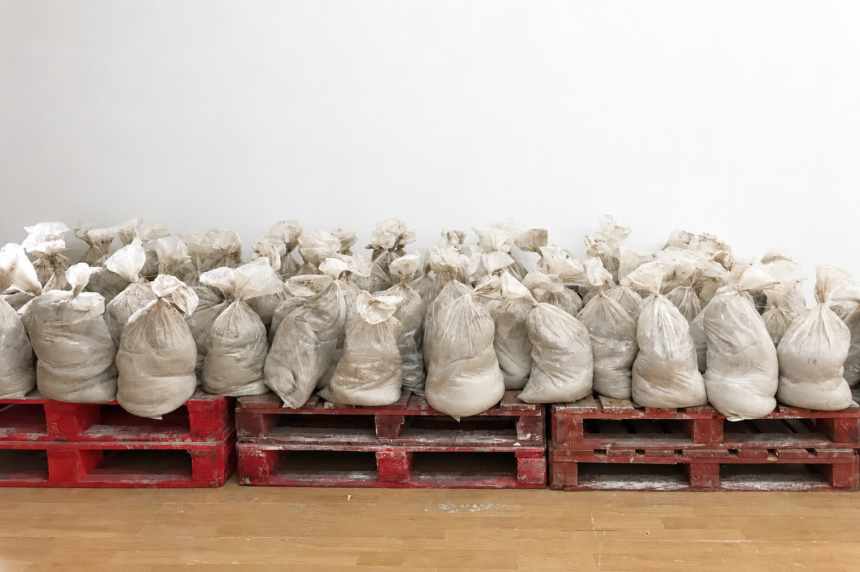
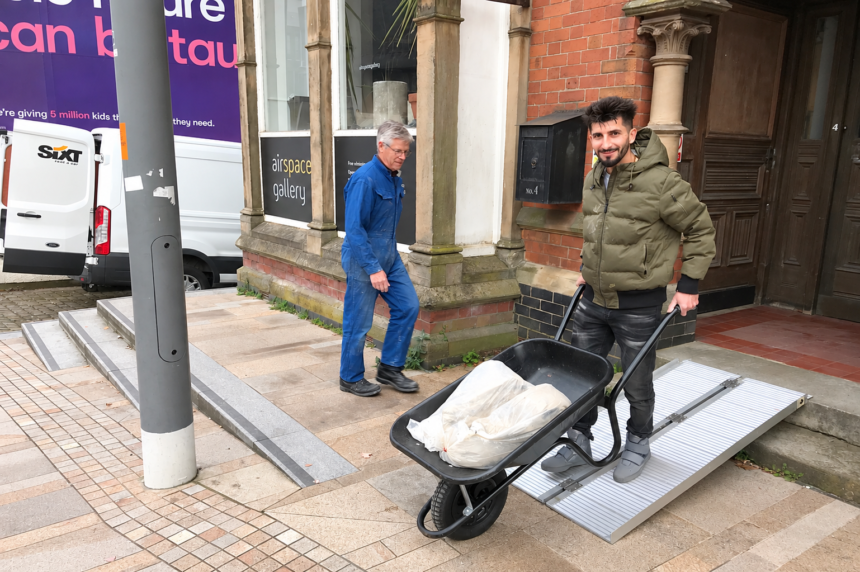
As the exhibition closed, Dunhill and O’Brien invited people in Stoke-on-Trent to take away clay that had been carefully tended and kept damp throughout the month-long exhibition. People arrived by car, bus and on foot to claim some for their own creative projects. Every bag was taken.
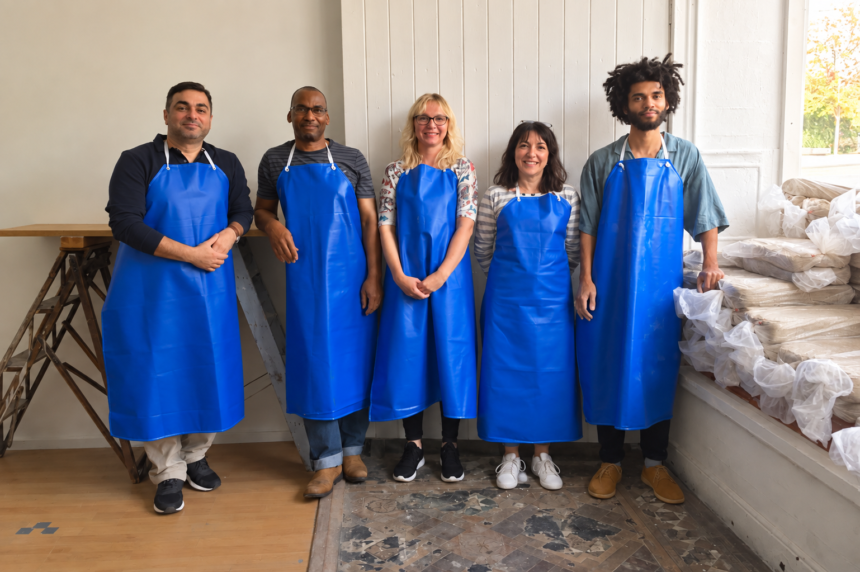
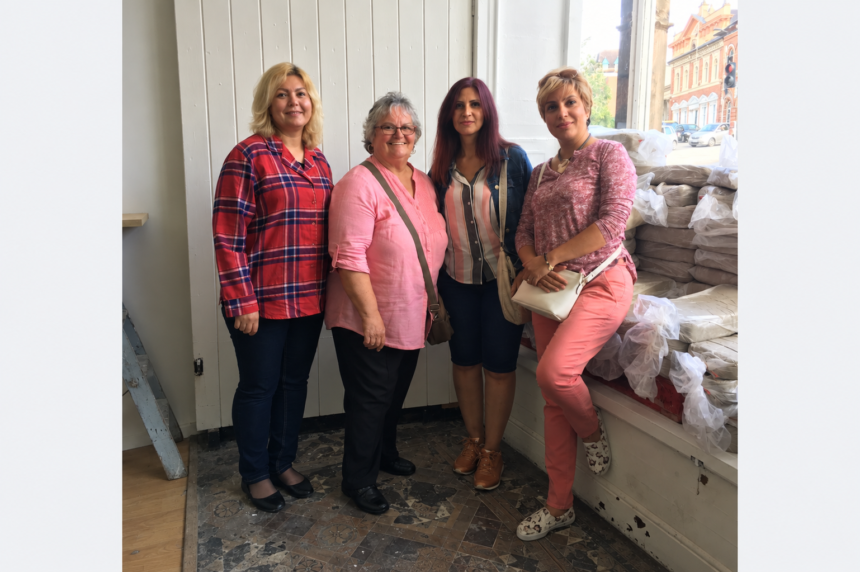
With very special thanks to the project participants: Ayad Al-Ani, Melissa Beardmore, Silvia Cotelea–Cazacu, Joanna Dawidowska, Sarah Delvari Zadeh, Steve James, Taraneh Noroozi Farsangi, Shelia Podmore, Anna Robinson, Leo Robinson, Len Robinson, John Shapter, Emma Tunnell, Asal Vahedi, and to Sophie Ashcroft, Sandy Auden, Lynn Davis, Genesis Rowley and Claire Stewart for input during preliminary workshop testing.
We would also like to thank Gavin Birkin and Pete Smith for pitching in to help shift a tonnage of clay and to John Plowman and Glen Stoker for their practical and professional help and their generous encouragement and insight throughout the development and realisation of the project.
This project was supported by the Arts Council England and Valentine Clays Limited, with professional support from Beacon Projects and AirSpace Gallery.
Links related to the project:
AirSpace Gallery Archived Project Page
British Ceramics Biennale 2019 Festival
Proposition 1 (Window)
Collection of clay objects made collaboratively by participants, kept damp through a sprinkler system, and added to following workshop sessions held during the exhibition.
Proposition 2 (Sitting)
Making spaces for up to 4 seated participants. The central unit designed for two people to model the same clay object together (filmed from above); the two units on either side are for individual making (filmed from the side). Small LED screens show images used as source material. The proposition is to understand and translate the 2-dimensional images into 3 dimensional forms, solely employing tactile interpretation.
Proposition 3 (Standing)
Making space for two participants standing side by side, with a shared tabletop unit (filmed from the front). There are two options with this proposition. In the first, a participant describes how to make a rock they are exploring through touch for up to 20 minutes, while the other uses tactile interpretation to model it in clay. In the second version a participant, at an adjoining workspace, observes and gives instructions to two participants at the standing unit, who model versions of the same object in tandem for approximately 20 minutes.
Proposition 4 (Table)
Making space for up to 5 participants employed for an introductory exercise. This session is not filmed though the outcomes are kept and displayed. In the centre of a large table area a small rock (flint) rotates very slowly on a turntable. Each participant models a clay form based on the flint for 5 minutes before swapping places to work on their neighbour’s clay model for 5 minutes. This exchange continues until each member of the group has been involved in modelling every one of the clay objects. Adjoining the table is a sink as well as a storage area for the aprons and tools used by the participants.
Proposition 5 (Shelf)
Collection of collaborative clay objects made from Proposition 4 (Table). This collection will be added to during the exhibition following further workshop sessions. Stored on the shelf are also various rocks that have been employed in Proposition 3 (Standing).
Proposition 6 (Video monitor)
A video documenting Proposition 3 (Standing), duration 3.5 hours.
Proposition 7 (How to Make a Rock – Object)
3 tonne clay sculpture made over an 8-hour period by Dunhill and O’Brien, employing sound recordings from Proposition 3 (Standing) where different participants describe how to make a rock in clay.
Proposition 8 (How to Make a Rock – Text)
A number of texts transcribing the recorded descriptions made by a number of participants during Proposition 3 (Standing).
Proposition 9 (How to Make a Rock – Video)
A video documenting the process involved in Proposition 7 (How to Make a Rock – Object). Duration 1hour