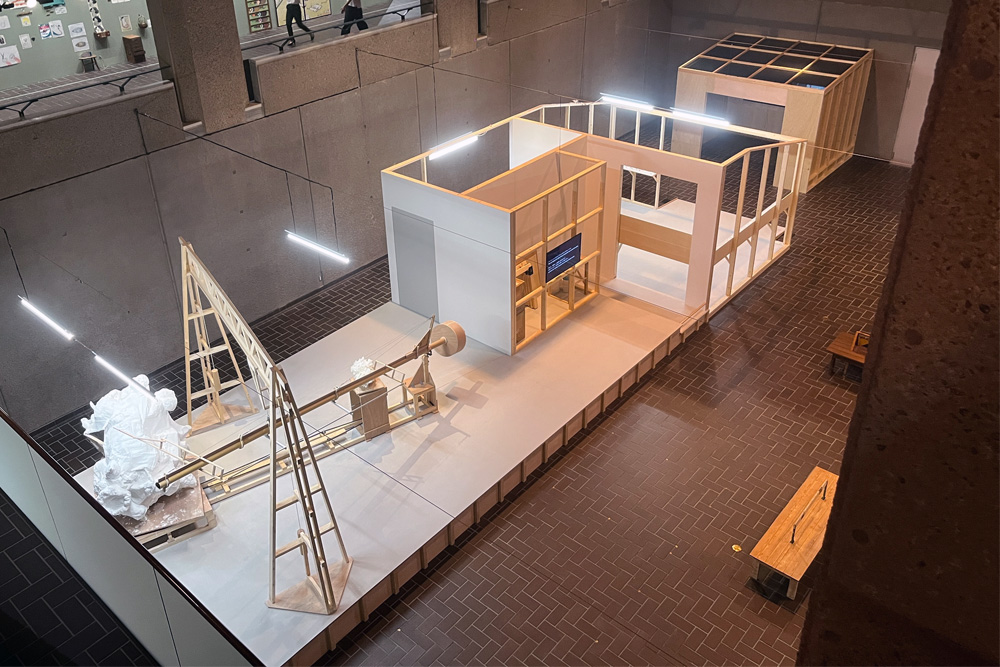
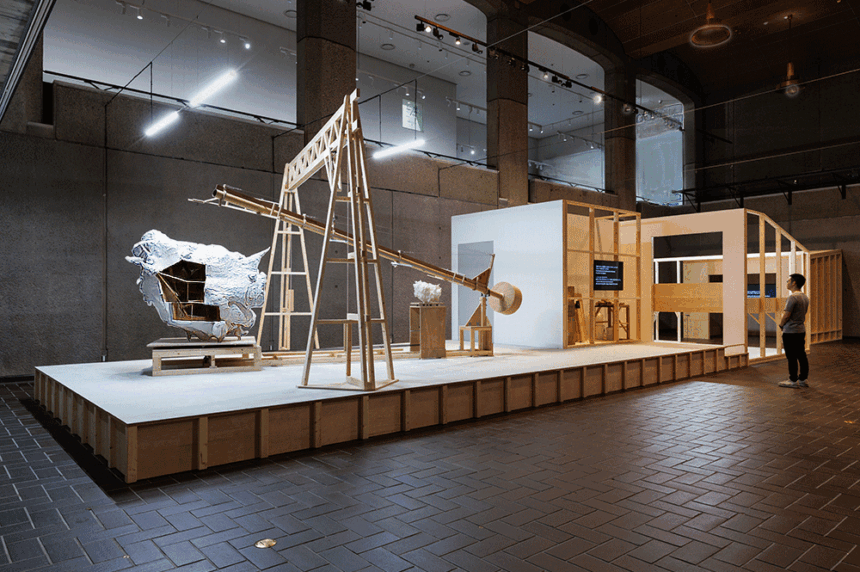
Method and Apparatus to Appreciate Iroha (MATA IROHA)* was an installation by Dunhill and O’Brien made for the exhibition Pleasure in Making at Tokyo Metropolitan Art Museum. The exhibition, curated by Hayato Fujioka, ran from July to October 2025, following residencies hosted by Kaetsu Ariake High School and HAKUTEN, Tokyo.
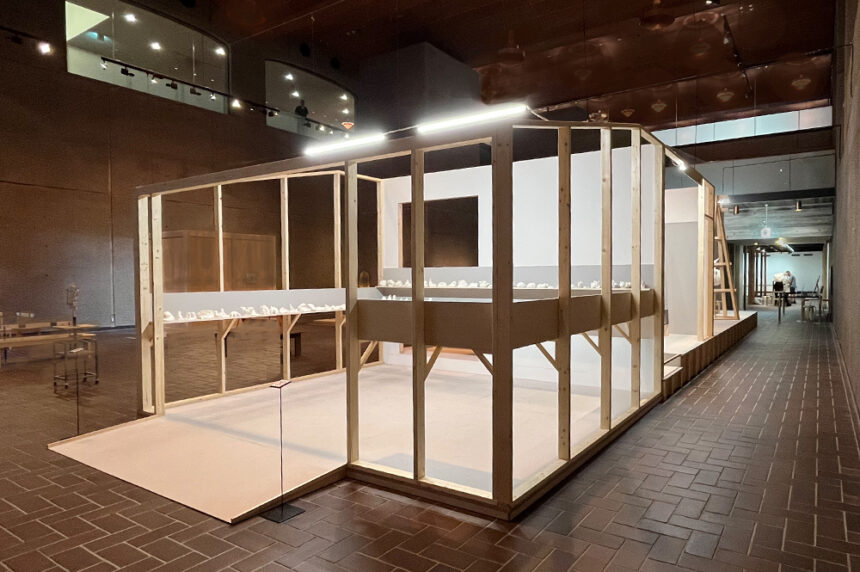
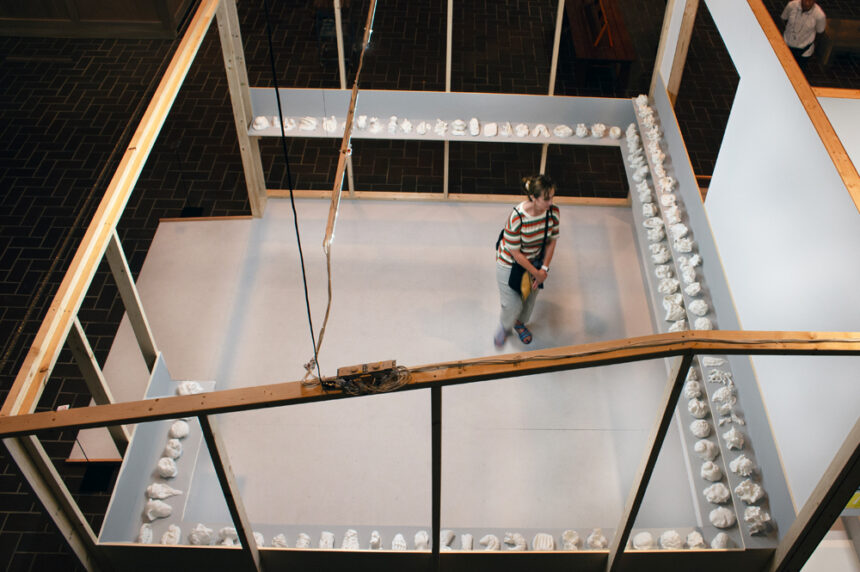
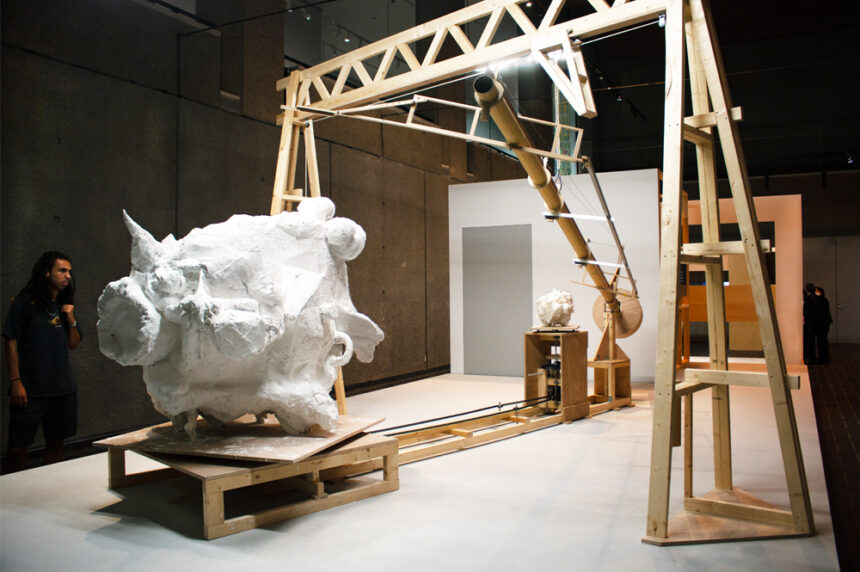
The installation was a large-scale multipart work with overall dimensions of 3.5 metres x 4.6 metres x 17 metres.
METHOD
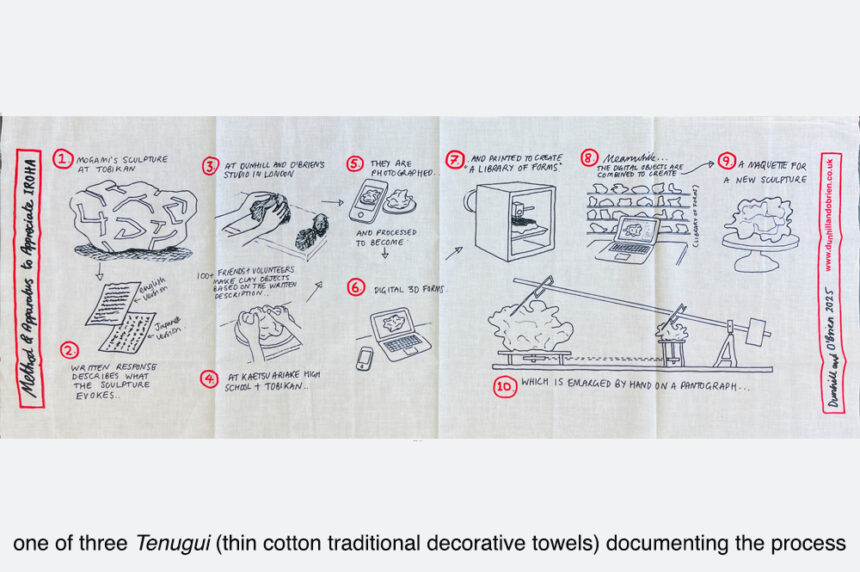
The project began with their trip to the museum in Autumn 2024 to see the gallery space first hand and to visit a sculpture in the collection which they had spotted on the museum’s website.
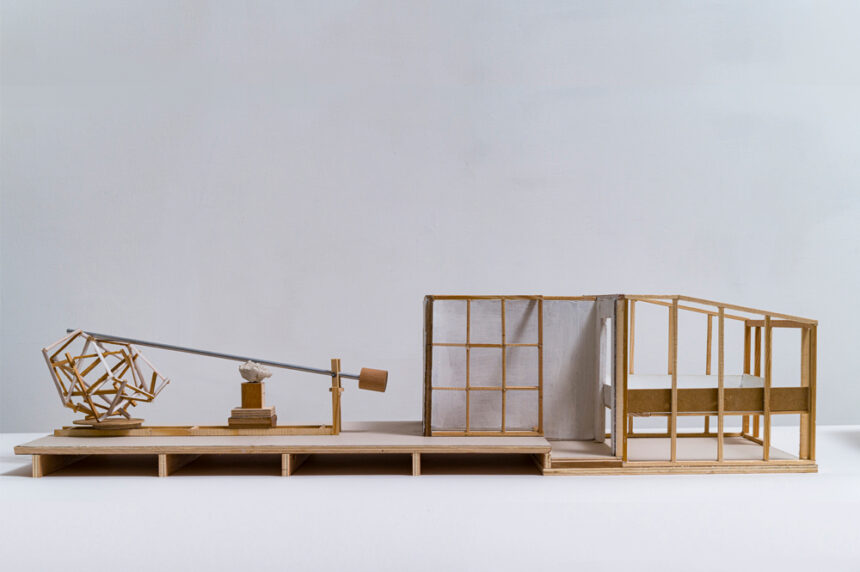
Designed by Mayekawa Kunio in 1975 the Museum’s sculpture gallery is a cavernous modernist space with distinctive hand hammered concrete walls. Noting that their ground floor sculpture studio and workshop in London would fit into this imposing and challenging gallery Dunhill and O’Brien decided to construct a life-size (1:1) platform and structure based on the dimensions of their studio for the exhibition. In this way they created their own making space independent of the gallery that could also act as a ‘raft’ and plinth.
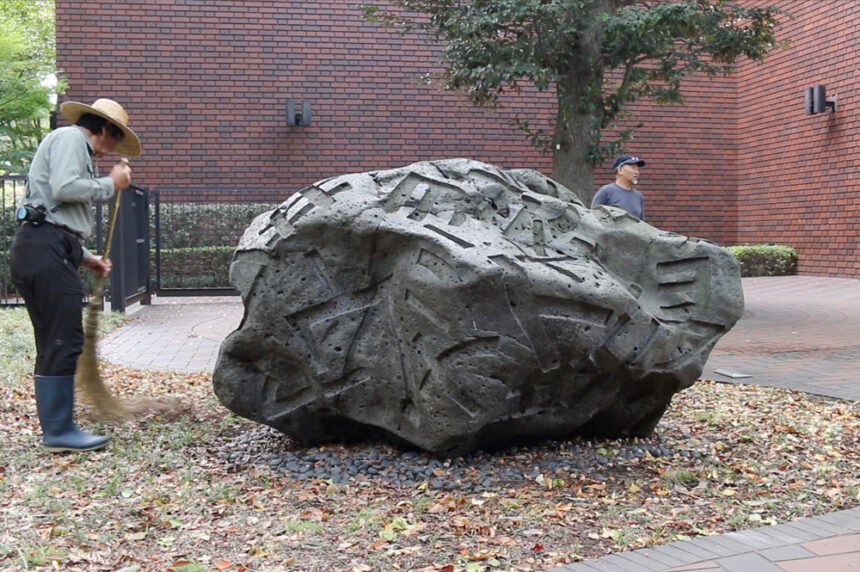
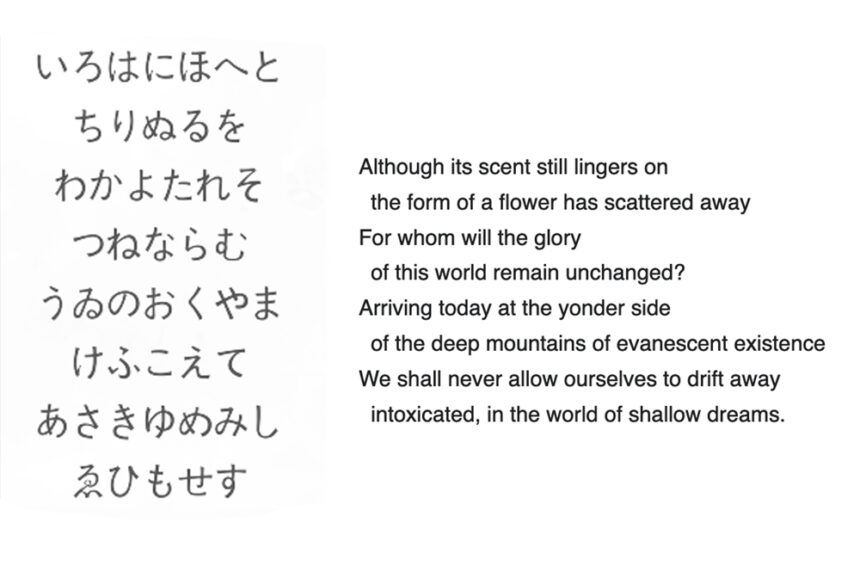
Meeting the basalt sculpture, they had first seen online, ‘IRL’ proved to be a powerful experience. I, RO, HA…N (1979) by Mogami Hisayuki, is a rock quite literally inscribed with meaning. Its title refers to an 11th Century poem, Iroha (いろは), sometimes ascribed to the Buddhist philosopher Kūkai (空海) (774–835). It is a perfect pangram containing each of the 47 kana syllables that make up the Japanese language. By carving these kana shapes into the raw basalt rock Mogami set out to translate the philosophical statement of the poem (which is a famous cultural artefact) into a tangible object.
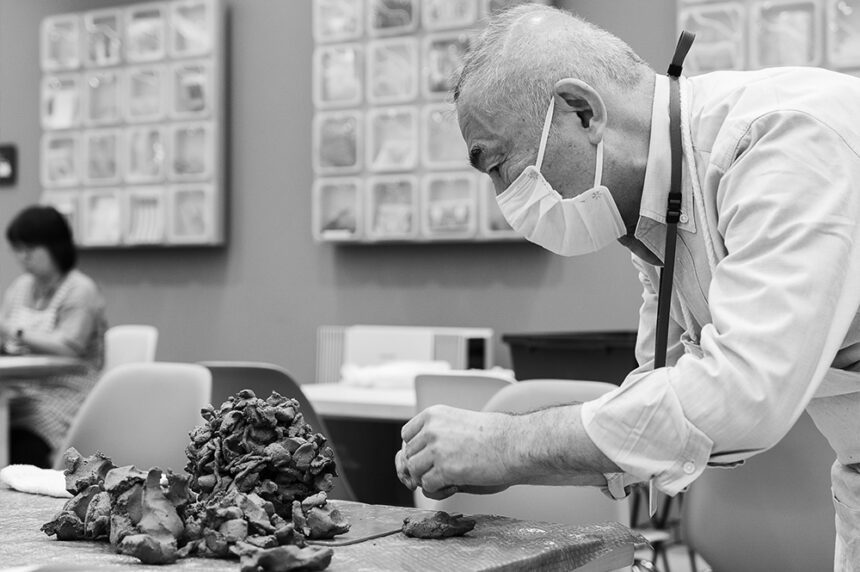
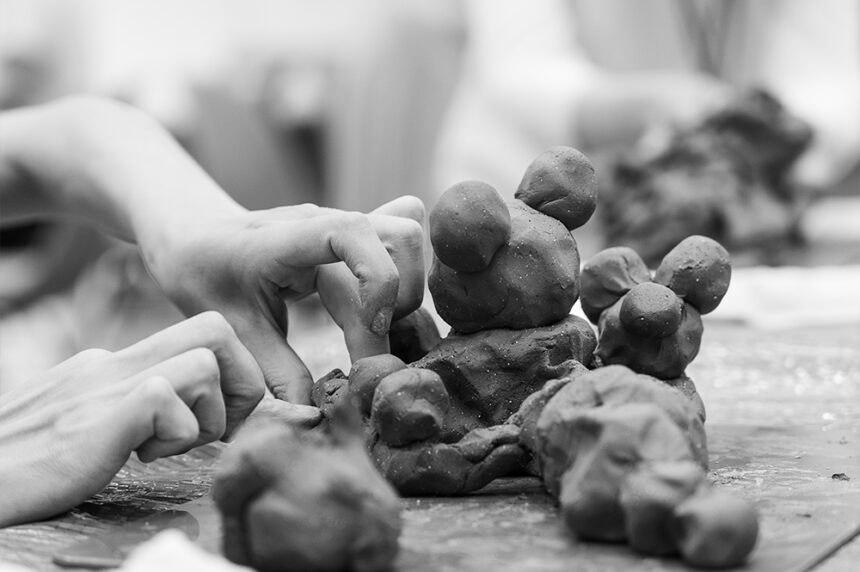
Contemplating Mogami’s sculpture Dunhill and O’Brien wrote a descriptive text reflecting on its physicality. This same text was used by over one hundred people during visits to their studio in London and workshops held in Tokyo. Equipped with just the text, 1 kilo of clay, and thirty minutes, each person created a three-dimensional form, interpreting the description in their own distinctive way.
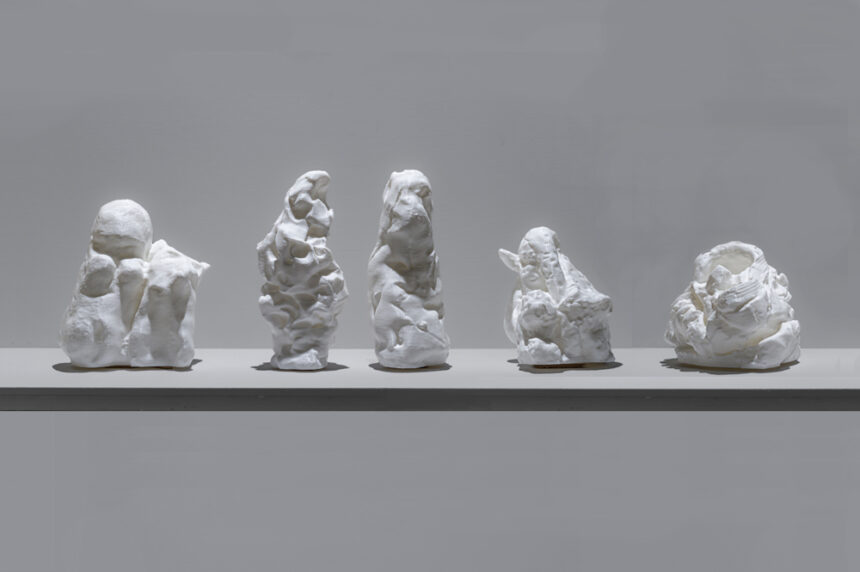
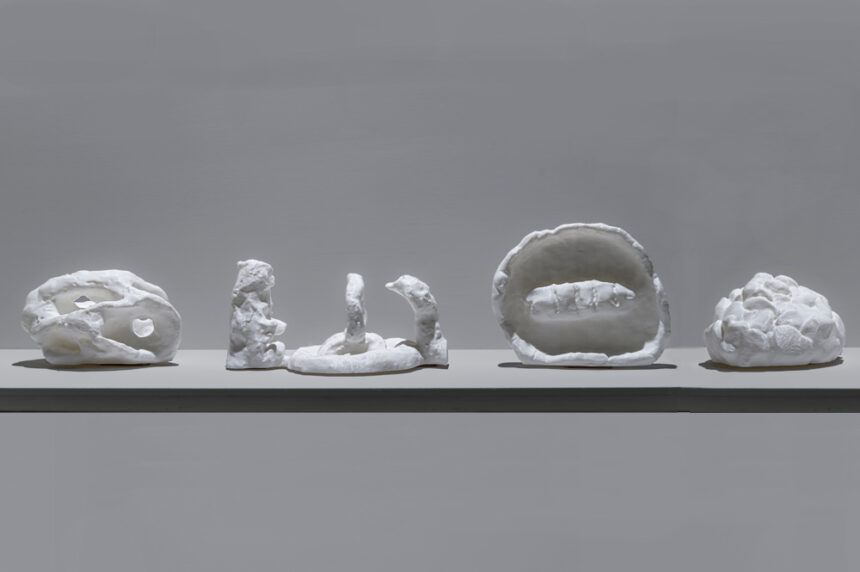
Through photogrammetry each of these clay objects was carefully studied and translated into computer code. A 3D printer transformed this information back into physical form. Then in the virtual space of a computer the same forms were amalgamated to generate a ‘mash-up’, a single collective object.
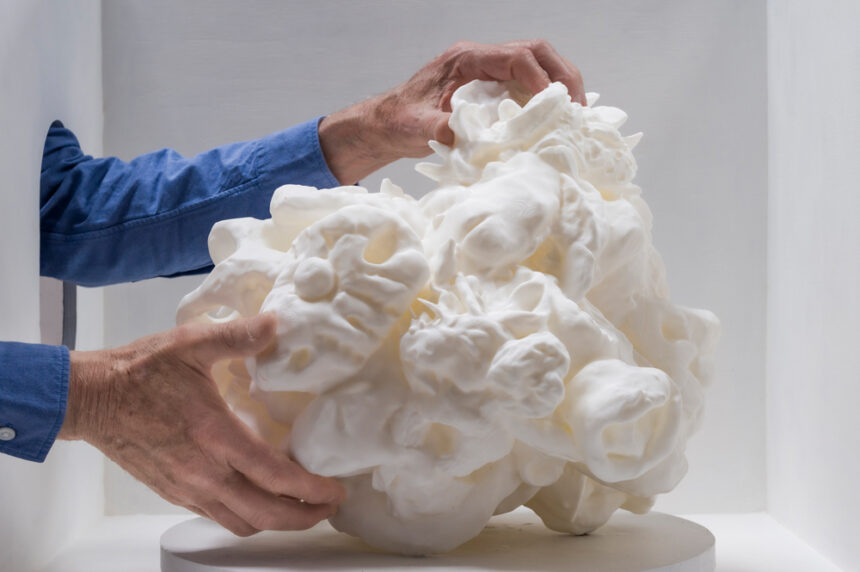
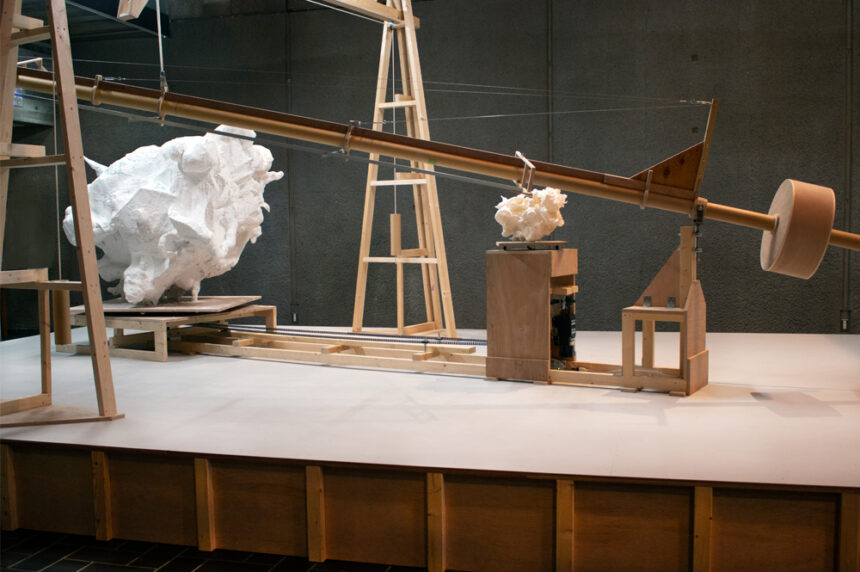
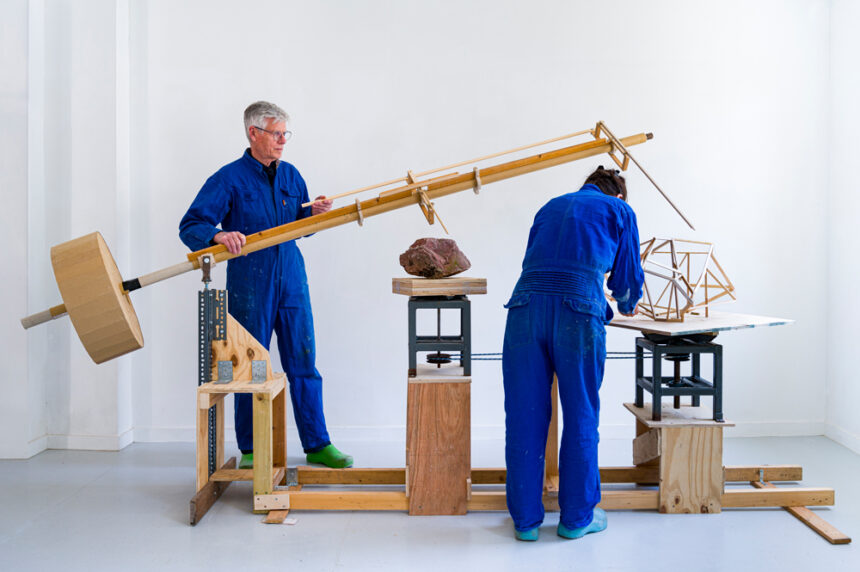
The final stage of the method saw this ‘mash-up’ scrutinised with the help of a 3D pantograph.
APPARATUS
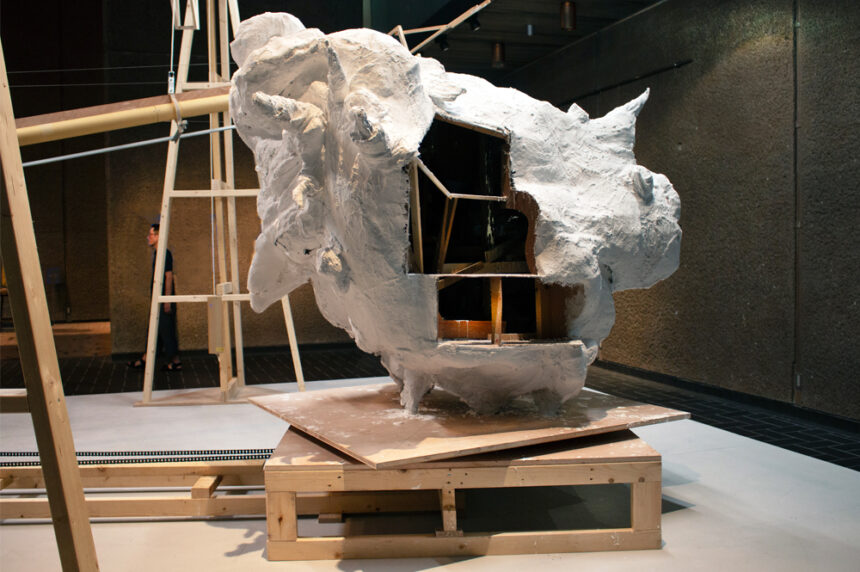
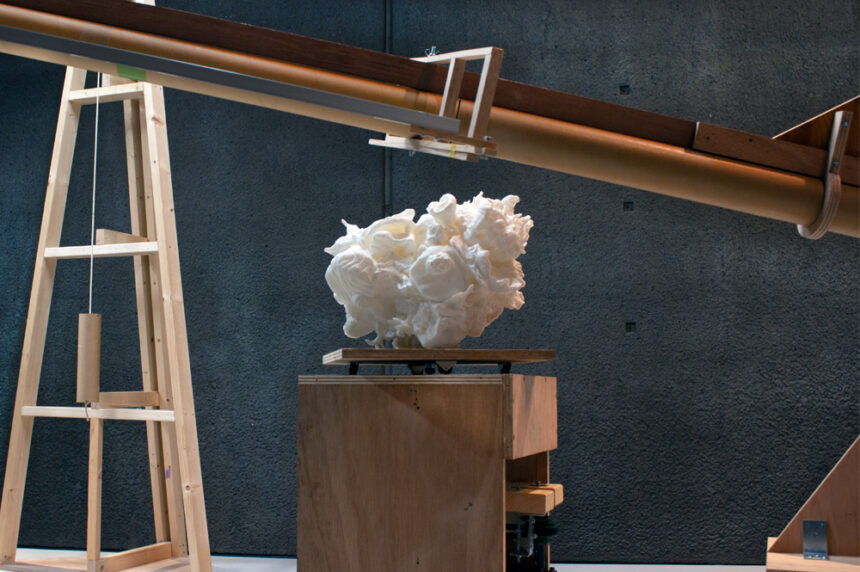
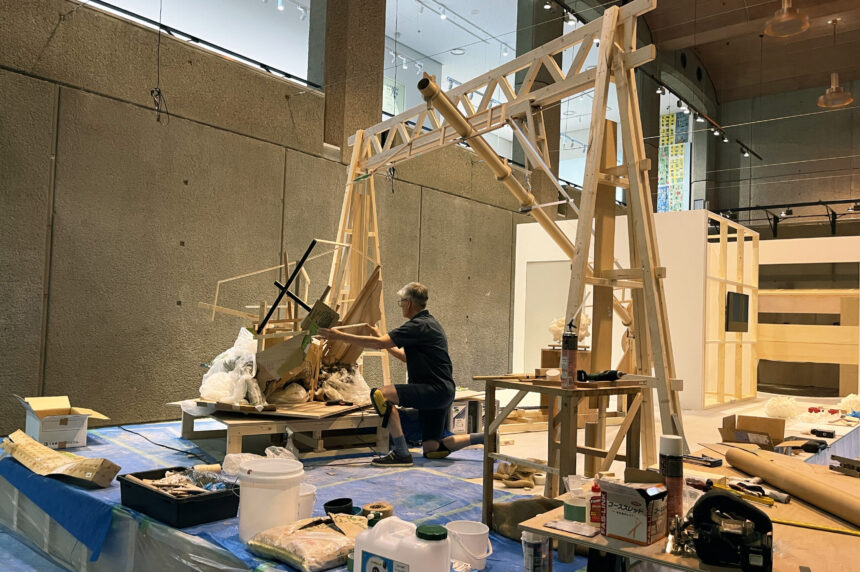
Following the elaborate process involving many acts of interpretation they used this home-made device, loosely based on a 19th Century Sculptors’ tool. Over a 5-day period Dunhill and O’Brien plotted and enlarged the ‘mash-up’ to a scale closer to Mogami’s sculpture employing traditional techniques and materials (wood armature, plaster, scrim etc) to produce a new work.
MATA IROHA
Abbreviation ‘MATA IROHA’ また いろは translated back into English becomes ‘Once More the Basics’
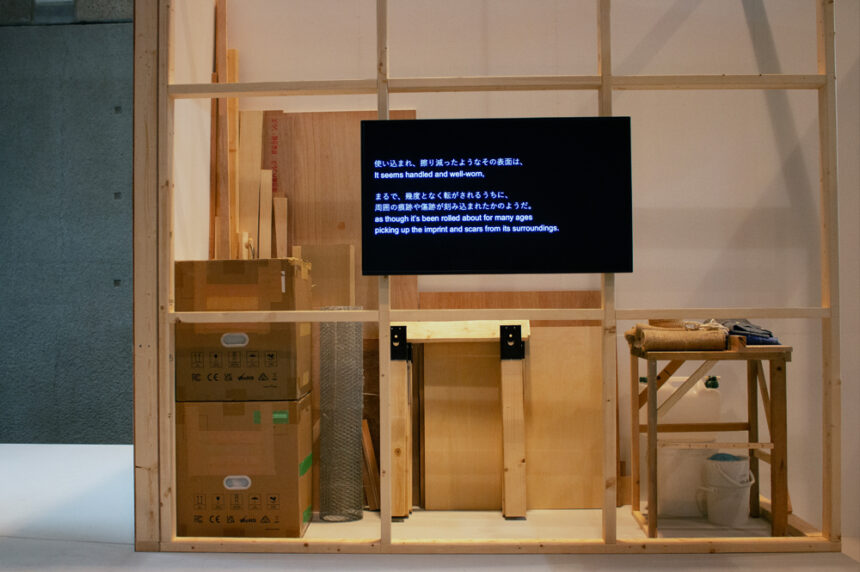
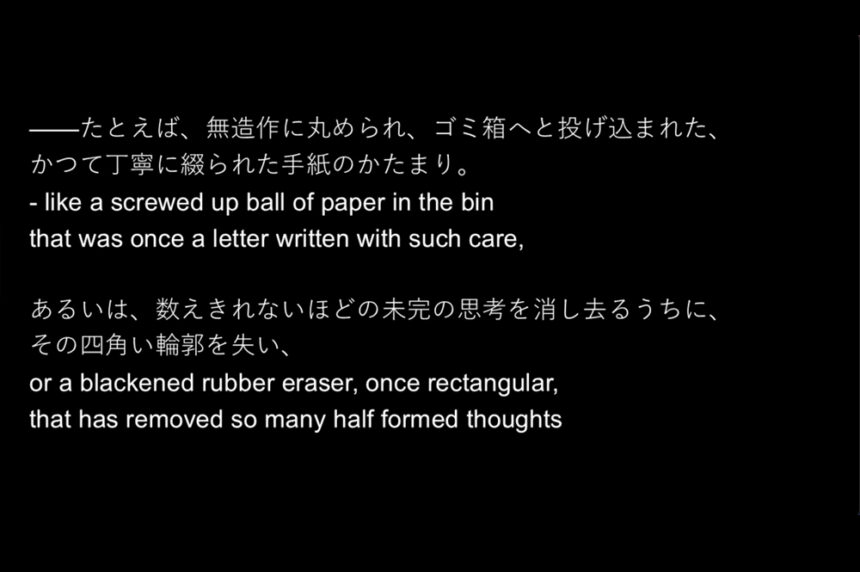
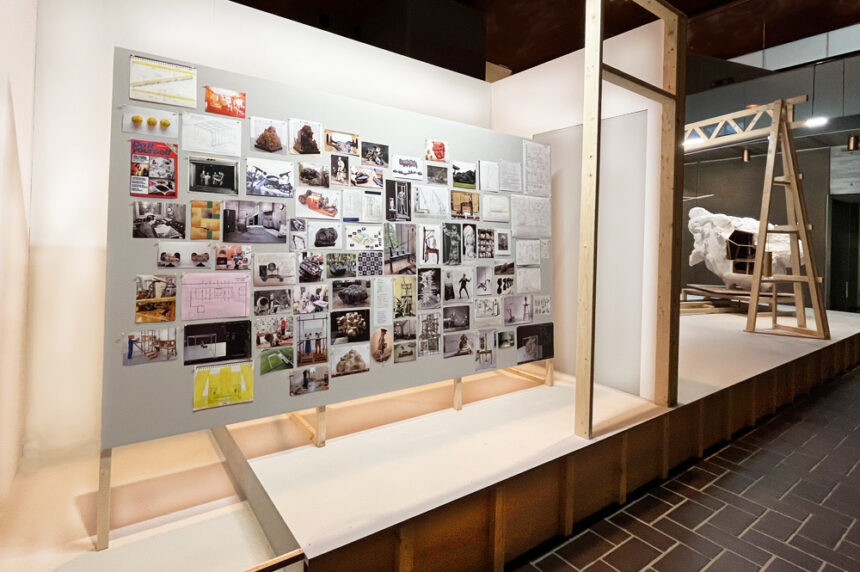
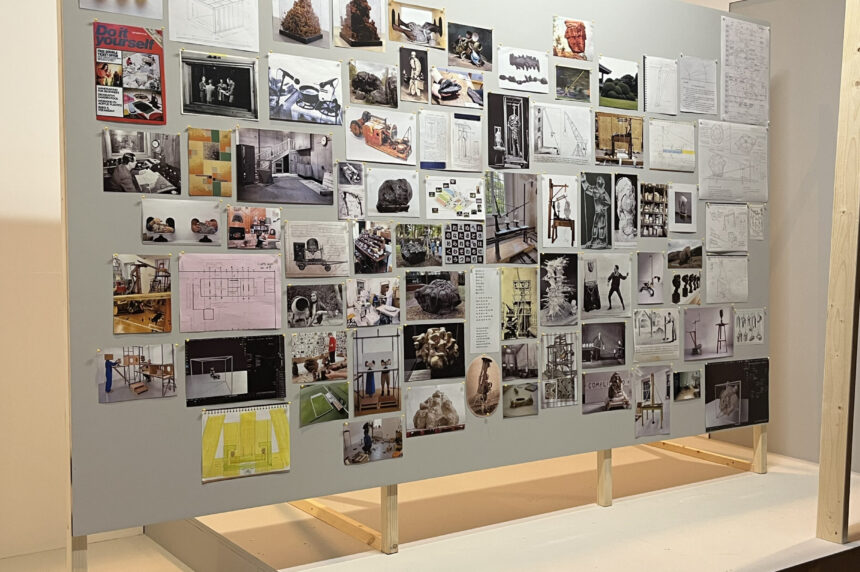
The installation comprised of the platform with framed wall structures, the large-scale plaster sculpture on a motorised turntable attached via a chain and motor to the ‘mash-up’ on a smaller turntable; the 5.5 metre long 3D pantograph with its 3.5 metre high wooden gantry; a 3.33 minute subtitle video of the descriptive text; the library of over one hundred 3D printed forms; and a pin board documenting visual research and references.
Materials employed included wood, plaster, steel, chicken wire, cardboard, plant-based plastic filament, an electric motor geared to run at 1RPM (turning for 1 minute every 30 minutes), rope, sand weights, a monitor, photographic prints and photocopies, and map pins.
ACKNOWLEDGEMENTS:
Dunhill and O’Brien’s participation in the exhibition Pleasure in Making was made possible thanks to financial support from The Daiwa Anglo Japanese Foundation and Tokyo Metropolitan Art Museum.
Special thanks are due to: Yoshinori Takakura and the team at Kaetsu Ariake Junior High School; Yousuke Nakazato and the team at HAKUTEN; the exhibition’s curator Hayato Fujioka and the curatorial team and team of Tobira at the Tokyo Metropolitan Museum of Art; sculptor Claire Fujita who acted as project assistant and analogue technician, and architectural technologist Hiroaki Yamane who provided expert digital support.
PROJECT PARTICIPANTS
Dunhill and O’Brien would also like to express their thanks to the project participants for their openness and ingenuity:
Tomoko Ido; Mariko Igari; Satoshi Ikeda; Sakuya Ishida; Mayumi Ishizawa; Nick Eagleton; Yumi Hayashi; Keiko Haseyama; Nicolai Hart-Hansen; Jeremy Herbert; Satomi Baba; Angela Baum; John Barker; Parata Kikuchi Kiwa; Akiko Nishida; Mika Nishiyama; Charlotte Hodes; Mick Hawksworth; Nick Haeffner; Nick Heaf; Sarah Baylis; Steve Bell; Deborah Paige; Masami Tougasa; Penny Driver; Lau Tong Han; Owen Leach; Nathalie de Leval; Rempei Washizu; Junpei Kaneko; Marisa Kageyama; Marjorie Allthorpe-Guyton; Julia Galvin; Takumi Takahashi; Yoshinori Takakura; Rie Tanabe; James Dunhill; Becky Leddy; Miyako Someya; Fang Chol Seo; Hiromi Nemoto; Mina Nakagawa; Yosuke Nakazato; Takehide Murakami; Rena Murata; Reo Murase; Junko Uchiyama; Ren Wolfe; Sachiko Ueda; Rie Umemura; Hiroaki Umemura; Sarah Wigglesworth; Reiko Nogami; Sean O’ Brien; Utaha Kurokawa; Hiromi Kubota; Yumiko Kuramochi; Clare Cooper; Graham Cooper; Hiroaki Yamane; Daisuke Yamanaka; Azumi Matsumoto; Agalis Manessi; Sandie Macrae; Dorian McFarland; Rob Kessler; Pat Frik; Helen Frik; Claire Fujita; Hayato Fujioka; Jem Finer; Marcia Farquhar; Mick Finch; George Blacklock; John Plowman; Komada Naoki; Paul Coldwell; Jinx Godfrey; Melanie Gautier; Aya Endo; Judo Tezuka; Jeremy Till; Paul Dale; Richard Ireland; Danielle Arnaud; Yuko Aono; Naoyo Asano; Sonia Ashmore; Jonathan Ashmore; Shuori Saito; Dani Salvatori; Anna Sasaki; Hiroko Kihara; Momoko Kihara; Douglas Gill; Miina Takezawa; Yuki Miyake; Miyoko Shigeta; Kate James; Takako Jin; Nicola Streeten; Gill Smith.
(names listed according to the I, RO, HA ordering system, thanks to Iku Fujioka)
The exhibition Pleasure in Making featured works by: Taku Hisamura; Kengo Noguchi; Dunhill and O’Brien; Natsumi Seo; Kurumi Wakiki with architectural practices Akihiro Ito and studiomegane.