At the beginning of a three-month residency at the European Ceramic Work Centre in ’s-Hertogenbosch, Dunhill and O’Brien placed an advert in a local newspaper offering to dig holes, free of charge, for whatever purpose might be required.
The offer brought them into contact with a number of generous and accommodating people who invited them to dig in gardens, allotments and farmland. Hole digging proved to be a satisfyingly collaborative way of making: the resulting forms were determined less by artistic intention than by soil conditions, location and whatever use the landowner actually had for the hole.
The holes themselves were only the beginning of a much more laborious process that eventually produced two separate works.
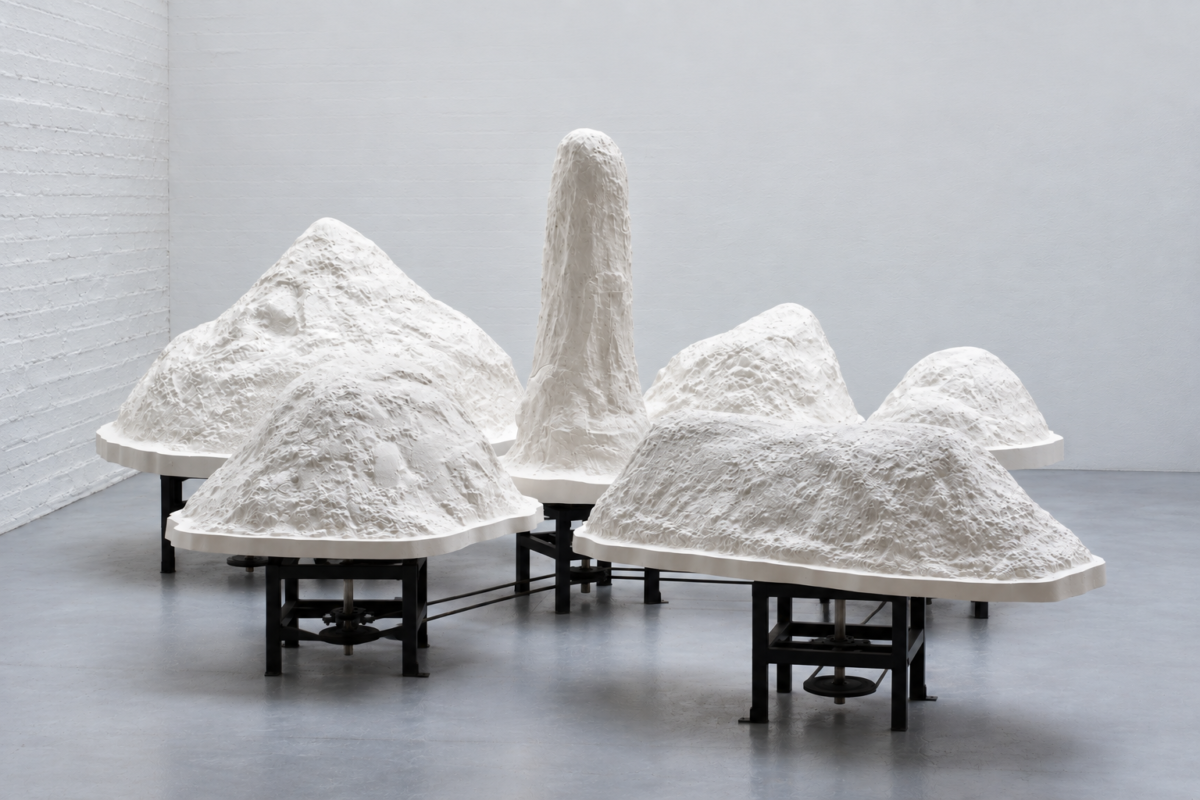
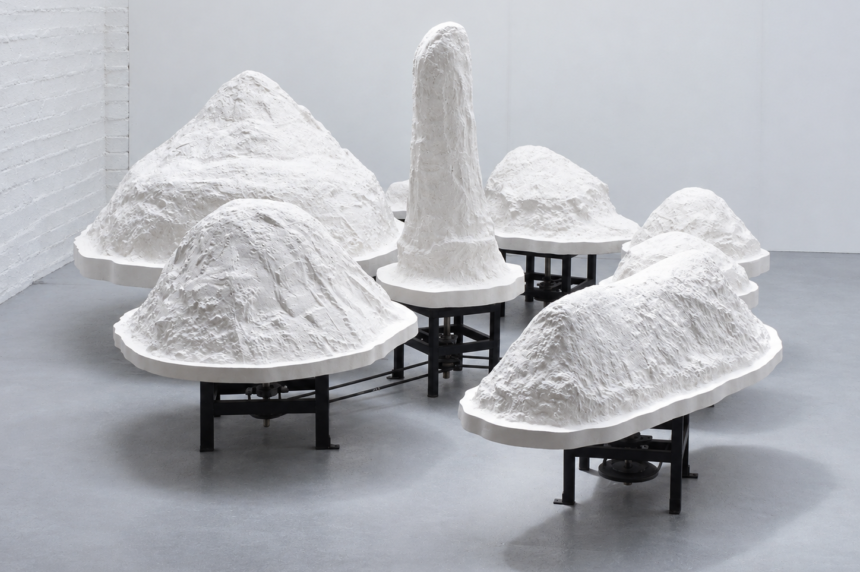
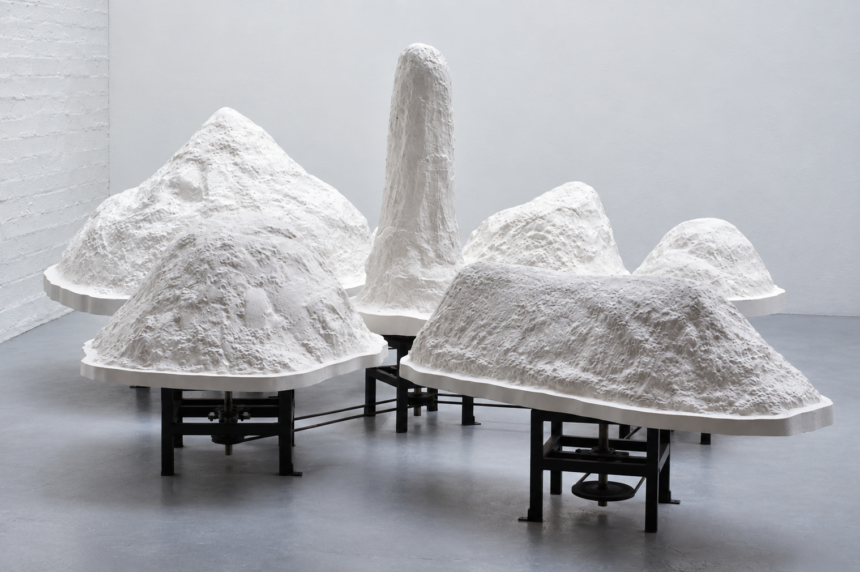
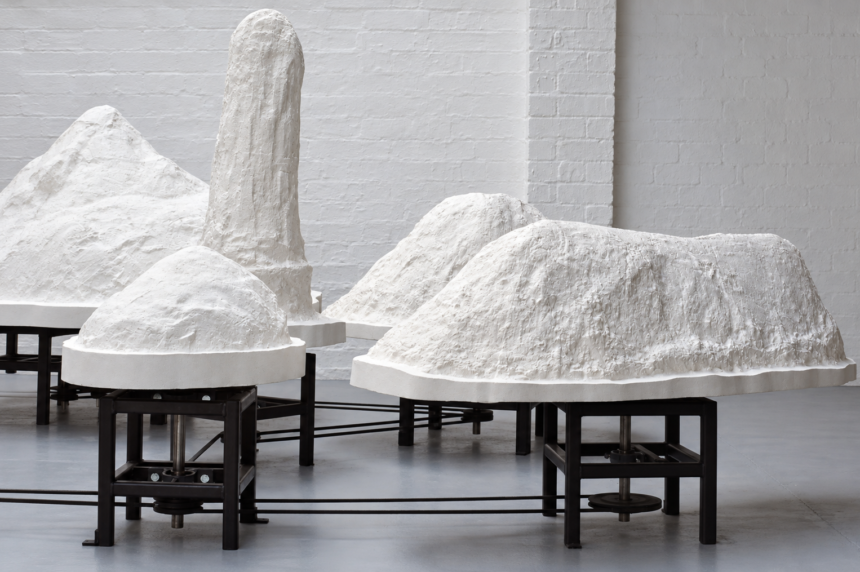
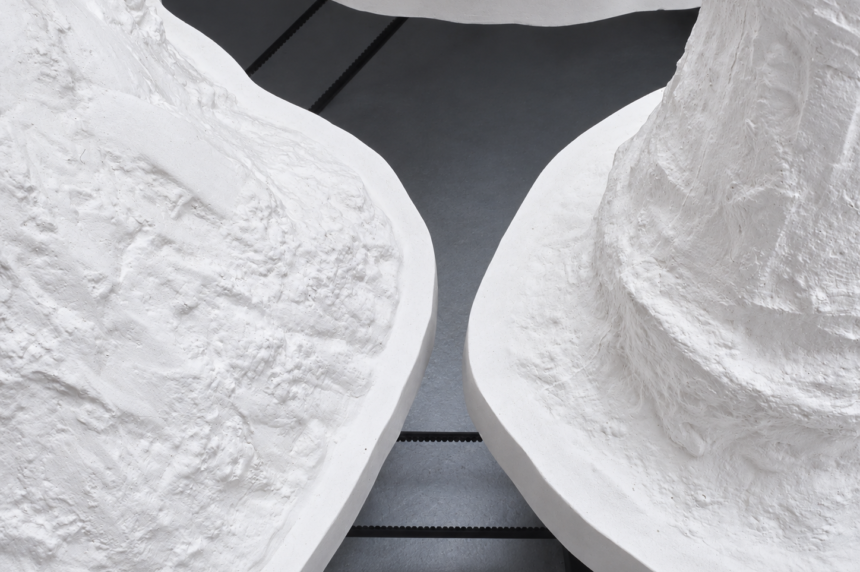
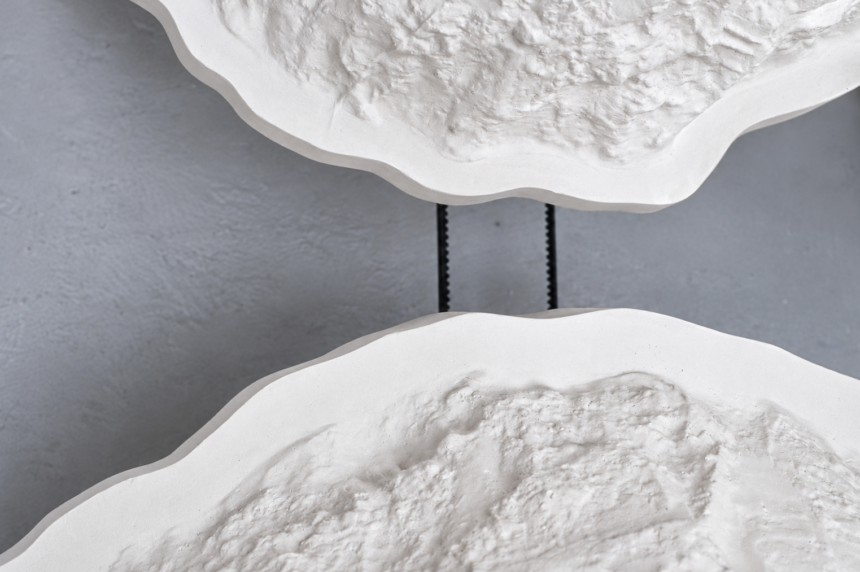
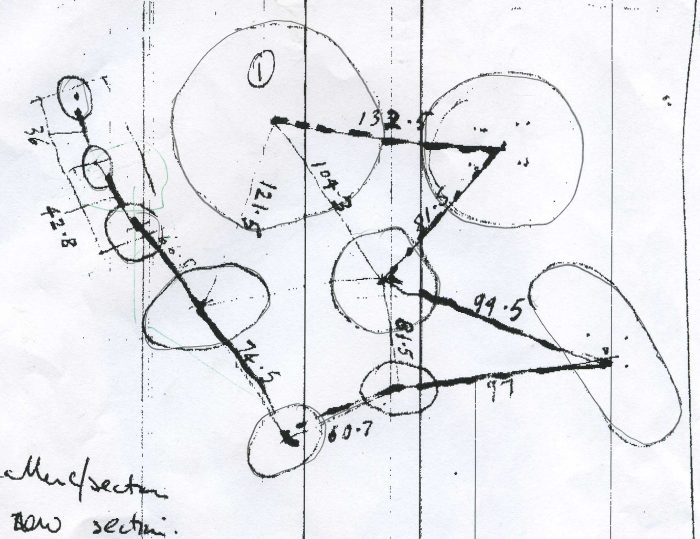
For Holes I, plaster forms derived from the excavations were mounted on steel frames and linked by spindles and belts to a motor, causing them to turn slowly together.
Dunhill and O’Brien had been unable to agree on how the completed forms should be presented as static objects, so the turning mechanism became a way of deciding how they might live together without settling on a single arrangement. The movement also echoed the potters’ wheels at the European Ceramic Work Centre, where the work had been made. Their irregular shapes continually shifted in relation to one another, held as closely together as their awkward contours would allow.
This project was made possible thanks to bursary support from South West Arts.